The Nigerian Supreme Council for Islamic Affairs (NSCIA) has condemned what it described as growing attempts by some individuals and groups within and outside the country to associate Nigerian Muslims with banditry, kidnapping and other violent crimes.
It warned that such narratives are false, divisive and harmful to national unity.
The Council, under the leadership of the Sultan of Sokoto and President-General of the NSCIA,
Alhaji Muhammad Sa’ad Abubakar, stated these in a Democracy Day message issued on Thursday by the Public Affairs Officer, Abbas Jimoh.
According to the Council, it is deeply disturbed by efforts to unjustly link the Muslim community to criminal activities perpetrated by individuals.


It stated that the overwhelming majority of Nigerian Muslims are law-abiding citizens who contribute positively to national development.
The NSCIA noted that religious profiling of criminals was misleading and unfair, particularly at a time when many Muslims are themselves victims of terrorism, banditry and other forms of insecurity.
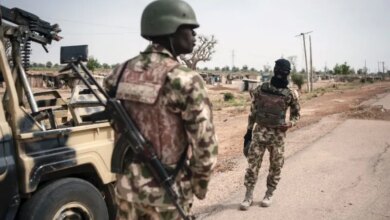
The Council cited the recent kidnapping of students and teachers in Orire Local Government Area of Oyo State, saying some individuals had attempted to criminalise Islam and Shariah over the incident.
It, however, pointed out that subsequent investigations and arrests had disproved claims that the perpetrators were Muslims or Fulani herders.
Referencing an article by Professor Farooq Kperogi titled “Don’t Add Lies to the Terrorist Horror in Oyo,” the Council said the incident was already tragic enough without the addition of falsehoods, conjecture and propaganda capable of inflaming tensions.
“The identity of the suspects arrested so far did not show them as Fulanis, contrary to the initial and erroneous reports,” the Council stated.
It insisted that criminals should be identified by their crimes and prosecuted in accordance with the law rather than being assigned ethnic or religious identities.
The NSCIA further warned that criminality should not be given religious or ethnic colouration, as such narratives deepen divisions, promote mistrust and undermine efforts to combat insecurity.
While congratulating Nigerians on the occasion of the 2026 Democracy Day, the Council acknowledged the progress made in the country’s democratic journey but expressed concern over persistent security challenges, including terrorism, banditry and kidnapping.
It condemned all forms of violence and urged those involved in criminal activities to renounce their actions, while offering prayers for victims and their families.
The Council also called on journalists, opinion leaders and other stakeholders to uphold professionalism, accuracy and fairness in their reporting and public commentary, stressing the need to avoid narratives capable of heightening tensions among Nigeria’s diverse communities.
What do you think about this?
Drop your opinion in the comment section.
FOLLOW US & Share this with someone who needs to see this.