New posts
12:53
Oil Prices Fall To Pre-War Levels For First Time
The price of Brent crude, the global benchmark oil, has fallen to below the level it was at before US and Israeli air strikes started the war with Iran on February 28.
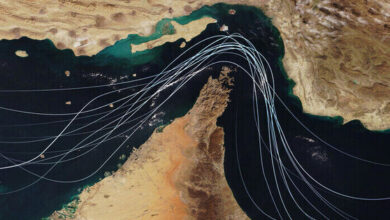
The decline comes as increasing numbers of ships have been clearing the Strait of Hormuz, the key global artery for some 20 percent of global oil supplies prior to the war.


(illustration)
At one point, Brent was trading at $72.24 a barrel on June 25. According to theTrading Economicsweb monitor, it reached $73.48 on February 27.
Oil prices have been coming down all week as traffic increased in the strait, following the US-Iran framework agreement to end their conflict.
Shipping levels still have a long way to go before they reach pre-war levels and have also been boosted by an International Maritime Organization (IMO) operation to evacuate ships stranded when Iran closed the strait in early March.
IMO figures on June 25 showed 13 vessels passed the strait on June 23, followed by 32 the next day, and 12 vessels by midday local time on June 25. These were just vessels exiting the strait as part of the IMO operation.
Global oil supply has been further boosted by the US waiver on sanctions applying to Iranian oil, bringing extra barrels to market that were previously not legally available — although Chinese refineries did buy large amounts of oil transported by Iranian shadow fleet vessels.
Kpler, a commodities intelligence company, noted 70 crossings in both directions on June 24, the highest figure since March 1. The same day, maritime intelligence company Windward noted a 48 percent increase in traffic through the strait.
Share
Copy link
Facebook
X (Twitter)
LinkedIn
Email
Share
12:30
Veterans Of Iran Talks Say Verification Will Be Heavy Slog With Details Of Access Key To Success
IAEA officials carry out an inspection at Iran’s Natanz nuclear power plant in 2014.
Amid an ongoing row between Washington and Tehran over whether international monitors can verify Iranian compliance with its nuclear nonproliferation commitments, former officials have told RFE/RL that the scale, scope, and degree of access are crucial to the success of inspections.
Details on those have yet to be determined, though Raffael Grossi, head of the International Atomic Energy Agency (IAEA) said the UN body “will be working on the modalities — dates, procedures, places — very soon.”
That doesn’t mean, according to experts, that the organization hasn’t already drawn up a wish list for any eventual inspections.
“They almost certainly have a plan for when they go back in, what the priorities are, where they would want to go first, second, third,” Laura Rockwood, a former IAEA negotiator on Iran, told RFE/RL.
To read the full report, clickhere.
Share
Copy link
Facebook
X (Twitter)
LinkedIn
Email
Share
11:15
Iran Agreed To Downblend Its Uranium. But How Do You ‘Dilute’ A Radioactive Metal?
In the 1990s, US and Russian scientists pulled off the ultimate nuclear magic trick: “downblending” weapons-grade uranium so it could never be used in a bomb.
Now, the US and Iran are trying to repeat history.
Under the new 60-day peace roadmap, Iran has agreed to downblend its current stockpile.
But how exactly do you “dilute” a radioactive metal? Its not as simple as adding water.