0
…Urge FG To Fund NCDC Amid Ebola Threat
ABUJA – The House of Representatives has called on security agencies to urgently rescue the abducted teachers and pupils in Oyo State and also secure the release of 42 schoolchildren abducted from Mussa Ward in Askira-Uba Local Government Area of Borno State.
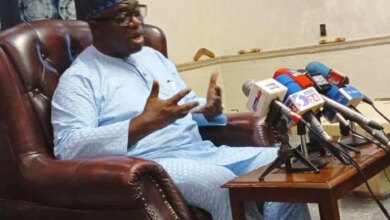
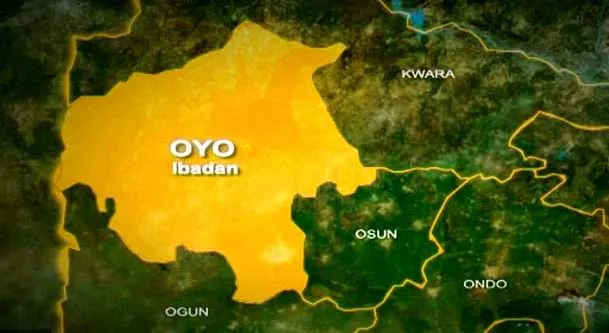
In the Oyo abduction, moving the motion under urgent national importance, the member representing Ogbomoso North/Ogbomoso South/Oriire Federal Constituency, Olamijuwonlo Alao-Akala, said that the victims needed freedom.
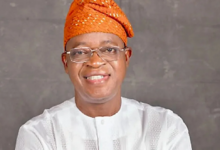

Alao-Akala, who condemned what he called an unrelenting siege on the people of Ogbomoso and Oriire local government areas, said over 30 children and teachers were abducted.
He also condemned what he described as the barbaric beheading of a mathematics teacher, Michael Oyedokun, by his abductors.
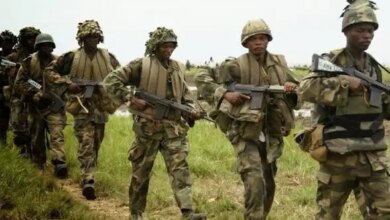
The lawmaker, while commending the military for the efforts being made to rescue the victims, called for more efforts to secure their freedom.
“This is a savage act that has shocked the conscience of our nation and demands an immediate and decisive response from every arm of government,” he said.
Alao-Akala re-echoed calls for the decentralisation of Nigeria’s security architecture and the establishment of a truly federal system of policing, anchored on state police and local government policing units.
He expressed concern over the continuous captivity of the victims, stressing the need to expedite action in rescuing them.
The lawmaker, however, called for the establishment of military forward operating bases in the affected areas.
The Speaker, Abbas Tajudeen, consequently referred the motion to the House Committees on Defence, Interior, Police Affairs and National Security for further legislative attention.
The House also observed a minute silence for the late Mr. Oyedokun.
Reps Calls for Immediate Release of 42 Abducted Schoolchildren in Borneo
Similarly, the House of Representatives, on Tuesday, called on the Federal Government and security agencies to immediately secure the release of 42 schoolchildren abducted from Mussa Ward in Askira-Uba Local Government Area of Borno State, while also pressing for the development of a comprehensive national framework for the protection of schools across the country.
The resolution followed the consideration of a motion of urgent public importance sponsored by the member representing Askira-Uba/Hawul Federal Constituency, Midala Balami, amid renewed concerns over escalating attacks on schools and rural communities in the North- East.
Presenting the motion, Balami expressed deep concern over the latest abduction and what he described as a troubling pattern of violence targeting educational institutions and surrounding communities.
He warned that the trend continues to undermine access to education and erode public confidence in the state’s ability to guarantee security.
He stressed that the protection of pupils, students, educational personnel and school communities remains “a fundamental responsibility of government at all levels.”
The lawmaker recalled earlier mass abductions in Borno State, including the Chibok schoolgirls incident in 2014, many of whom remain unaccounted for, as well as other attacks in Ngoshe and along the Biu–Buratai axis, noting that such incidents have become recurring symbols of the security crisis in the region.
According to him, “The House is concerned that the recurring attacks on schools and communities continue to threaten access to education, endanger lives, traumatise families, disrupt livelihoods, and undermine public confidence in the capacity of government to guarantee security.”
Balami further warned that sustained insecurity in affected communities has had far-reaching social consequences, including declining school enrolment, reduced attendance, and heightened fear among residents in vulnerable areas.
He added that the situation underscores “the urgent need for decisive and coordinated action to safeguard schools, restore public confidence, and secure the release of all abducted persons.”
Following deliberations, the House adopted the motion and urged the Federal Government and relevant security agencies to “take immediate and decisive action” to secure the release of the 42 abducted schoolchildren from Mussa Ward, alongside all other persons currently in captivity.
Lawmakers also called for strengthened security coverage around schools in Borno State and other high-risk areas, including enhanced deployment of security personnel, improved intelligence gathering, and more effective rapid-response mechanisms to prevent further attacks.
The House further advocated the expansion of school protection initiatives such as early warning systems, community-based security structures, security awareness programmes, and improved surveillance infrastructure around educational facilities.
Reps Urge FG To Fund NCDC Amid Ebola Threat
Meanwhile, the House of Representatives has called on the Federal Government to urgently provide adequate funding to the Nigeria Centre for Disease Control and Prevention (NCDC), warning that the country’s ability to respond effectively to Ebola and other epidemic-prone diseases could be severely compromised if critical funding gaps are not addressed.
The call followed a motion on a matter of urgent national importance sponsored by Hon. Amobi Godwin Ogah during plenary, where lawmakers expressed concern over Nigeria’s preparedness in the face of a renewed Ebola threat in Africa and mounting operational challenges confronting the nation’s foremost public health agency.
Presenting the motion, Ogah noted that the NCDC, which serves as Nigeria’s national public health institute for the management of infectious disease outbreaks and public health emergencies, is facing significant financial constraints despite increasing health security threats across the continent.
He recalled that on May 15, 2026, the Africa Centres for Disease Control and Prevention (Africa CDC) reported an outbreak of Ebola disease in the Ituri Province of the Democratic Republic of Congo, involving the Bundibugyo strain of the virus.
According to the lawmaker, the outbreak poses a significant threat to countries across Africa, including Nigeria, owing to porous borders and inadequate cross-border surveillance mechanisms.
“The House is aware that the Nigeria Centre for Disease Control (NCDC) is the National Public Health Institute responsible for responding to infectious disease outbreaks and public health emergencies,” he said.
He added that the Ebola outbreak in the Democratic Republic of Congo “is causing a major public health emergency in Central Africa and may spread to other parts of Africa soon because of the porous nature of our borders and lack of strict cross-border checks.”
Ogah further expressed concern that there are currently no licensed vaccines or targeted therapies specifically approved for the Bundibugyo strain of the Ebola virus, thereby increasing the importance of robust preparedness and response measures.
The lawmaker also drew attention to an advisory issued by the NCDC on May 25, 2026, in which the agency placed Nigeria at high risk of Ebola importation.
He noted that while the Director-General of the NCDC, Dr. Jide Idris, had stated that the agency was intensifying national coordination efforts and had placed the National Emergency Operations Centre on alert mode, the reality on the ground painted a different picture.
“However, it is known that the NCDC received no operational funding in 2025, with no capital releases made to date against the approved 2026 allocation. Furthermore, the overhead releases are highly epileptic and grossly inadequate,” Ogah said.
He questioned how the agency could effectively guarantee emergency preparedness under such conditions.
The lawmaker warned that the prolonged funding shortfall had significantly weakened the country’s health security architecture at a time when donor support, which had previously supplemented government funding for outbreak preparedness and response, was steadily declining.
According to him, the funding crisis has left the agency struggling to meet several critical obligations.
He disclosed that vendors providing essential goods and services to the NCDC had remained unpaid for more than a year, leading to delays in the completion of strategic projects, including zonal laboratories, treatment centres and isolation facilities.
Ogah further stated that resources required for simulation exercises, preparedness drills and after-action reviews had become dangerously limited, reducing opportunities to identify operational weaknesses before outbreaks occur.
He also highlighted shortages of laboratory reagents, consumables and other critical materials required for disease surveillance, screening and diagnosis.
Other challenges identified in the motion include inadequate biosafety and biosecurity infrastructure for handling highly infectious pathogens, limited intensive care and oxygen support systems for severe cases, and insufficient funding for the training and retraining of Rapid Response Teams across the country.
Following deliberations, the House urged the executive arm of government to immediately release adequate funds to the NCDC in line with provisions of the Appropriation Acts to enable the agency settle outstanding liabilities and sustain critical operations.
The House also mandated its Committee on Infectious Diseases to facilitate oversight of the released funds and ensure their proper utilisation, while reporting back to the chamber for further legislative action where necessary.
In addition, lawmakers called on Port Health Authorities to intensify surveillance activities and strengthen border screening measures to prevent the entry of infected persons into the country.