0
…Want FG To Invest More In Agric, SMEs, Improve Citizens’ Social Welfare
…Call For Transparent Social Investment And Empowerment Programmes
LAGOS – Chief Emeka Charles Kalu, a power engineer and seasoned politician, has said that the Federal Government should complement ongoing economic reforms with targeted social interventions that directly improve the living conditions of ordinary Nigerians.
Kalu, the Director-General, Global Initiatives for Good Governance (GIGG), and a chieftain of Labour Party (LP), was reacting to a recent World Bank Report which stated that the gains of President Bola Tinubu’s economic reforms, which have significantly boosted government revenues and foreign reserves, have not trickled down to the masses.

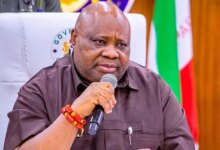
The World Bank has consistently commended President Bola Tinubu’s economic reforms—particularly the removal of fuel subsidy and the unification of the foreign exchange rate—for restoring macroeconomic stability and investor confidence.
However, it strongly cautions that these structural changes have yet to improve living conditions, noting that poverty has surged with roughly 63% of the population living in poverty.
Kalu, President of ECK Foundation, in an interview with Sunday Independent, maintained that investments in agriculture, support for small and medium-scale enterprises, and expansion of job creation programmes would help translate macroeconomic gains to household prosperity.
He stated: “Strengthening social safety nets, improving access to affordable healthcare and education, and ensuring stable electricity supply are also critical. In addition, the government must address inflation, particularly rising food prices, through effective policy implementation and market regulation.
“Nigerians will appreciate the reforms more when they experience tangible improvements in their daily lives.”
Barrister Olalekan Festus Ojo, a Lagos-based human rights lawyer, who added his voice, said the World Bank’s assessment captures a paradox that Nigerians live daily: macro-economic indicators improving, while micro-economic realities worsen.
Ojo, the Managing Partner, Platinum & Taylor Hill LP, one of Nigeria’s leading law firm, maintained that reforms that exist only on spreadsheets and not in the pockets of ordinary Nigerians are, at best, incomplete.
The lawyer, who is an advocate of social justice and good governance, stated: “The Federal Government must pivot urgently towards deliberate social investment.
“Conditional cash transfer programmes must be properly funded, transparently administered, and shielded from the corruption that historically hollows them out.
“The National Social Investment Programme cannot remain a political instrument; it must be a genuine poverty alleviation mechanism.”
Also, Ojo opined that beyond welfare, the government must stimulate the real sector, adding that agriculture, manufacturing, and SMEs: the employers of the vast majority of Nigerians need targeted credit access, infrastructure support, and regulatory relief.
Ojo stressed: “When a smallholder farmer in Kebbi or a textile trader in Aba prospers, the reform story becomes credible at the grassroots.
“Additionally, the government must urgently fix the electricity crisis. No economy trickles wealth downward when productivity is crippled by darkness. Power is the multiplier of all other reforms.
“Ultimately, the masses do not read World Bank reports; they feel fuel prices, food costs, and school fees. Government must close that gap between narrative and lived experience.”
Barrister Emeka Iheonu, another Lagos lawyer, in a chat with Sunday Independent, said that to enable the masses to feel the positive impact of ongoing economic reforms, the Federal Government must prioritise targeted inflation control, specifically food inflation, aggressively scale up social safety nets, and boost local production to create jobs.
“There should be a temporary removal of tariffs by suspending import duties on staple agricultural inputs and basic food items to lower market prices.
“There should be a boost in local output by subsidising small holder farmers and providing better access to quality seedlings, fertilisers, and mechanical equipment to flood the market with domestic produce.
“Storage and logistics should be enhanced by investing in rural infrastructure and refrigerated transport to significantly reduce post-harvest losses.
“The government should ensure that the poorest households are shielded from the immediate, painful shocks of policy adjustments via direct cash transfers, etc.
“Job creation and SME growth should be stimulated via the provision of consumer credit, investing in digital and creative economies and optimising tax by streamlining taxes for small businesses while closing revenue collection leakages so the gross revenue collected translates to real developmental impact.”
Bishop Herbert Ekechukwu, a cleric and economist, while contributing, recalled that the economic reforms carried out by the Tinubu government include subsidy removal on petroleum products, foreign exchange unification and reforms on taxation.
For the masses to have a positive impact, he said the gains need to flow from macro level to the real household.
Dr Ekechukwu stated: “Let us look at some measures that will reduce the suffering of the people. There should be targeted cash transfer to the lowest economic bracket.
“Also, there should be subsidised mass transport. They should purchase more CNG buses and give support for state run BRT low cost buses.
“There should be release of strategic grain reserves and temporarily waive import duties on staple foods like wheat, rice, and fertilisers to force local prices down.
“Government should tie reform savings to public goods. People accept hurt if they see where the money went.
“The problem at hand is that the reform savings and the multiple borrowings of this government there is nothing to show for it
“The government should publish monthly what is saved and what it is used for to showcase transparency.
“There should be provision of free maternal care, drug subsidies and free school feeding in the poorest LGAs.
“Reforms cannot be positive when people are hungry. SME credit should be given at a single digit rate. There should be tax breaks for employers. Give PAYE relief to companies for low income workers.
“Government should give local production incentives. People do not eat GDP. They feel reforms through transport fare, food price, light, school fees, and hospital bills.
“Reforms become effective when transport fare, food prices are low, when school fees and hospital bills are affordable by the masses.”
Professor John Ebhomien, an economist and finance expert, said the World Bank’s recent reports on Tinubu’s economic reforms is key, stressing that macro stability means little, if households still feel squeezed.
Ebhomien, a chieftain of the All Progressives Congress (APC), stated: “For the masses to feel Tinubu’s reforms, the government needs to close the ‘transmission gap’ between policy gains and daily life.
“Consequently, the Federal Government should take some actions for the masses to feel the positive impact of Tinubu’s economic reforms.”
He said there should be targeted relief, and not blanket subsidies, adding, that the government should “expand and digitise cash transfers through the social register to cover more poor households.
“It should use savings from fuel subsidy removal to fund food, transport, and health vouchers so inflation doesn’t wipe out income gains.”
Ebhomien, a former World Bank/International Monetary Fund (IMF) consultant, advised the Federal Government to fix micro-economics, stressing, “Power, roads, and FX access hit small businesses hardest.
“Accelerating electricity reform and credit access via BOI/DBN will lower costs for traders, farmers, and artisans faster than GDP growth alone.”
On local government impact, he urged the Federal Government to push states and LGAs to deliver visible projects – clinics, farm inputs, market upgrades.
According to him, “Most Nigerians experience government at the local level, not in macro data.
“Reforms create potential; distribution creates perception. Without deliberate safety nets and last-mile delivery, growth numbers will keep outpacing lived reality.”
Julius Adegunna, a media executive, who also spoke to Sunday Independent, said: “I think it is heartwarming to know that President Tinubu’s economic reforms are yielding positive results at macro level, but it can only have more impacts when the people can feel it positively at micro level.
“One thing about Nigeria is that the economy has been made to survive on fake and baseless foundation in the past, thriving on subsidised life without strong planning.
“The solution to me is a two-way approach: one on the side of the government and the other on the side of the people.
“On the part of the government, it should explain its policies and the possible short and long term effects on the people, while it works on relief measures, like lowering costs of living, boosting production capacity and provision of infrastructure.
“The other part on the side of the masses is for them to think and work on how they can maximise the opportunities provided by the government reforms, rather than waiting for free things from the government.
“Of course, the government should provide the enabling environment for private initiatives to thrive in the country, through ensuring peace, and ending insecurity in the country.”