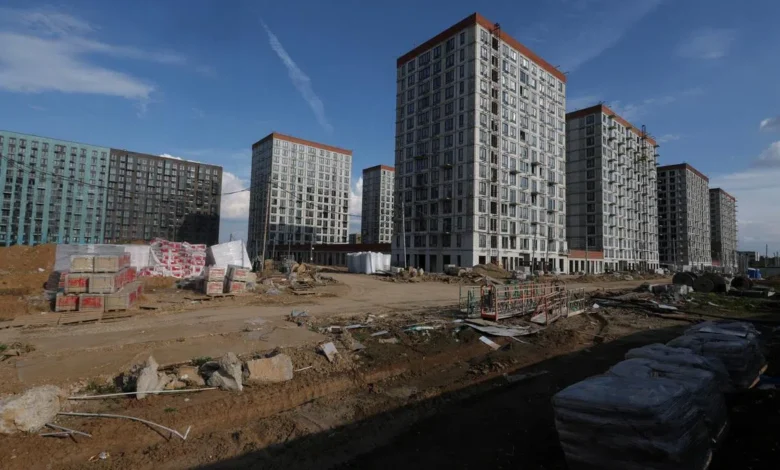
MOSCOW, June 23 – Plastic sheets flap in empty windows and balconies hang askew at part of outer Moscow’s unfinished Ostafyevo housing complex, where disgruntled homebuyers say they are suing its developer.
Fuelled by state-backed mortgages, a record volume of housing was built across Russia in 2023, but a rollback of subsidies and high borrowing costs have since hit builders in a broader economic slowdown as war with Ukraine drags on.
The amount of residential space completed slumped 28% year-on-year in the first quarter, data from the state statistics service shows, while Russia’s largest lender Sberbank warned that the whole construction sector had stagnated in the period.
Some buyers of Ostafyevo apartments said they had seen move-in deadlines slip multiple times since March 2025 and a group of around 20 confronted developer Samolet at a meeting in May.


“Who is working there? Are they even working? Because … we have not seen any changes since January,” one buyer said.
Another showed Reuters video shot inside one of the half-built apartments, where wiring hung from walls of bare breeze block and a large patch of damp spread from the ceiling.
Samolet said in a written response to a request for comment that it understood the group’s concern and was “making every possible effort” to expedite move-ins.
It did not say what had caused the delays, but said a number of contractors had been replaced with “reliable partners”.
With a video of children swinging in a sunlit playground, Ostafyevo’s website promises to deliver a sprawling complex of landscaped apartment blocks with schools and shops. Units start at around 7.5 million roubles ($101,500).
Samolet said construction was complete on three of six phases, with buyers already in residence. Apartments in the fourth phase and some in the fifth are ready for move-in and a gradual handover of the rest will start by September 30.
“All obligations to clients will be fulfilled,” it said.
The finances of the firm, one of Russia’s largest developers, reflect pressures facing the wider sector. After rapid revenue growth in 2023-24, high borrowing costs contributed to Samolet reporting a loss in 2025. Denied state subsidies, it refinanced part of its debt load in February.
As of end-2025, its broader debt exposure stood at 373 billion roubles ($5 billion), the latest available data shows.
The building downturn is set to further drag on Russia’s economy, which contracted for the first time in around three years in January to March.
Together with related sectors, construction accounted for 13% of gross domestic product in 2025, RIA news agency quoted Russia’s construction minister as saying.
‘THEY DO NOT GET PAID’
Russia’s central bank said in a financial stability review in June that loan restructuring requests from construction and real estate firms rose 10% in January to March compared with the previous quarter. It said challenges facing some developers were “limited and involve no systemic risks”.
It pointed to a 37% year-on-year rise in new project launches in the first quarter as a positive indicator, adding that delays to housing completions had fallen in the period following the expiry of a moratorium in January that had barred buyers from seeking penalties for missed deadlines.
Ostafyevo buyers said they acted as soon as they could.
“Many have filed lawsuits, I have as well,” said Elena Skripnichenko, standing with fellow apartment buyers outside the Samolet office at the construction site.
She said some of them had recently slipped through a fence to talk to workers, who had said they were not being paid.
At the meeting, the Samolet representative said workers were being paid “but probably not the amount they want”.
Samolet did not respond directly in its emailed comments to questions about pay and how many buyers had filed lawsuits.
While developers see acute labour shortages easing somewhat, nearly 75% missed their first quarter sales targets and over half expect overall conditions to worsen in the coming year, a survey in mid-May by Russia’s state housing agency showed.
At Ostafyevo, some are losing hope.
Tatyana Lubentsova had planned to move her young family into an apartment in March 2025, after leaving their hometown of Belgorod near the Ukrainian border, which has been a frequent target of drone and missile strikes.
“Now we are in May 2026, and we still do not have any keys,” she added. REUTERS