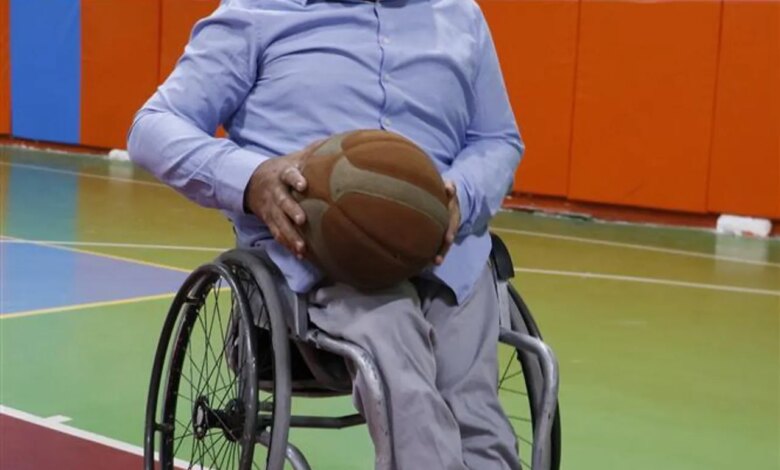
Serdar Yildirim grew up at a time when polio was still affecting children across Türkiye.
“I was born in 1971, and between 1965 and 1985 there were polio cases in the country”, Serdar, president of the Sanliurfa Disabled Sports Club, tells TRT Español. “It was especially common in southeastern Anatolia.”
He contracted the disease when he was just a year and a half old. At the time, polio – a highly contagious virus that attacks the nervous system and can lead to permanent paralysis, respiratory failure, or even death – was still at one of its most severe stages worldwide.
Serdar survived, but the aftermath shaped his entire childhood. Access to education was difficult, yet he never gave up. As a teenager, he came to learn that sport was more than physical activity – it was a refuge. By the age of 25, he had founded the Sanliurfa Disabled Sports Club.
What began as a wheelchair basketball team gradually expanded to include table tennis, weightlifting, archery, wrestling, and amputee football.
Under his leadership, the club has produced athletes who have won titles in both Türkiye and Europe, including the U22 Wheelchair Basketball Championship in Italy (2018), as well as arm-wrestling victories in Moldova (2024) and Kazakhstan (2023), alongside multiple national titles.
“Being able to positively impact people’s lives gave me real happiness,” he says. “It made me believe I should keep going and stay persistent, no matter the difficulties.”
Today, Serdar has become a reference in sport for people with disabilities, especially for young people seeking opportunity and direction.
A childhood shaped by barriers
Raised in a large family in southeastern Türkiye, Serdar says his disability was initially misunderstood. “They thought it was a wrongly administered injection,” he recalls, referring to the paralysis caused by polio, which was only later properly diagnosed.
Growing up with limited financial means and no access to proper treatment or social support, he says he was essentially “left to fate”. Still, he was never excluded from daily life, playing with other children, even adapting football games to his condition. Around this time, TV first entered his home—and with it, his love for the club, Fenerbahce, was born.
But education proved to be a major struggle. Health issues and distance prevented him from attending regular school and he was later rejected from a boarding school in Şanlıurfa. “They told me I couldn’t go because I was disabled,” he says. With no other option, his father taught him at home and eventually he learnt to read.
His sporting journey also came to an abrupt end at 14, after surgery removed his left kneecap, leaving his leg stiff and forcing him to use crutches. “Leaving sport was deeply painful for me,” he recalls.
Even so, he later completed his education externally, attending primary, secondary school before finishing his exams at high school.
An inclusive club
His education eventually led to a job at the Sanliurfa Health Directorate, where he worked in the malaria department. But everything changed in 1997 after discovering a local disability association. “Seeing children with disabilities brought back my own childhood pain and strengthened my determination to do something,” he recalls.
Together with friends, it led to the group founding the Sanliurfa Engelliler Spor Kulubu in 2001.
“At first, I was only a founding member and could barely take part because of work pressure,” he explains. “They wanted to form a wheelchair basketball team, but they couldn’t afford the wheelchairs.”
Financial difficulties nearly stalled the project. But the following year, due to the insistence of then-president Ibrahim Tapsik and several friends, Serdar took over as club president and things began to change.
The club secured sports wheelchairs, entered a basketball team into the national league and gradually expanded into table tennis, football, weightlifting, and shooting – steadily building an inclusive sports hub.
“In these sports, we’ve produced champions of Türkiye, Europe, and even the world,” he says. “We don’t only work with athletes with physical disabilities, but also with athletes with Down syndrome and visual impairments.”