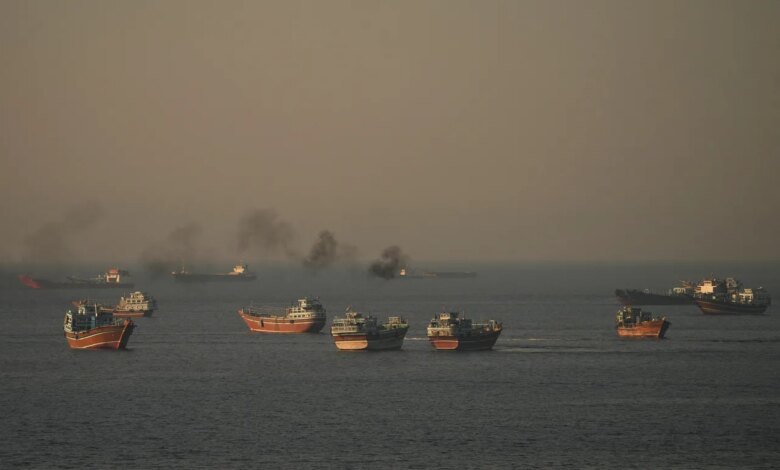
Maritime traffic in the Strait of Hormuz remains at levels before the Iran-US agreement, says the Kpler maritime tracking platform, but there are signs of recovery ahead of Friday’s official reopening.
Eight ships carrying raw materials transited the strait on Monday, and six on Tuesday, according to Kpler data updated on Wednesday.
The agreement was reached overnight on Sunday.

The rate is comparable to the previous week, which saw an average of eight transits per day.
That is well down on the rate of approximately 120 transits per day before the war, according to the maritime information website Lloyd’s List.
A fifth of global hydrocarbon exports passed through the strait, as well as other essential raw materials.
In a sign of a less hostile climate in the area, several oil tankers in Iran’s shadow fleet, all under international sanctions, reactivated their transponders on Tuesday and Wednesday.
They had been switched off for months to evade maritime surveillance.
The Amber, Diona, Sonia I, Starla, Tour 2 and Hero II, were among the vessels to have turned off the transponders, according to the MarineTraffic platform.
These ships had loaded oil on Kharg Island and left the Gulf through the Strait of Hormuz during the conflict, with their transponders switched off, according to Kpler.
Most of them have resumed transmitting AIS signals from the Iranian port of Chabahar, located at the mouth of the Gulf of Oman, about 500 km east of the Strait of Hormuz, near the Afghan border.