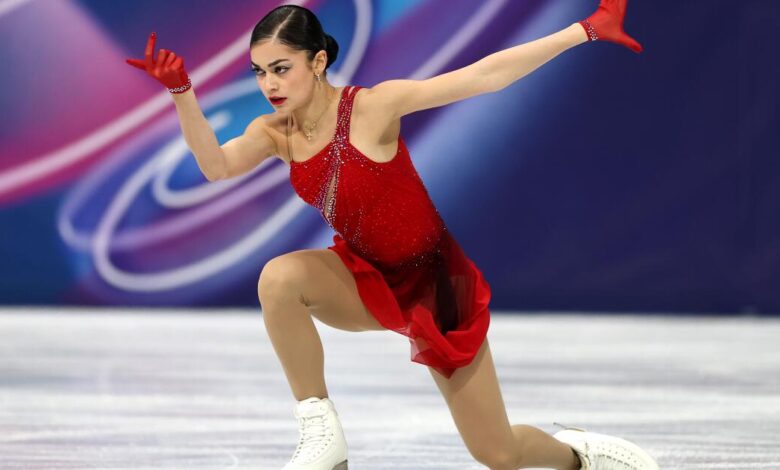
Skaters from Russia and Belarus banned “exclusively in the interests of the safety of participants and the integrity of the competitions” can return to world championships and Grand Prix events next season.
The International Skating Union said Tuesday that the ban triggered by Russia’s 2022 military invasion of Ukraine is over. But skaters and officials from Russia and Belarus may compete only as neutral athletes, meaning without their national symbols of flag and anthem.
The figure skaters, speed skaters and short track speed skaters will be allowed to participate as long as they have not supported the war in Ukraine. A neutral skater is not eligible if they are in active service with the armed forces or a national security agency of Russia or Belarus; have taken active part in military operations in the war against Ukraine; and-or have actively and publicly supported that war.
In announcing the decision, the ISU council described the ban as a “protective measure” and emphasized that “those measures were expressly stated not to be a sanction, disciplinary measure or ineligibility decision.”
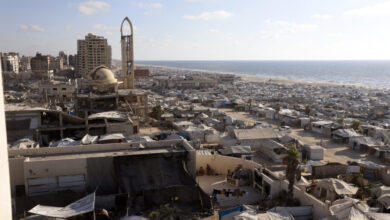
The war in Ukraine is in its fifth year since the full-scale Russian invasion began in February 2022. According to Global Conflict Tracker, Russia occupies roughly 20% of Ukrainian territory and fighting persists with ongoing Russian missile and drone attacks on Ukrainian cities. Meanwhile, Ukraine has launched retaliatory drone strikes deep into Russian territory targeting energy and military infrastructure.
Nearly 56,000 civilians have died or been injured, while 3.7 million people are internally displaced. Through 2025, Ukraine had received about $188 billion in aid from the United States and $197 billion from the European Union.
“The ISU continues to condemn all armed conflict around the world,” the ISU said in a statement. “The ISU continues to provide financial support to Ukrainian skaters through various initiatives, including the ISU Development Program, contributions to the Ukrainian Skating Federation, and a support program for displaced skaters.”
The ISU council’s decision to lift the ban on Russian skaters took into account “developments across the Olympic Movement and the differing approaches of other International Federations.”
While acknowledging that the lifting of restrictions had given rise to occasional protests at competitions, the participation of neutral Russian and Belarusian athletes in 2025-2026 Olympic qualification events and at the 2026 Milan Cortina Olympic Winter Games were completed “without related incident.”
Russian figure skaters Adeliia Petrosian and Petr Gumennik were cleared to compete with neutral status in Milan and both finished sixth in their events. Viktoriia Safonova of Belarus also competed as a neutral athlete.
“Skaters should not be held responsible for the actions of their governments,” the ISU posted. “Safety remains the guiding consideration for any further easing. The ISU will continue to monitor conditions at ISU events and will relax restrictions further only when satisfied that no safety or integrity issues arise, and reserves the right to reintroduce or increase restrictive measures should such issues emerge.”
Neutral athletes could face difficulty obtaining entry visas from countries hosting ISU events. The 2027 figure skating, short track and speed skating world championships will be hosted by Finland, South Korea and China, respectively.
The International Olympic Committee was instrumental in the ISU decision, advising sports bodies to readmit athletes from Belarus on May 7 without vetting for neutral status.