Stakeholders Fault Federal, States Hoarding Of Information On MoU Signed With Brazilian Firm, JBS

0
Chinwendu Nnadozie
Stakeholders to a One-Day industrial animal farming roundtable have asked the Federal and Niger state governments to make public the contents of a Memorandum of Understanding (MoU) signed with Brazilian agricultural business firm, JBS for the benefits of especially unemployed Nigerians that may be intrested to explore the opportunities contained therein.
The Federal government signed a $2.5 billion MoU which also entails ceeding sizable land across the six geopolitical zones for the take off of industrial animal farming, but kept details of the deal shrouded in secrecy or politicized instead of making it public for the benefits of all.

Releasing the contents of the MoU signed between the federal and Niger state government with the Brazilian industrial animal farming firm, JBS, according to participants to the One-Day northern regional multi stakeholders round table on the implications of industrial animal farming in Nigeria, is to enable Nigerians also know the implications of the deal on the citizenry.
For transparency sake and to be sure that the deal is devoid of political undertone, the stakeholders insists that the Federal government should make known the contents of the MoU to ensure that it does not negatively impact on small holders and local farmers within the affected regions.
Other areas of fears deliberated during the roundtable are; “Deficit of transparency; the MoU signed with JBS S.A. remains shielded from public scrutiny, depriving citizens and host communities of the earmarked regions the right to information or details regarding a project of this scale.
The people also reasoned that, for regulatory vulnerability sake, Nigeria may be positioned as a regional test case for unregulated industrial agriculture expansion, lacking the robust legal frameworks and oversight mechanisms necessary to police multinational meat producing corporations.
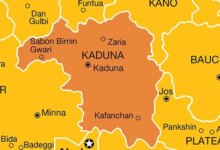
They also considered local omplementation risks, arguing that Niger state which is currently a frontline territory for the rollout of this agreement msy have large acres of land risking being monopolized, directly threatened, land rights violation and as well pose potential threats to traditional livelihoods of local small-scale pastoralists and crop farmers.
Other issues like; severe environmental threats coming with the scale of industrial facilities specifically the intensive poultry, beef, and pork factories planned by JBS, could pose health hazards.
The participants who are also curious about why the federal government and Niger state governments chose not to make public the deal insisted that the contents of the MoU signed with JBS must be made open for public scrutiny.
Beneficiaries of the roundtable also considered public health and antibiotic misuse that can be associated with meat factory of such magnitude, concentrated confinement model inherent to corporate factory farming which they argued promote rapid zoonotic disease outbreaks and accelerates antimicrobial resistance (AMR) due to the heavy prophylactic use of antibiotics on animals.
The Convener of the roundtable, Youth in Agrocology and Restoration Network (YARN) had raised the alarm that federal government signed a $2.5 billion MoU, which included ceding sizable land across the six geopolitical regions for the take off of the animal farming industry, but refused to make public the contents of the deal.
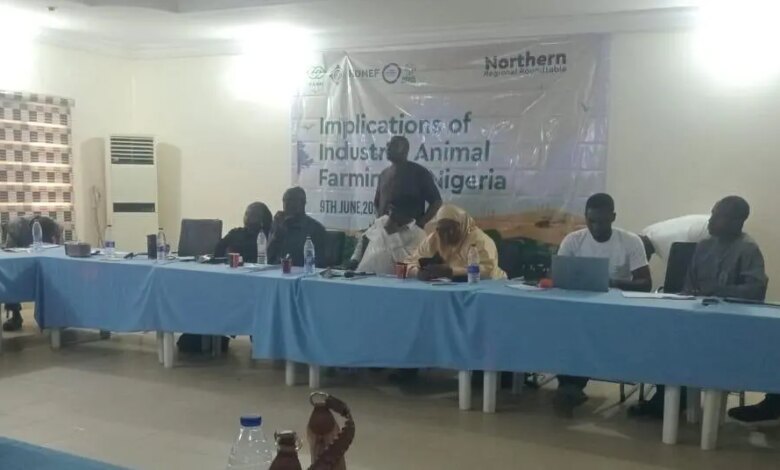
The Programe Manager of YARN, Mr. Seyi Olawuyi told the stakeholders which included; farmers, NGOs, CSOs, journalists and relevant state government agencies that the purpose of the roundtable which took place at Brighter Suites, western by-pass is to deliberate on accelerating expansion of industrial animal farming and its critical threats to Nigeria’s food sovereignty, public health and environmental sustainability.
Seyi said, “This roundtable considered the profound implications of JBS S.A.’s proposed $2.5 billion investment plan, which aims to establish six large-scale industrial facilities across multiple Nigerian states. Federal government has pledged extensive economic, sanitary, and regulatory support and sub-national governments like Niger state”.
Relevant federal government agencies he insisted must come clean on the deal. “Federal government and the Niger state Ministry of Livestock Development must declassify, publish, and make publicly accessible the complete text of the MoU signed with JBS to allow for democratic, community-led scrutiny”,
This according to him is because, “Industrial animal farming, also known as factory farming, presents growing concerns for Nigeria’s agricultural and food production landscape. It raises significant issues regarding public health, labour rights, animal welfare, environmental sustainability and socioeconomic equity”.