0
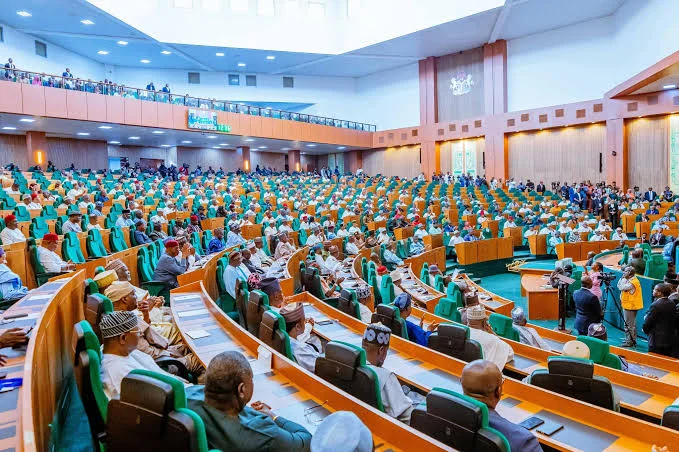
ABUJA – The House of Representatives is set to take a decisive step in Nigeria’s ongoing security reform efforts as lawmakers prepare to vote on a constitutional amendment bill seeking to establish state police formations across the country.
The vote, scheduled for Thursday, comes amid growing concerns over worsening insecurity, including kidnapping, terrorism, banditry and other violent crimes that have continued to challenge the capacity of the nation’s centrally controlled policing system.
Deputy Speaker of the House and Chairman of the House Committee on Constitution Review, Benjamin Kalu, disclosed the development on Wednesday while briefing journalists at the National Assembly Complex in Abuja.


According to Kalu, the proposed legislation represents a significant legislative response to the country’s security challenges and reflects the determination of the National Assembly to utilize constitutional means to improve the protection of lives and property.
The bill, sponsored by Kalu alongside 14 other lawmakers, passed second reading on February 20, 2024. It seeks to transfer policing from the Exclusive Legislative List to the Concurrent Legislative List, thereby granting states the constitutional authority to establish and manage their own police services.
To achieve this objective, the bill proposes amendments to several sections of the 1999 Constitution, including Sections 197, 214 and 215.
Speaking on the rationale behind the legislation, Kalu emphasized that ensuring the security of citizens is a collective responsibility that extends beyond the executive arm of government.
“When we say that security of lives and property is a primary purpose of government, it is not only the executive that particular section of the Constitution refers to. It concerns the three arms of government. While we call on them to order as a parliament and as allowed by Sections 88 and 89 of the Constitution of the Federal Republic of Nigeria 1999 (as amended), the question is how do we do our part in regards to the expectation of 88 and 89 as it concerns legislative functions?” he said.
He noted that the House of Representatives has consistently positioned itself as a platform for addressing national challenges through legislative intervention.
“We have always referred to the parliament, the House of Representatives, as the solution hub where hydra-headed problems of the country are presented and solutions given to them.
“While we call on service chiefs to come and meet with us to dialogue and the Ministers of Finance and Budget Office, there is the need for us to use legislative tool to great effect,” Kalu added.
The Deputy Speaker argued that experience has shown that maintaining the current policing structure may not be sufficient to address the country’s evolving security threats.
“We have discovered that leaving the law as it is will not give us that expectation that all Nigerians have placed in the expectation basket with regards to curing the issue of insecurity,” he stated.
He explained that the proposed reform is aimed at improving intelligence gathering, strengthening local security responses and enhancing the overall effectiveness of law enforcement operations across the federation.
Kalu also dismissed reports suggesting that political interests were attempting to derail the state police initiative, insisting that the constitutional amendment process was progressing smoothly.
“The Speaker has asked us to come and address Nigerians to assure them that hope is coming and there is nobody stopping us from going ahead with state police.
“We’ve read a lot of things on the news that people are trying to stop it. No, the parliament is marching forward and by tomorrow we’ll be concluding on this.
“By tomorrow, state police will make it in our constitutional amendment. We are hoping that by the time we finish it tomorrow, it will be going to the states,” he said.
Expressing confidence in the eventual passage of the bill, Kalu revealed that the proposal has received considerable backing from major stakeholders, including state governors, the Presidency and the leadership of the Nigeria Police Force.
“We have seen the body language of the governors of these 36 states and they are in support of state police.
“They will work hand in hand with their Houses of Assembly to ensure that it is returned back to Mr President for his assent as quickly as possible,” he added.
The debate over state police has remained one of the most contentious issues in Nigeria’s constitutional reform discourse. Advocates argue that decentralizing policing would improve community-based security management, facilitate quicker responses to criminal activities and strengthen intelligence gathering at the grassroots level.
Opponents, however, have raised concerns about the possibility of abuse by state governments, warning that governors could deploy state-controlled police forces to intimidate political opponents and suppress dissent.
Despite these reservations, support for the proposal has continued to grow as persistent security challenges expose the limitations of the current policing arrangement.
Should the amendment secure approval from the National Assembly and subsequently receive endorsement from at least 24 state Houses of Assembly, it would mark one of the most far-reaching reforms to Nigeria’s security architecture since the country’s return to democratic governance in 1999.