The idea of substituting Venezuelan oil for Persian Gulf oil has become more relevant as energy security is increasingly shaped by chokepoints, sanctions, and regional conflict. Persian Gulf producers remain central to global oil supply, but a large share of their exports depends on the Strait of Hormuz. The U.S. Energy Information Administration estimates that oil flows through Hormuz averaged about 20 million barrels per day in 2024, equal to roughly one-fifth of global petroleum liquids consumption. This makes Hormuz not only a regional vulnerability, but a global energy-security risk.
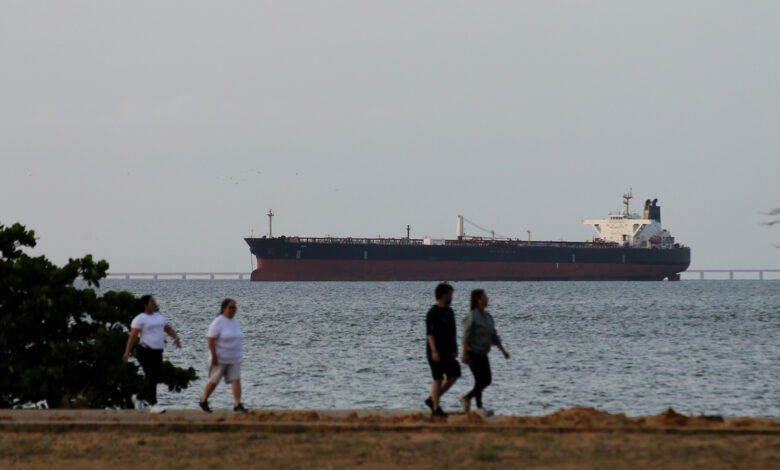
Venezuela appears attractive in this context because it offers a major reserve base outside the Middle East. The country held approximately 303 billion barrels of proven crude oil reserves in 2023, the largest in the world, accounting for about 17 percent of global reserves. Most of these reserves are extra-heavy crude located in the Orinoco Belt. Venezuela’s geography also gives it strategic value for Atlantic Basin markets, especially the United States, where Gulf Coast refineries have long experience processing heavy sour crude.
However, reserves alone do not create substitutable supply.

Persian Gulf producers combine large reserves with current production capacity, export infrastructure, spare capacity, and long-standing relationships with buyers in Asia and Europe. Venezuela has the resource base, but its operational capacity has been badly weakened.
Baker Institute analysis notes that Venezuelan production peaked at about 3.4 million barrels per day in 1998 and fell to about 1.3 million barrels per day by the end of 2018, before U.S. oil sanctions contributed to further decline. This means that Venezuela’s potential is real, but its near-term ability to replace Persian Gulf barrels remains limited.
Opportunities for Diversification
The main opportunity is diversification, not full replacement. Venezuelan oil could reduce exposure to Persian Gulf disruptions by adding another major source of heavy crude outside the Strait of Hormuz. For the United States, this is especially relevant because Venezuelan crude is geographically closer than Middle Eastern supply and better suited to parts of the Gulf Coast refining system than much domestic light tight oil. For other importers, including India and some European buyers, Venezuelan barrels could provide an additional hedge during periods of Gulf instability.
This diversification could also improve Venezuela’s geopolitical position. A recovery in oil production and exports would provide revenue, restore some international bargaining power, and reduce dependence on opaque or discounted sales channels.
The Real Instituto Elcano argues that Venezuela’s oil sector has long-term potential, but that its short- and medium-term impact on global markets is likely to remain limited because the sector has been damaged by decades of energy nationalism and years of sanctions.
In other words, Venezuela can become more strategically relevant without becoming a full substitute for the Persian Gulf.
A partial recovery would still matter. Oil markets respond not only to reserves, but also to credible alternative supply during moments of stress. If Venezuela can restore some production, improve export reliability, and attract investment, it could become a useful balancing supplier.
This would not remove the centrality of Saudi Arabia, Iraq, Kuwait, the UAE, or Iran, but it would widen the global supply map. Geopolitically, even limited diversification can reduce the leverage of a single region or chokepoint.
READ: International Energy Agency warns oil inventories could fall to critical levels
Structural Constraints
The main constraint is technical. Venezuelan crude is mostly extra-heavy and high in sulfur. It often requires diluents, blending, upgrading, and specialized refining capacity. This makes it different from many Persian Gulf crudes, which are generally easier and cheaper to extract, transport, and refine. Venezuelan oil therefore cannot be swapped barrel-for-barrel with Gulf crude across all markets. It is more useful for refineries already configured for heavy crude than for buyers whose refining systems are built around lighter grades.
Infrastructure is another major barrier. Venezuela’s fields, pipelines, upgraders, ports, and service networks have suffered from years of underinvestment and weak maintenance. The loss of skilled personnel has also reduced operational capacity.
Restoring production would require sustained investment, stable rules, technical expertise, and time. Even under favorable political conditions, recovery would likely be gradual rather than immediate.
Investment risk is equally important. International oil companies remain cautious because Venezuela’s oil sector has a history of nationalization, contract instability, corruption, debt disputes, and political interference. Sanctions uncertainty adds another layer of risk. Companies may return for limited projects if licenses allow them to recover debt or operate existing fields, but large-scale recovery requires credible legal protections, payment mechanisms, arbitration rules, and policy continuity. Without those conditions, Venezuela will remain a source of potential supply rather than a dependable strategic replacement.
Geopolitical Implications
For the United States and its allies, Venezuelan oil offers a possible tool for hemispheric energy security. It could reduce exposure to Middle Eastern disruptions, support refineries that require heavy crude, and create an additional source of supply during periods of geopolitical stress. But this opportunity depends on a careful sanctions strategy. If sanctions remain too restrictive, production recovery will be limited. If sanctions are eased without governance safeguards, revenue could strengthen corrupt networks or reproduce old patterns of mismanagement. The policy issue is therefore not simply whether to buy Venezuelan oil, but how to structure engagement so that energy recovery supports stability rather than renewed dependency.
For Venezuela, the opportunity also carries risk. Oil recovery could bring revenue and international reintegration, but it could also create new forms of dependence. If exports become concentrated toward one market or one group of companies, Caracas may simply replace old dependencies with new ones. A sustainable strategy would require diversified buyers, transparent contracts, stronger institutions, and reinvestment in infrastructure. Without governance reform, higher exports may improve short-term revenue while leaving the deeper fragility of the sector untouched.
For Persian Gulf producers, Venezuelan recovery would not represent an immediate strategic threat. Gulf exporters retain lower production costs, larger current export capacity, stronger market relationships, and greater ability to adjust supply. However, over time, a more reliable Venezuela could reduce the geopolitical risk premium attached to Gulf disruptions and give importers more flexibility. This would not end the centrality of the Persian Gulf, but it would make the global oil system somewhat less dependent on a single strategic corridor.
The central conclusion is that Venezuelan oil can complement Persian Gulf oil, but it cannot fully substitute for it in the near term. Its value lies in strategic redundancy: adding another source of heavy crude, reducing chokepoint exposure, and giving importers more room to maneuver during crises.
The opportunity is real, but it depends on production recovery, infrastructure repair, investment confidence, and political stability. Venezuela can be part of a more diversified energy-security strategy, but treating it as a quick replacement for the Persian Gulf would misread both the scale of Gulf supply and the depth of Venezuela’s internal constraints.
OPINION: Kazakhstan and the Iran-Israel war: Navigating risks, opportunities, and strategic neutrality
The views expressed in this article belong to the author and do not necessarily reflect the editorial policy of Middle East Monitor.