63
How It Will Affect 2027 Elections
Have you noticed that there is a cold war albeit tacitly between the Yorubas and Igbo people? This cold war has been ongoing for a long time, but it is now escalating between the two tribes with the 2027 general elections heating up. The tensions between the Yoruba and Igbo ethnic groups can be traced back to the 1966 military coup and the subsequent Nigerian Civil War (1967–1970). These historical events fostered mutual political distrust, which has recently been intensified by economic rivalry and ethnocentric narratives during recent election cycles.
This tension between the 2 tribes has now degenerated into issues of how leaders are selected and appointed. Currently, as a result, both Yoruba and Igbo people are intolerant of each other, especially when the issue on ground is a political discourse. This tension has grown into a serious crisis over the last 10 years, driven by new developments that are disturbing, and this will significantly influence the upcoming elections in Nigeria.
The 2027 election is fast approaching, and it has been said that many people will vote to defend their regions. Many Yorubas have also vowed to vote to protect their legacy and heritage, especially in Lagos, where some of these issues are currently being discussed. Don’t forget that Lagos State has always welcomed people from all strata of life and has always given Igbo people political appointments in the past.

For instance, Governor Babatunde Fashola had an Igbo Special Adviser, and Governor Babajide Sanwo-Olu appointed an Igbo cabinet member during his first term. However, the administration’s subsequent cabinet announcements have faced criticism from socio-political groups for allegedly excluding representatives of Igbo extraction.
Also, Igbo politicians have previously held federal legislative seats. For instance, in 2015, three individuals of Igbo extraction were elected to the Federal House of Representatives to represent Lagos constituencies under the Peoples Democratic Party (PDP). Presently, there is no Igbo representative in the Lagos State House of Assembly. This occurred as a result of people revolting. The forthcoming election is almost here, but the two tribes have vowed to go head to head in determining who should represent them in government yet again.
One of the reasons many Yorubas are now angry is because of the disrespect shown by many Igbos towards Yoruba. Discussions on platforms like Facebook reveal mixed opinion. Many Yoruba individuals feel disrespected by the Online attacks on their elders and religious leaders. Conversely, many Igbo commenters express that they feel unfairly targeted by tribal profiling and are simply reacting to controversial statements sometimes made by religious leaders. High-profile verbal attacks typically peak during general elections in Lagos State. During these periods, prominent Yoruba religious figures and traditional leaders who speak on local politics often face severe online criticism and insults from Igbo social media users and commentators. The recent attack on one of the most respected Pastors, E. A. Adeboye, who controls the Redeemed Church of God angered many Yorubas. Don’t forget how Professor Wole Soyinka was abused. It has been established that once a Yoruba person or an Igbo man has a contrary view, he or she becomes a target. Many Yorubas and Igbo now see the forthcoming elections as revenge and also defend what they believe.
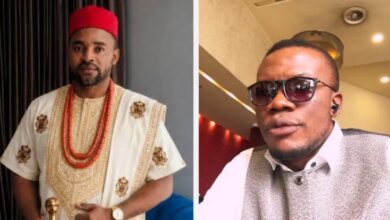
Recently, about a week ago, popular music star, Ill Bliss made a post stating, “The Igbos have contributed immensely to the Lagos economy! Commerce-wise! If you have a problem with it, hug a frigging transformer! We have made massive investments in real estate too! Other tribes have contributed too. Why is it always a problem when it’s the Igbos? Why?” One user identified as @IgeOlusayo47761 accused him of being ungrateful and told him to focus on issues affecting the South-East instead. Ill Bliss’ response, which carried a lot of condescending tone and insults, became a topic among Yoruba indigenes, although he later deleted it. In …, the rapper was quoted as saying, “We own your lands, fool. We bought everywhere and are renting it back to you. Thank you, Lagos, for the opportunity. You will pay rent forever in this city, bloody scavenger.” Lingering tensions from past electoral cycles have resulted in intense ethnic polarization. Igbo candidates and voters have frequently faced voter suppression, intimidation, and profiling in Lagos. The perception that the Igbo community generally vote for opposition parties (such as the Labour Party in recent elections) has created a political rift with the ruling class. The issue of population is another burning point. The Igbos in Lagos have said time and time again that they are the majority in terms of population and that they will elect one of their own. Currently, the Igbo community has candidates for Governor, House of Assembly, Senate, and House of Representatives, etc.
The claim that “Igbos developed Lagos” is a major flashpoint in Nigerian ethnic relations. It deeply angers many Yoruba people because it is frequently perceived as an attempt to erase the indigenous history of the Awori and Isheri settlers, ignore the broader contributions of other tribes, and lay territorial claims to Yoruba land. While many acknowledge the undeniable economic impact Igbo traders and investors have brought to Lagos, many Yoruba indigenes argue that participating in the city’s commerce is not the same as founding or developing it. There is strong sentiment that guests should honor their hosts rather than claim ownership or dominance. Tensions heavily spiked during recent election cycles, such as the 2023 presidential elections and the lead-up to the 2027 polls, when some individuals controversially labeled Lagos as a “no-man’s land.” This assertion infuriates the Yoruba, who view it as a direct threat to their cultural and political heritage. The conferment of the “Eze” (King) title to Igbo leaders residing in Yoruba states has historically triggered tension. Indigenous Yoruba monarchs and socio-cultural groups view this practice as an affront to their cultural sovereignty, maintaining that an area cannot have two Kings simultaneously. While the Igbos see nothing wrong in this, they are considering how to retaliate during the 2027 elections by voting their own.
While historical rivalries and political manipulation have historically caused tension, observers and political analysts emphasize that overcoming these barriers through honest dialogue is vital for moving the country forward. Building functional political ties allows the nation to harness both the visionary Yoruba spirit and the industrious Igbo drive.
Isaac Abimbade
08155107955
What do you think about this?
Drop your opinion in the comment section.
FOLLOW US & Share this with someone who needs to see this.