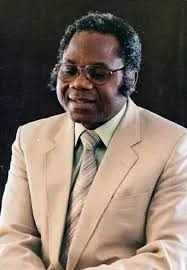
In the turbulent years of Nigeria’s Second Republic, one man stood out for his audacity, vision, and unyielding commitment to the people Professor Ambrose Folorunso Alli, former governor of the defunct Bendel State.
A respected academic turned politician, Alli governed Bendel State from 1979 to 1983 under the Unity Party of Nigeria (UPN), bringing with him a radical agenda that would redefine governance at the state level. At a time when many politicians made lofty promises, Alli pursued policies many considered impossible free education, expanded healthcare access, and aggressive infrastructural development.
His administration introduced free primary and secondary education, established hundreds of schools, and provided learning materials at no cost to students. He also founded Bendel State University, now known as Ambrose Alli University, Ekpoma, one of his most enduring legacies.
Beyond education, Alli invested heavily in healthcare and rural development, ensuring that basic services reached ordinary citizens. His leadership style was marked by simplicity and focus, often described as that of a man more concerned with governance than personal comfort.

However, his tenure was not without conflict.
As an opposition governor, Alli frequently clashed with the federal government led by President Shehu Shagari over issues of revenue allocation and transparency. He was among the early voices demanding accountability in the distribution of funds from the Federation Account, an issue that remains central in Nigeria’s political discourse today.
One of the most widely recounted stories from that era is his reported resistance to a presidential visit to Bendel State a symbolic episode that has come to represent the tension between state autonomy and federal authority during the period. While details of the incident remain subject to historical debate, it underscores the political climate of the time and Alli’s reputation as a bold and independent leader.
The collapse of the Second Republic following the military coup of December 31, 1983, marked a turning point in Alli’s life. He was arrested, tried by a military tribunal, and sentenced to 100 years imprisonment over allegations of financial misconduct involving less than one million naira.
The conviction sparked controversy, with many observers describing the trial as politically motivated. Although he was later released, the experience took a significant toll on him.
Professor Alli died on September 22, 1989, his 60th birthday.
Decades later, his legacy continues to spark reflection. A posthumous presidential pardon was granted, though his family rejected it, maintaining that he had committed no wrongdoing.
Today, Ambrose Alli is remembered not just as a former governor but as a symbol of principled leadership, bold reforms, and the complexities of Nigeria’s political history.
His story remains a powerful reminder of the challenges faced by leaders who dare to pursue transformative change and the enduring impact they can leave behind.