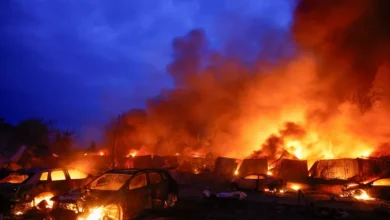
During the current war in the Middle East, G7 energy billionaires just made an extra $23.5 billion, thanks to exchanged missiles and air strikes, the closure of the Strait of Hormuz and the bombing of infrastructure across the region.
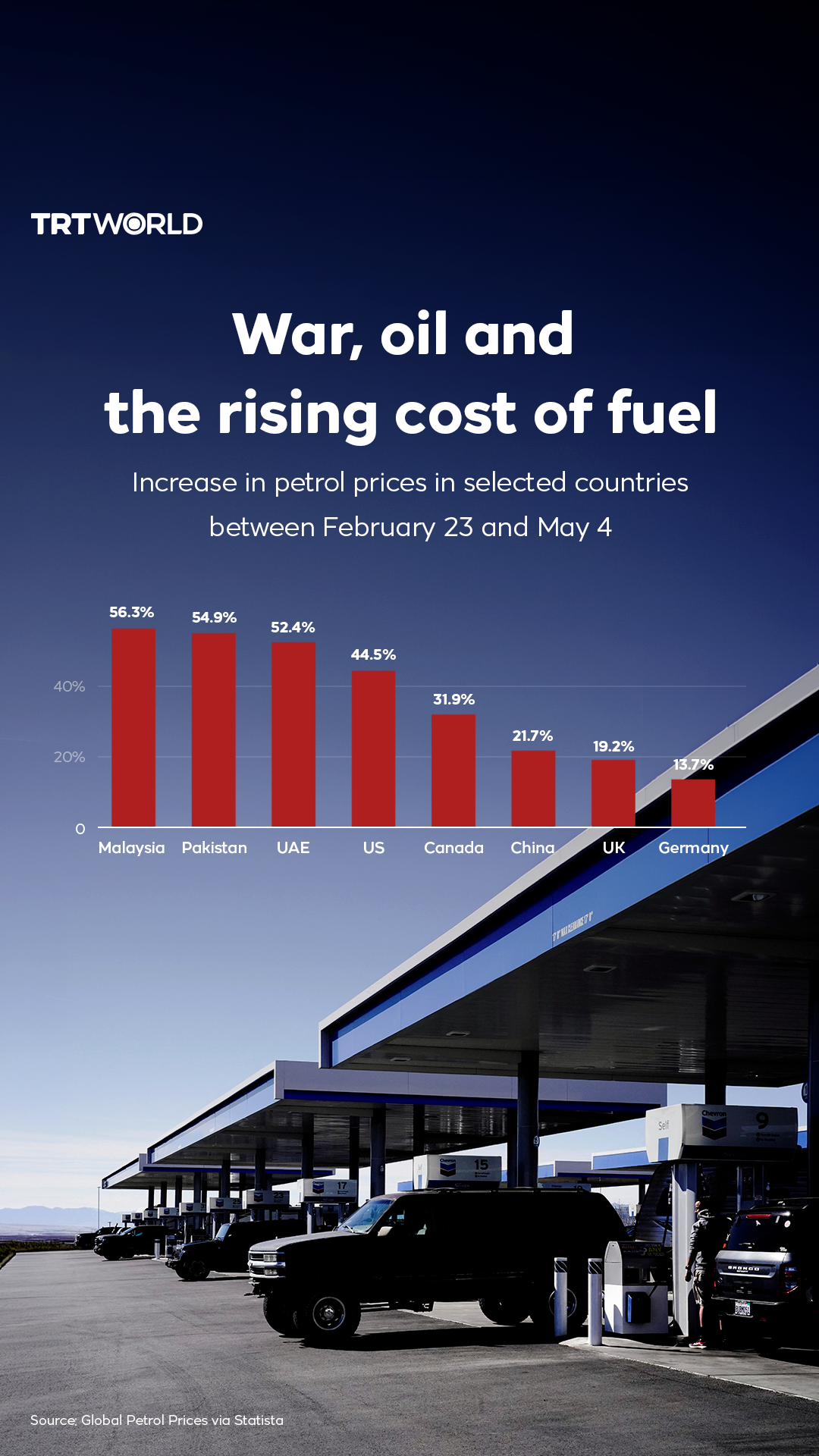
Ordinary households paid that “extra” through rising fuel and food prices, and that was quietly transferred into the pockets of the few who benefit from war.
The accumulation of wealth by the ultra-rich during wars and crises is not a 2026 phenomenon.
Since the onset of the COVID-19 pandemic in 2020, total billionaire wealth has surged by nearly $10 trillion in real terms, a 94 percent increase, according to a recent report by Oxfam titled Ending Impunity and Inequality.

During the same period, the number of people affected by humanitarian emergencies increased by 84 percent.
Between 2020 and today?
The COVID-19 pandemic. The debt crisis driven by rising interest rates. Russia’s invasion of Ukraine and the food and energy shock that followed. Israel’s ongoing military campaign across the occupied Palestinian territories, Lebanon, Syria and Yemen.
And now the US-Israel war against Iran, which has put the broader region – Qatar, Kuwait, Bahrain, the UAE, Oman and Iraq – in flames and has closed the passage through which roughly twenty percent of the world’s oil flows.
The disruption in the Strait of Hormuz was, in the words of the International Energy Agency, “the largest supply disruption in the history of the global oil market”.
Global oil supply crashed by over 10 million barrels per day in March alone. Brent crude, which had been trading around $70 a barrel before the war, surged past $100 and peaked at above $118.
Behind the scenes, war destroys nations and costs countless lives. But for a select few at the top, these are extraordinarily profitable times.
According to Oxfam’s analysis of Forbes’ real-time billionaire-tracking data, 41 G7 energy billionaires increased their collective wealth by $23.5 billion between March 1 and May 18, 2026.
That makes $301 million per day.
Related
Feeding the war machine
The same G7 countries – the United States, United Kingdom, Canada, France, Germany, Italy, and Japan – cut their Official Development Assistance to the world’s poorest countries by $48 billion between 2024 and 2025.
A 29 percent reduction. The lowest level of foreign aid since 2015.
G7 billionaires accumulate the equivalent of that entire $48 billion cut in just nine days.
Each year, the windfall is even more dramatic. ExxonMobil, Chevron, Shell, TotalEnergies, BP, and Eni – the Big Six oil majors – are now projected to earn $152 billion in 2026.
That is an 80 percent increase over what analysts had forecast before the war began.
That doesn’t end there. Three of the world’s largest fertiliser corporations are expected to see profits jump 23 percent compared to pre-war forecasts. This matters more than it might appear.
Fertilisers account for nearly two-fifths of total farm production costs for staples such as maize and wheat. Food prices rose 3.4 times faster between February and April 2026 than in the same period in 2025.