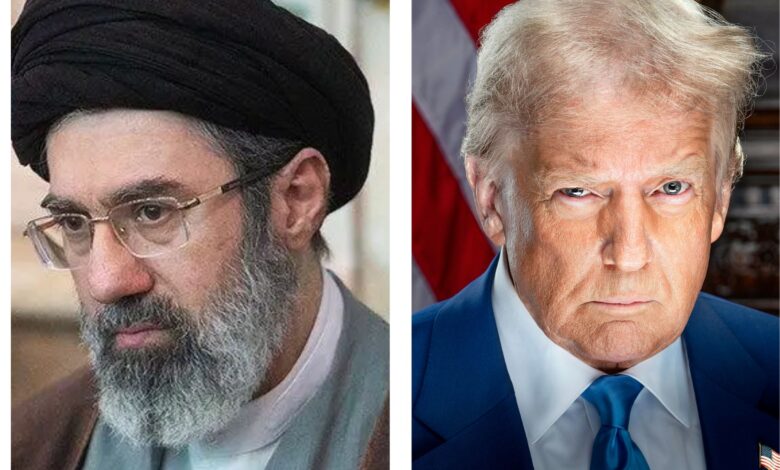
United States President Donald Trump has announced that Washington and Tehran have reached a peace agreement aimed at ending months of conflict, reopening the Strait of Hormuz and lifting the US naval blockade on Iranian ports. He also called for an end to all further attacks.
Trump declared that the agreement was complete in a post on his Truth Social platform on Sunday, saying commercial shipping and oil exports would resume through the vital waterway.
“The deal with the Islamic Republic of Iran is now complete. Congratulations to all,” he wrote.
Trump said he had authorised the toll-free reopening of the Strait of Hormuz and the removal of the US naval blockade imposed on Iranian ports.

“Ships of the world, start your engines. Let the oil flow,” he added.
Pakistan’s Prime Minister Shehbaz Sharif, whose government played a leading role in the negotiations, also announced that an agreement had been reached.
Sharif said both sides had accepted an immediate and permanent end to military operations on all fronts, including hostilities linked to Lebanon.
The formal signing is expected to take place in Switzerland on Friday, June 19, after further meetings between diplomats and technical officials.
Iranian officials said the full text would be published after the signing.
Kazem Gharibabadi, Iran’s deputy foreign minister, said the memorandum did not mean that Tehran trusted Washington.
He added that negotiations on unresolved political, nuclear and economic issues would continue for 60 days. Iran, he warned, would respond if the United States failed to meet its obligations.
Read related news:
US senate approves $70bn for Trump immigration crackdown after Republican divisions
US judge temporarily blocks Trump administration’s $1.8bn compensation fund
US strikes Iranian military sites after helicopter downing near Strait of Hormuz
Beirut strike threatened the agreement
The announcement came hours after Trump condemned an Israeli attack on Beirut, warning that renewed violence could derail the diplomatic process.
Israel said it targeted Hezbollah positions in the Dahiyeh area of the Lebanese capital after the armed group fired projectiles towards northern Israel.
Lebanese authorities reported deaths and injuries from the strikes.
Trump said Israel had a right to defend itself but argued that the attack should not have happened while Washington and Tehran were close to finalising an agreement.
He called for an end to further Israeli attacks in Lebanon and also urged Hezbollah to stop firing at Israel.
“There should be no more attacks by Israel anywhere in Lebanon, but there should also be no more attacks by any other party, including Hezbollah, against Israel,” Trump said.
Iran condemned the Beirut attack and warned that the United States would share responsibility for its consequences because of Washington’s close military and political relationship with Israel.
Senior Iranian officials said the strike had raised fresh questions about whether the United States was willing or able to restrain its ally.
Tehran also warned that a response could follow if Israel continued to attack Lebanon.
Pakistan said the agreement covered an end to military operations on all fronts, including Lebanon. However, Israel is not a signatory to the US-Iran agreement, creating uncertainty over how that part of the arrangement would be enforced.
Hormuz reopening could ease pressure on oil markets
The Strait of Hormuz is one of the world’s most important shipping routes.
A significant share of internationally traded oil and liquefied natural gas passes through the narrow waterway connecting the Gulf with the Arabian Sea.
Restrictions on shipping during the conflict reduced supplies, increased transport risks and pushed global energy prices higher.
Trump said the strait would reopen when the agreement was signed and mine-clearing operations began.
US Defence Secretary Pete Hegseth, however, suggested that a full return to normal shipping might take longer.
He said implementation would begin immediately but could require between two weeks and one month.
Oil prices fell sharply after the agreement was announced, reflecting expectations that the risk of prolonged disruption to Gulf energy exports had reduced.
The United States is also expected to begin lifting its blockade on Iranian ports as the strait reopens.
Nuclear questions remain unsettled
The proposed agreement appears to halt the fighting, but it does not immediately resolve the long-running dispute over Iran’s nuclear programme.
Washington and Tehran remain divided over uranium enrichment, Iran’s stockpile of enriched material, sanctions, frozen assets and the future of the country’s nuclear facilities.
Those issues are expected to be addressed during the 60-day negotiation period following the signing.
A draft described by an Iranian official includes a temporary waiver on some oil sanctions, the eventual lifting of further US and United Nations restrictions, and the release of about $25 billion in frozen Iranian assets.
Under the draft, Iran would commit not to produce or acquire nuclear weapons and would pause further development of parts of its nuclear programme while final negotiations continue.
The management of Iran’s enriched uranium stockpile and nuclear infrastructure would be settled during the subsequent talks.
The complete agreement has not yet been published, meaning some reported terms could change before or after the signing.
Trump rejects regime-change objective
Trump also said he was not seeking to remove Iran’s government, despite previously calling on Iranians to take control of their country after US military strikes.
Speaking before announcing the deal, he said he had never been interested in regime change and described the current Iranian officials involved in negotiations as more rational than those who had dealt with Washington in the past.
His remarks marked a shift from earlier statements made during the conflict, when he publicly encouraged political change in Tehran.
Trump presented the agreement as a major diplomatic achievement and claimed that previous American presidents had failed to establish peace with Iran.
He said the deal would bring greater security to the Middle East and allow energy exports to resume.
US Vice-President JD Vance is expected to attend the signing ceremony in Switzerland on behalf of Washington.
There have also been suggestions that Trump could participate, although the White House has not confirmed his attendance.
Pakistan said mediators would hold further meetings before Friday to prepare for implementation and longer technical negotiations.
Qatar and other regional governments were also involved in efforts to bring the two sides closer.
The agreement follows more than three months of war and repeated exchanges of fire involving the United States, Iran, Israel and armed groups operating across the Middle East.
A ceasefire had reduced the scale of the fighting, but continued attacks repeatedly threatened to collapse negotiations.
The deal offers the clearest route so far towards ending the conflict, but its success will depend on whether all sides halt military operations and respect the terms eventually signed.
Important questions remain over sanctions relief, nuclear inspections, uranium enrichment, frozen Iranian funds and the conflict between Israel and Hezbollah.
For world energy markets, the expected reopening of the Strait of Hormuz has already brought relief.
For the Middle East, the greater test will be whether the agreement becomes a lasting settlement or another temporary pause before fighting resumes.