WASHINGTON/TEHRAN – US and Iranian officials signed an interim peace deal electronically on the evening of June 17, according to a US official and Iranian state media.
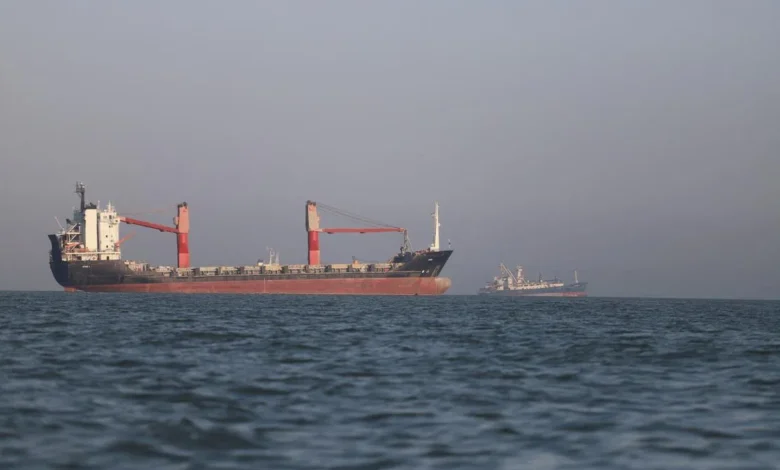
The deal is now in effect, the US official said. It was unclear if the Strait of Hormuz had yet reopened.
Trump signed the document at the palace of Versailles near Paris, where he had dinner with French President Emmanuel Macron, according to a US and a French official.
Under a draft seen by Bloomberg and a version read to reporters by a senior US official on June 17, the strait was to rapidly be reopened, after a months-long closing that sent global energy prices soaring. The text also envisions immediate sanctions waivers for Iranian oil. Talks on nuclear issues, and potential further financial gains for Iran, will follow.
With agreement in effect, attention will turn to the shipping companies that had largely stopped sending their vessels through the strait because of blockades by both the US and Iran. Trump had said earlier the deal would be signed on June 19 to allow for any mines in the strait to be cleared away.
Back in Washington, the deal has prompted unusually strident criticism from some of the president’s allies in Washington who had cheered his military campaign in Iran.
“History teaches us giving billions of dollars to theocratic lunatics who want to murder us is not a good idea,” said Senator Ted Cruz, a Texas Republican.
Even Senator Lindsey Graham, one of Trump’s closest allies on Capitol Hill, said the memorandum is not so much a deal as a framework of how to get a deal.
While he praised Trump for trying to get an agreement, Graham, a South Carolina Republican, allowed there were “parts of it I don’t like” while raising doubts that the president will ever be able to get a firm agreement with Iran over their nuclear program.
With Gulf energy supplies dwindling during the three-month conflict, and economic strains building around the world, Trump signalled the risk of a major economic crisis played a key role in his decision to call off the war he started in February.
Trump, in France where he attended a summit of the Group of Seven advanced economies, said military escalation “could have caused an international depression.”
Trump also defended the exclusion from the deal of Iran’s ballistic missile program, which was cited by Israeli officials and his own Secretary of State Marco Rubio as justifications for the war.
On June 17, the president said the missiles would be discussed along with Iran’s nuclear program during subsequent talks, though Iran will “have to have some because other people have some.” Rubio has previously argued that Iran’s missiles and drones could create a shield for the country to develop nuclear weapons.
Trump also defended the US$300 billion (S$384 billion) development programme for Iran that’s envisaged in the MOU, reiterating that there’d be no US government cash in it, and Iran will only get to benefit if it “behaves”. He added US forces would hit Iran again if its leaders didn’t adhere to the deal.
But Trump did indicate that he’s ready to release the billions in Iranian assets frozen over the years by the US, something he’s ruled out in the past – arguing now that it’ll be bad for the dollar if he doesn’t. “At a certain point in time I guess we’ll have to give it back,” he said. “If we didn’t give it back, nobody would ever invest in the dollar again.”
The preliminary accord has brought relief to world energy markets, with Brent crude plunging below US$80 a barrel this week, though it pared the decline slightly on Wednesday.
At the same time, the MOU will leave most of the thorniest disputes – such as the one over Iran’s stockpiles of highly enriched uranium – to a 60-day period of future talks. On Wednesday, Trump told reporters in France he didn’t see 60 days as a “hard” deadline “just as long as they’re behaving.”
Those negotiations will likely be tense as Trump comes under increasing pressure from GOP allies who say he’s conceding too much and have argued US forces should “finish the job.”
“Iran is on its back heel right now, weaker than it’s ever been before,” Mike Pence, Trump’s first term vice president, told Bloomberg Government. “My concerns about the MOU, now that we’ve seen it, have to do with the fact that there’s no mention of verifiably dismantling the nuclear weapons program. It only reiterates the same promise that Iran has made in years past about not having a nuclear program.”
The deal presents political risks for Trump, who had claimed for years that a 2015 accord negotiated with Iran during President Barack Obama’s administration was the “worst deal in history” and amounted to a massive financial giveaway to Tehran. Trump scrapped that agreement in 2018 and promised something far better.
But as more details emerged about the scope of the deal, some traditional GOP lawmakers were harshly critical, suggesting the war against Iran wasn’t worth it.
“Before the war, the strait was open, Iran was being crushed by sanctions, and 13 service members were still alive,” Senator Bill Cassidy of Louisiana wrote on social media.
“Now, 13 Americans are dead, families have paid billions at the pump, sanctions will be lifted, and the bombing has stopped,” Cassidy said. “This is the worst foreign policy blunder in decades.”
Other Republicans urged additional pressure on Iran. “We should tighten the thumbscrews if we want to get the sort of concessions required to secure or remove the nuclear material,” Republican Senator Todd Young of Indiana said on June 17.
The MOU is scheduled to be formally signed by Vice-President J.D. Vance and Iranian Parliament Speaker Mohammad Bagher Ghalibaf in the Swiss town of Bürgenstock, a mountain resort overlooking Lake Lucerne.
Trump and Israeli Prime Minister Benjamin Netanyahu began the war by bombing Iran on Feb. 28, arguing it was necessary to stop the Islamic Republic building a nuclear weapon.
But the war has fallen short of its initial aims. While their forces battered Iran’s military and economy, the Islamic Republic is still standing, despite Trump saying the Iranian people would be able to “take over” their government.
Tehran has also shown it can still menace the region with drones and missiles and put pressure on the White House to strike a deal by effectively closing the Strait of Hormuz. The rise in prices in the US hit the standing of Trump and his Republican Party before November’s midterm elections.
At its core, the interim deal “trades the reopening of the Strait Hormuz for economic relief,” said Bloomberg Economics analysts including Dina Esfandiary and Ziad Daoud. “But the exchange is uneven: Tehran’s gains will be plenty and new. Washington will just recover some benefits that existed before the war began in February.” BLOOMBERG