US-Iran War Live Updates: IRGC claims retaliatory strikes on US sites in Gulf, warns of 'broader response'

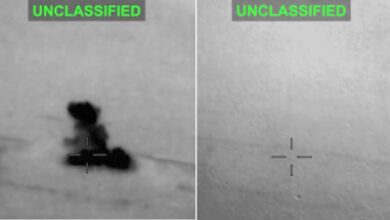
Iran’s Islamic Revolutionary Guard Corps (IRGC) has claimed responsibility for retaliatory attacks on US military positions in the Gulf and warned that any new American strikes would trigger a much broader military response. Senior Iranian officials have accused Washington of violating the ceasefire agreement and undermining ongoing diplomatic efforts, while insisting that Iran retains the capability to defend itself and respond forcefully to any aggression.
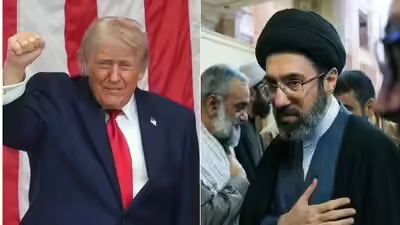
The White House has defended the strikes as a necessary response to protect international shipping and maintain freedom of navigation. Vice President JD Vance said the United States had honoured the ceasefire but warned that “Violence will be met with violence” if Iran continued military action. President Donald Trump has also claimed that recent US and Israeli operations have severely degraded Iran’s military capabilities, although Tehran has strongly rejected those assertions.

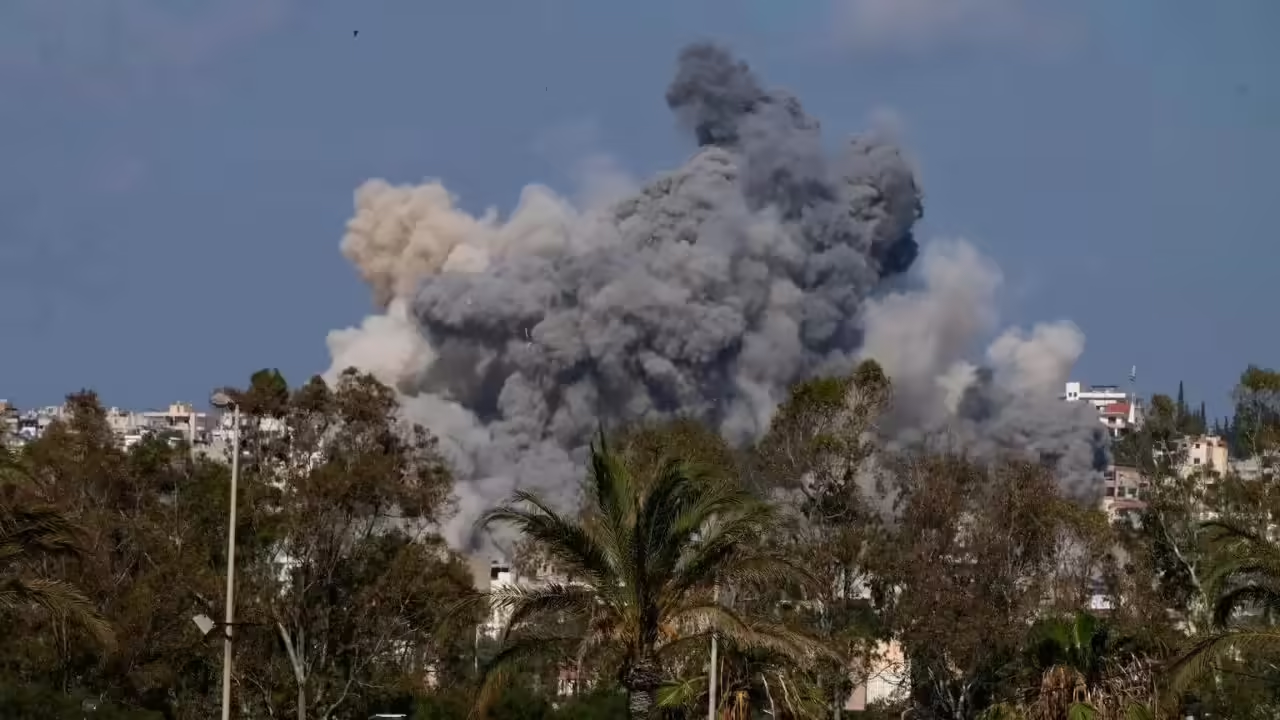
Alongside the renewed military tensions, diplomacy has achieved a significant breakthrough in neighbouring Lebanon. The United States, Israel and Lebanon have signed a trilateral framework agreement intended to create conditions for a lasting peace after months of conflict involving Hezbollah and Israeli forces. The agreement outlines a phased process under which Lebanese Armed Forces will gradually assume control over southern Lebanon after the verified disarmament of Hezbollah and other armed groups, allowing Israeli forces to progressively redeploy.
Israeli Prime Minister Benjamin Netanyahu has made it clear that Israeli troops will remain in southern Lebanon until Hezbollah is disarmed, describing the agreement as a strategic success for Israel. US Secretary of State Marco Rubio has called the accord the first step toward a broader peace process, while Lebanese leaders have welcomed it as an opportunity to restore full state sovereignty and begin reconstruction.
Hezbollah, however, has rejected the agreement, accusing the Lebanese government of making concessions that favour Israel. The group’s criticism underscores the challenges that lie ahead in implementing the framework.
The region is also grappling with humanitarian concerns. The United Nations has welcomed the Israel-Lebanon agreement as a rare opportunity for de-escalation, while India continues efforts to repatriate victims of the Ras Laffan industrial accident in Qatar. With diplomacy and military action unfolding simultaneously, global attention remains focused on whether the ceasefire between Washington and Tehran can hold and whether the Lebanon framework can deliver lasting stability.