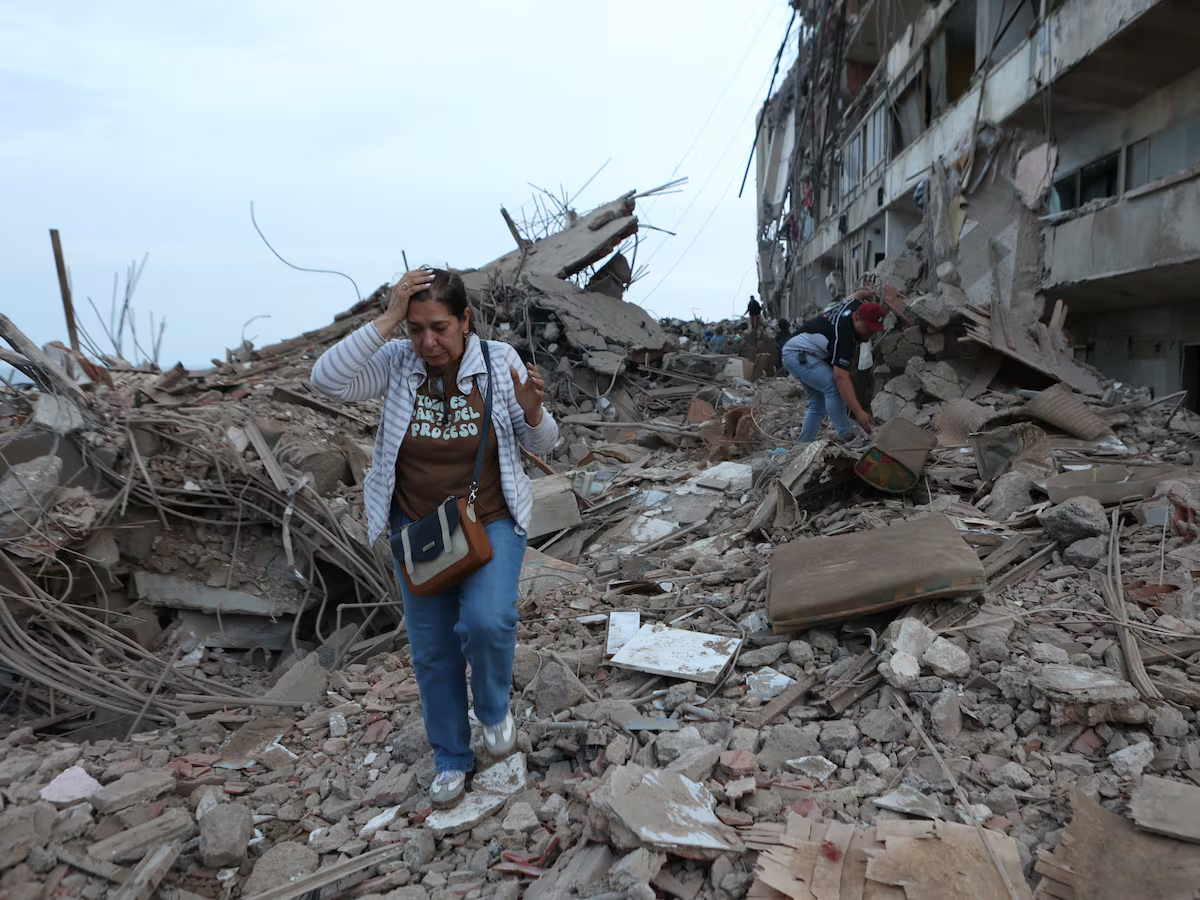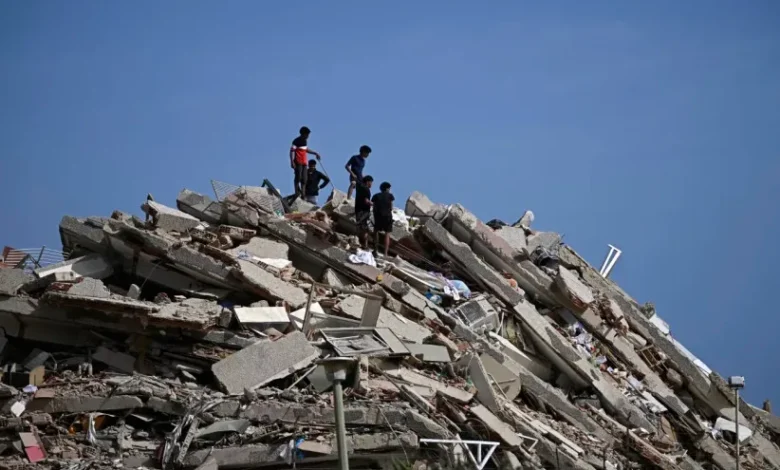
Over 188 people have been reported dead and as many as 41,000 are missing following the two earthquakes that struck Venezuela on Wednesday, according to government and USGS counts.
A magnitude 7.2 earthquake struck the south American country around 160 km (100 miles) west of Caracas, and less than a minute one with a magnitude of 7.5 followed, according to the US Geological Survey (USGS), which estimated total deaths to be in the thousands.
Hundreds of people in Venezuela were trapped under rubble and many more still unaccounted for on Thursday after two powerful earthquakes wreaked havoc in and around the capital Caracas, setting off powerful aftershocks and leaving thousands homeless.
The disaster struck a country already grappling with years of economic turmoil that had left much of its infrastructure fragile, complicating rescue efforts and posing a crucial test for the country’s interim government, which welcomed promises of aid from across the international community.
Jorge Rodriguez, who heads Venezuela’s national assembly and is the brother of interim President Delcy Rodriguez, said on Thursday afternoon that at least 188 people had been confirmed dead and 200 were trapped.
He said at least 1,520 people had been hospitalized and 250 buildings were damaged or destroyed, leaving nearly 3,000 families homeless.
‘Disaster zone’
The worst-affected area, La Guaira state, near Caracas, “has become a disaster zone,” acting President Rodriguez said, adding that her government was working with businesses to deploy heavy machinery to accelerate rescue efforts. Electricity in the state was scarce on Thursday.
Caracas’ main airport in La Guaira was closed on Thursday after suffering damage. Witnesses’ footage during the earthquakes showed scenes of panic as ceilings came down.
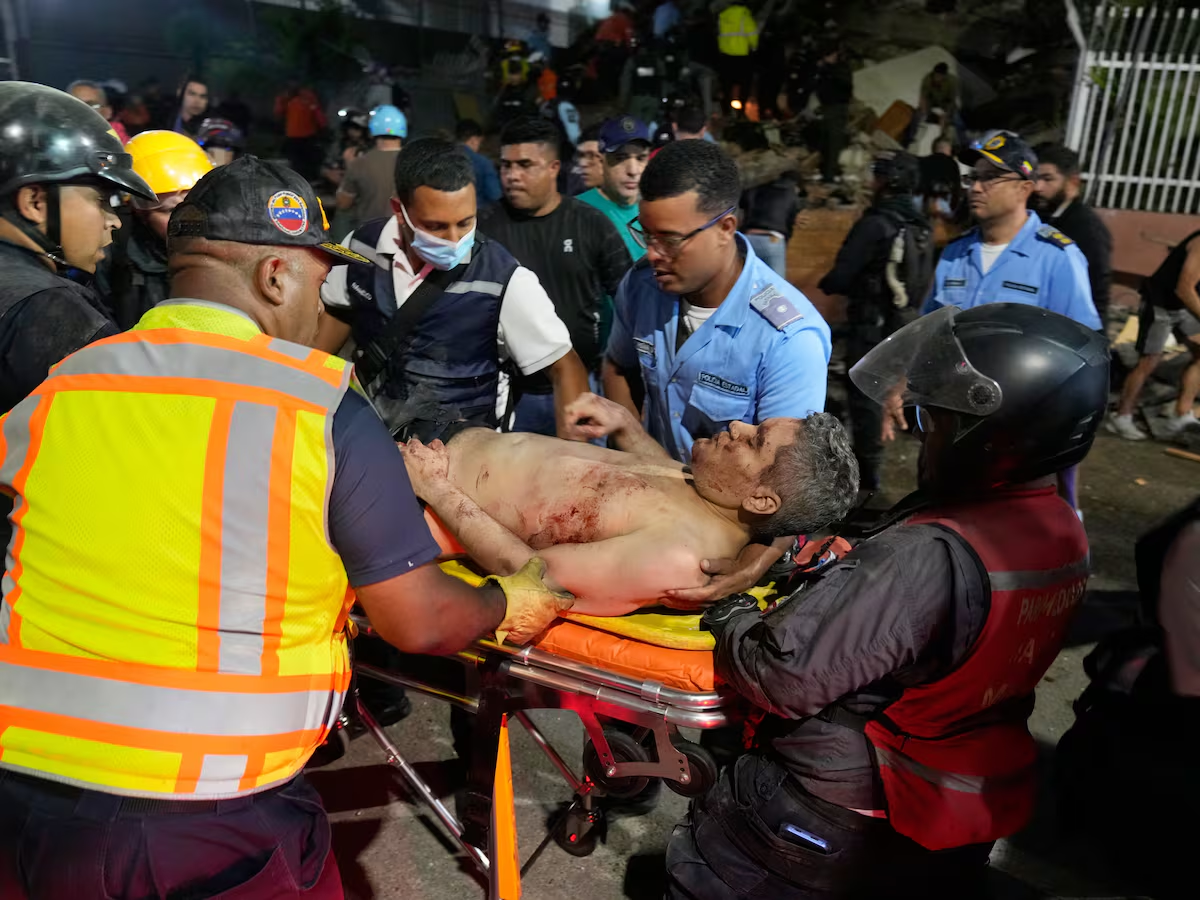
On-site footage Wednesday and Thursday showed survivors and emergency services searching for trapped people, and survivors being taken away on stretchers. In others, residents decried a lack of help.
La Guaira resident Yamileth Jimenez said her 19-year-old son was trapped in the rubble of their seven-story apartment building.
“He’s under the slabs and there’s no machinery to get him out,” said Jimenez, distraught after her father had died just three days earlier.
Rescue workers were scarce in the state’s eponymous capital, where volunteers were digging with their bare hands.
“We lost everything. We have no food or medicines … We hope help arrives quickly,” said Pedro Perez, 64, the owner of an upholstery workshop. He said he lost his home and business and had been forced out onto the streets with his wife and children.
Residents rush outside
Many Venezuelans were at home when the quakes struck during a public holiday. Residents fled shaking buildings and poured into the streets as structures collapsed across Caracas and nearby coastal areas.
“When we went downstairs, the scene was like a horror movie,” said Caracas resident Maria Alejandra, who did not give her surname.
Houses collapsed near the quake’s epicenter in Morón, a small seaside town in the state of Carabobo, where there was no water or electricity. Three children were among at least eight killed in the area, Mayor Emily Riera told Reuters.
Some 200 families who live in a damaged residential complex in Morón were removing what personal possessions they could reach, including mattresses, televisions and washing machines.
Some said they were going to stay with relatives. Others were waiting for promised government shelters.
Denis Sequera, 47, said her 5-year-old granddaughter helped lead her 79-year-old father to safety as the shaking began, while she helped her 70-year-old mother.
“She kept telling my dad, ‘Grandpa, get out, put your hands over your head,’ and she led him into the yard,” Sequera said. “We couldn’t go back inside. We slept outside and are now waiting for help.”
The USGS, using predictive modeling, estimated the death toll would most likely run into the thousands, with a substantial probability of exceeding 10,000.
A website set up to track missing people and shared by leaders from the country’s opposition listed more than 41,000 people as unaccounted for just after 3:30 p.m local time. Reuters could not verify the reports.
The 7.5-magnitude quake was Venezuela’s strongest since 1900. The country lies on the boundary between the Caribbean and South American plates and has suffered devastating earthquakes, including one that killed an estimated 30,000 people in 1812.
“This earthquake was horrible, even worse than the one in 1967,” said Maria Romero, an 80-year-old pensioner in southern Caracas, referring to a magnitude 6.3 quake that the USGS said killed 240 people.
International solidarity and aid
Leaders from across the political spectrum expressed solidarity with Venezuela, a shift from the international polarization that has surrounded the country in recent years.
Rodriguez said international rescue teams were expected soon and thanked leaders including US President Donald Trump and Russian President Vladimir Putin.
Trump said the US was “ready, willing and able to help” and that the US would “be there for our new and great friends,” while US Secretary of State Marco Rubio said rescue teams were being deployed and the Pentagon would send assets to Caracas’ badly damaged airport.
UN aid chief Tom Fletcher said the organization was coordinating the rapid deployment of international rescue teams, adding that “a massive collective effort” would be needed in a country where, even before the quake, 8 million people needed humanitarian aid.
The UN’s Venezuela human rights mission urged the government to lift restrictions on some social media, saying it was a “matter of life and death.”
Pope Leo has sent €100,000 ($114,000) to Venezuela for quake relief from the Vatican’s charity fund, Vatican media reported.
Chef Jose Andres, founder of the humanitarian meal provider World Central Kitchen, said on Thursday his team had begun distributing meals in Caracas. He also said on X that his Longer Tables Fund will immediately contribute $1 million to help Venezuela.
Other countries, including El Salvador, Spain, Italy, and Mexico said they had sent or would send aid or rescue workers.
Israel is preparing for the “possibility of deploying an Israeli humanitarian aid delegation” to the area, the Foreign Affairs Ministry said in a statement Thursday.
Oil infrastructure spared
At least eight hospitals had been affected, Jorge Rodriguez said. The Venezuelan Red Cross said its headquarters had been critically damaged but it sent rescue teams to the worst-affected areas. The French embassy was also badly hit.
Near the epicenter, workers were restarting the Morón Petrochemical Complex, Venezuela’s second-largest in operation, a local firefighter chief said, after damage was assessed. The small El Palito refinery, meanwhile, remained partially out of service due to power outages.
Other oil infrastructure appeared to be unaffected.
Foreign oil companies operating in Venezuela, including Chevron CVX.N, the main foreign partner of the country’s state-run oil company PDVSA, as well as Italy’s Eni ENI.MI and Spain’s Repsol REP.MC, said all personnel had been accounted for.
Chevron said the company remained operational while Eni and Repsol said the quake had not affected their operations.
Shell, which is evaluating developing gas fields in Venezuela, said all its employees were unhurt.