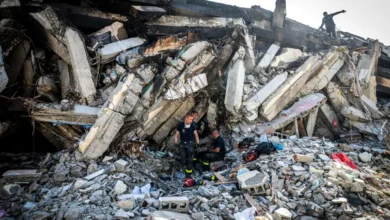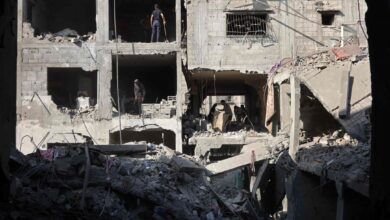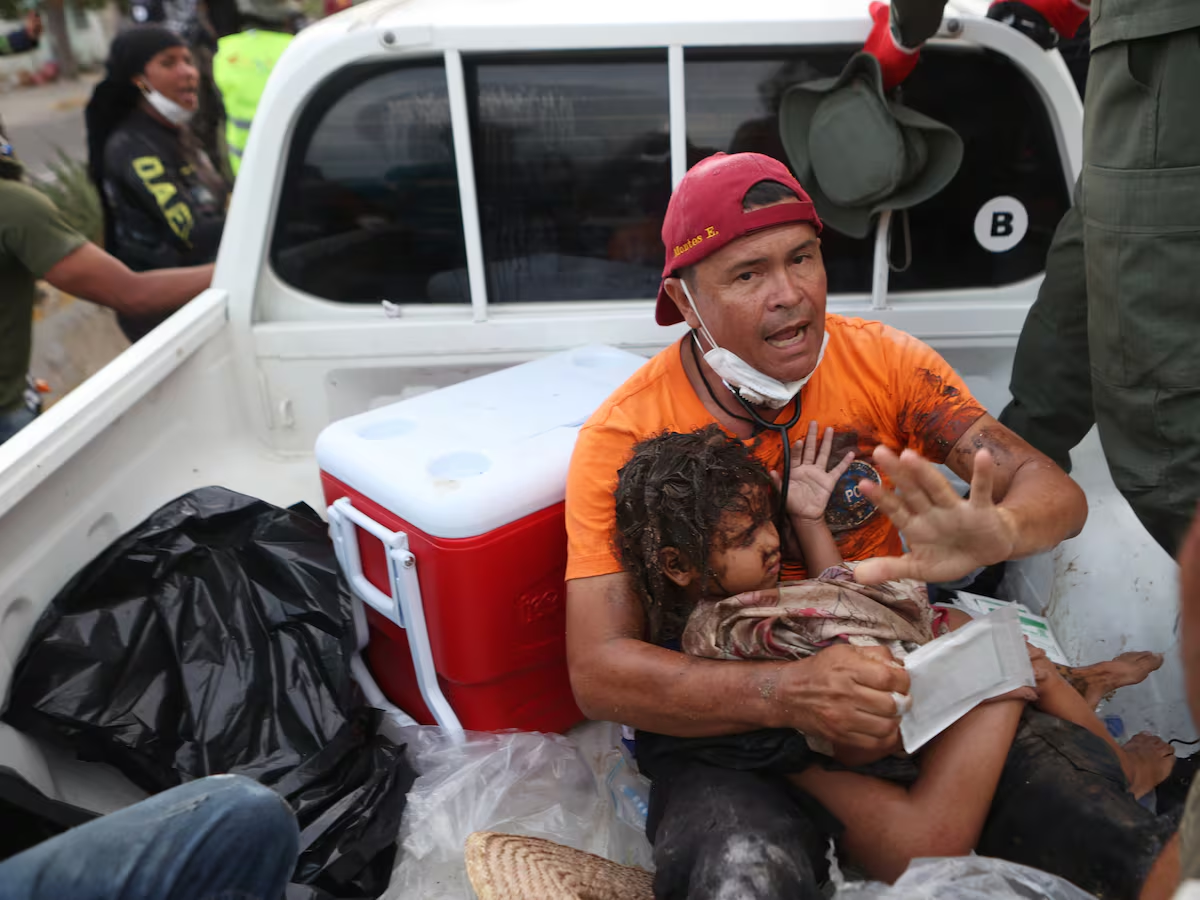
LA GUAIRA, Venezuela (AP) — With the window for finding survivors shrinking fast, Venezuelans combed Monday through more ruins of buildings toppled by last week’s powerful back-to-back earthquakes, and a 4.6 magnitude aftershock rumbled through the disaster zone in the northern state of La Guaira.
Relief organizations say the first 72 hours after a natural disaster is the most crucial time period for rescues, though survival can be extended if people have access to food and water. Five days after the twin quakes struck northern Venezuela, attention turned to the humanitarian crisis that was taking shape in devastated regions.
The death toll stood at more than 1,700 people, according to the government.

Major questions loomed about whether the cash-strapped government under acting President Delcy Rodríguez — who came to power in January after the Trump administration seized former President Nicolás Maduro — will be able to coordinate the effort needed to care for thousands of people who have been left homeless.
Facing criticism that authorities have done too little, too slowly, the government has promoted its rescue efforts on social and state-run media. On Monday, it shared footage of Rodríguez inspecting a school-turned-shelter for displaced people in the hard-hit northern town of Catia La Mar and survivors being lifted out of the ruins to applause.
But such bright spots are rare at the quake’s epicenter, where families keep vigil at search sites.
“We have to stay strong, even without food, without sleep,” said Ana Rada, watching as civil defense workers looked for her brother. “Until I see the body, I still have hope.”
Aftershock rattles rescuers
Following a weekend of smaller aftershocks, Monday’s temblor struck near the epicenter of last week’s quakes — 27 kilometers (17 miles) north of Caraballeda on Venezuela’s Caribbean coast — and measured 4.6 magnitude, according to the United States Geological Survey. Colombia’s geological survey put the magnitude at 5.1.
Jorge Rodríguez, the leader of the Venezuelan National Assembly, said there were no immediate reports of additional damage, but the aftershock sent residents in the capital of Caracas screaming into the streets.
“Here we are again, back in the street. I don’t know when we’ll have a moment of true peace,” said Concepción Hernández, 51, who evacuated her apartment building in the Chacao municipality of Caracas.
The Caracas Metro said it would temporarily suspend service Monday to inspect infrastructure following the aftershock.
Questions over extent of US help
The disaster has raised expectations for the Trump administration, considering its takeover of Venezuela’s oil industry earlier this year.
In a briefing with reporters, a senior State Department official said 300 first responders sent from the U.S. are working on the ground — alongside dozens of other international rescue teams — and two dozen C-17 military transport planes arrive every day with supplies. Financial support from the U.S. now exceeds $300 million.
The American military is also assisting with some repairs, including damage to the port in La Guaira to enable the arrival of more relief supplies by sea. Another team is helping to manage air traffic after the quakes destroyed part of the control tower at Simón Bolívar International Airport in Caracas, said the official, who spoke on condition of anonymity because he was not authorized to speak publicly.
It seemed unlikely, however, that the Trump administration would grant temporary legal protections to Venezuelans as previous administrations have done for people from disaster-stricken countries already in the U.S. Such action was taken after earthquakes in 2010 in Haiti and 2001 in El Salvador.
Venezuelans have been a major focus of the Trump administration’s immigration crackdown, with officials revoking temporary legal protections for hundreds of thousands of Venezuelans and stepping up deportation flights.
Rescuers included a miner deported from the US
Among the rescuers digging through the rubble Monday in La Guaira was miner Jean Sosa, who said he was deported from the U.S. in January over a missed immigration court hearing and returned to Caracas last month, dazed by an odyssey that he said began in shackles at an Arizona immigration detention center. The journey involved traveling by bus through five countries after immigration agents left him in southern Mexico without his passport, phone or wallet.
Since arriving Wednesday in La Guaira to visit family and friends, Sosa has raced to pull people from the rubble in the absence of national rescue teams.
“I’m not involved in politics, but I believe many people could have been saved if there had been equipment and support from top authorities from the very beginning,” he told The Associated Press, wearing a helmet and a black T-shirt splotched with dust in the port city where he said he had already rescued 20 people alive.
Those rescues heartened him, he said, and gave him hope for more despite the lack of supplies. “We’re working without gloves, without equipment, borrowing supplies, improvising bandages and whatever else we can.”
Government and UN offer vastly different numbers of people affected
The full scale of the damage remained unclear. Jorge Rodríguez, who is the brother of the acting president, said that as of Monday, a total of 15,866 people had been affected, while the number of damaged or collapsed buildings had reached 855.
A preliminary assessment by NASA estimated that the earthquake damaged or destroyed 58,870 buildings. The assessment relied on radar imagery from the European Space Agency’s Sentinel-1 satellites, which can detect changes to infrastructure.
The United Nations has said that up to 6.8 million of Venezuela’s nearly 30 million residents may be affected, which could mean being displaced or losing access to essential services such as electricity and water.
Because of the chaos and poor cellphone service, many Venezuelans have turned to non-governmental digital databases to report their loved ones as missing. More than 50,000 people were reported missing on one such database, though it is unclear how many have been found.
___
DeBre reported from Buenos Aires, Argentina. Associated Press writers Jorge Rueda and Regina Garcia Cano in Caracas, Venezuela, and Gabriela Aoun Angueira in Tijuana, Mexico, contributed to this report.
Copyright 2026 The Associated Press. All rights reserved. This material may not be published, broadcast, rewritten or redistributed without permission.