0
••• Donate Before Emergency, Permanent Secretary Urges Residents
••• LSBTS Calls For Increased Voluntary Donations To Meet Rising Blood Needs
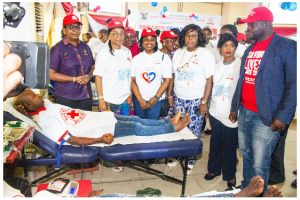
Lagos – As blood demand surges, Lagos yesterday honoured voluntary blood donors as lifesaving heroes, urging eligible residents to make regular blood donation a civic duty as thousands of patients depend on timely donations for survival.
The call was made during the commemoration of the 2026 World Blood Donor Day (WBDD) held at the Adeyemi Bero Auditorium, Alausa Secretariat, Ikeja, with the theme, “One Drop of Humanity: Give Blood, Save Lives.” The event brought together government officials, development partners, healthcare professionals, humanitarian organisations and regular blood donors to celebrate individuals whose donations sustain the state’s healthcare system.
Delivering the keynote address, the Permanent Secretary, Lagos State Ministry of Health, Dr. Dayo Lajide, described blood donors as a special group of people whose generosity provides hope to patients facing life-threatening situations. “This year’s theme reminds us that blood donation is much more than a medical procedure. It is an act of compassion, solidarity and shared humanity,” she said.
According to her, every unit of blood donated represents hope for mothers experiencing severe bleeding during childbirth, children living with sickle cell disease, accident victims and patients undergoing cancer treatment. She noted that emergencies occur unexpectedly and survival often depends on blood that had been donated before such crises arise. “The difference between life and death is often a single unit of blood donated by someone who may never meet the person whose life they have saved,” she stated.
Dr. Lajide stressed that Lagos, as Africa’s leading megacity and one of the fastest-growing urban centres globally, faces enormous pressure on its blood supply due to the influx of people seeking healthcare services from across Nigeria. “Our hospitals cater not only to Lagos residents but also to patients from neighbouring states and other parts of the country. Therefore, Lagos cannot plan solely for its estimated population of over 30 million people,” she said.
She challenged eligible residents not to wait until a relative requires blood before deciding to donate. The Permanent Secretary also advocated sustained investment in blood services, including reliable electricity, modern testing technologies, storage infrastructure, transportation systems, digital innovations and workforce development. “Blood is a public good. Access to safe blood should never depend on a patient’s ability to pay,” she declared.
Speaking with journalists after the event, Dr. Lajide described voluntary blood donors as individuals “cut from a different cloth” because they repeatedly donate blood for people they do not know. “They understand that a woman may need blood during childbirth, a child with sickle cell disease may require a transfusion, or a road traffic accident victim may need urgent support. They donate in advance so that blood is available whenever needed,” she said.
She dismissed fears surrounding blood donation, assuring the public that the body naturally replenishes donated blood and that healthy individuals can safely donate three or four times annually. “We particularly encourage young people aged 18 years and above who meet the required health criteria to become regular voluntary blood donors and help save lives,” she added.
Earlier in her opening remarks, the Executive Secretary of the Lagos State Blood Transfusion Service, Dr. Bodunrin Osikomaiya, said World Blood Donor Day was an opportunity to honour millions of voluntary unpaid blood donors whose contributions sustain healthcare systems globally.
She noted that the 2026 theme underscored the values of solidarity and compassion embedded in blood donation. “From emergencies and childbirth complications to surgeries, cancer treatments and lifelong care for conditions such as sickle cell disorder, your gift is more than blood; it is a lifeline,” she said.
Dr. Osikomaiya disclosed that the World Health Organization had called for sustained blood donation and increased public awareness to ensure universal access to safe blood. “We appreciate one-time donors, but it is regular, sustained blood donation that truly saves lives,” she emphasised.
The Executive Secretary commended healthcare workers involved in the blood transfusion chain and appealed to first-time participants to make voluntary blood donation a lifelong commitment. “To those who have not yet donated blood, today is your invitation. Let today be your first donation,” she urged.
Representing the Permanent Secretary, Public Service Office, Mrs. Sunkanmi Oyegbola, Director of Service Matters, Mrs. Ololade Ashimi, admitted that she once believed blood donation could be harmful until awareness campaigns by the Lagos State Blood Transfusion Service changed her perception. She praised the Service for educating the public and thanked donors for their sacrifices. “Your selfless commitment to saving lives and supporting humanity is highly commendable,” she said.
Also speaking, Lion Olawale Afolabi of Lions Clubs International reaffirmed the organisation’s support for blood donation initiatives. He described blood donors as individuals rendering invaluable service to humanity. “Blood is life, and every individual who donates blood is making a valuable contribution to society,” he stated.
Marketing Manager of Fidson Healthcare Plc, Anuoluwapo Adenuga, observed that the nation’s blood demand still exceeds supply, necessitating stronger advocacy and partnerships. He urged Nigerians to embrace voluntary blood donation, saying, “A single unit of blood donated can make the difference between life and death for someone, somewhere.”
Similarly, the Divisional Coordinator of the Nigerian Red Cross Society, Kosofe Division, Benjamin Aghoro, who identified himself as one of Lagos State’s highest voluntary blood donors, testified to the safety of regular blood donation. “As you can see, I remain healthy, energetic and active. Donating blood regularly helps to save lives,” he said.
Regular donor, Shogo Oloshunde, who announced that he was making his 57th donation after previously donating 56 times, challenged members of the public to emulate regular donors. “When emergencies arise, it is not blood-building medications that save lives. What saves lives is blood that has already been donated, tested and made available,” he said.
Another donor, Imana Oluwaseun of the KB Club, described blood donation as a lifestyle that should accompany healthy living. “We go to the gym and promote wellness. In the same way, voluntary blood donation should become part of our commitment to community service,” he noted.
Community and patient representative, Osarenkhoe Chima-Nwogwugwu, recounted how advocacy efforts inspired her entire family to become blood donors. The 57-year-old mother of five urged Nigerians not to be discouraged by myths and misinformation. “I encouraged each of my daughters to begin donating blood once they turned 18 because every donation has the potential to save a life,” she said.
The event featured donor recognition, testimonies from regular donors and a renewed call for Lagos residents to make voluntary blood donation a way of life, reinforcing the message that humanity is strongest when people give of themselves to save others.