0
LAGOS – In a political environment often defined by visibility, slogans and the competition for attention, acts of generosity are frequently announced before they are experienced.
Public life has increasingly become a theatre where giving is documented, amplified and translated into political value.
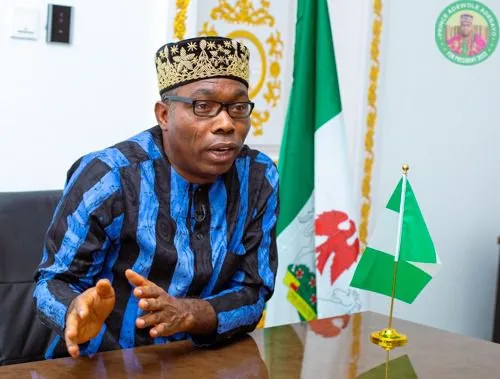
Yet within this setting, there remain individuals whose approach to service follows a different tradition, one that prioritises impact over applause and people over publicity. Among them is Prince Adewole Ebenezer Adebayo.

For many who observe him beyond the public stage, his philanthropy is not framed as occasional charity or a structured public relations exercise.
Rather, it is described as a sustained philosophy rooted in responsibility, dignity and the belief that society only progresses when ordinary people are given real opportunities to rise.
That belief also runs through his reflections on governance and national life. At different points, Adebayo has argued that leadership must begin with restoring confidence among citizens who feel disconnected from institutions and uncertain about the future.
He once said: “We believed we had to go out and restore hope to the people — to ensure that Nigerians did not lose faith in their country at a time many felt abandoned and unprotected, almost like stateless people in their own land.
People were beginning to question whether anyone still cared, whether the government still remembered them. But our message was simple: Nigeria remains a project worth believing in.
It still holds great promise and remains one of the greatest places anyone can call home. The failures of government must never be mistaken for the failure of the nation itself.”
From this standpoint, his interventions, according to accounts and beneficiary testimonies, extend beyond charity. They are described as attempts to preserve confidence where institutions struggle, spanning education, youth development, enterprise support and humanitarian assistance.
What many observers emphasise is not only the reach of these efforts, but their character. They are reportedly carried out quietly.
Beneficiaries are said to be supported without public ceremonies. Students receive assistance without being turned into campaign material. Families are helped without publicity. Young people are encouraged without repeated references to the source of support.
That discretion has become a defining feature of his humanitarian identity.
Education remains one of the most consistent areas of focus in his philanthropic engagements.
Across several universities in Nigeria, hundreds of students are said to have received assistance covering tuition, accommodation, registration fees, books and other academic needs.
Institutions listed among beneficiaries include Obafemi Awolowo University, University of Ibadan, University of Lagos, Lagos State University, Federal University of Technology Akure, Ekiti State University, Federal University Oye Ekiti, Tai Solarin University of Education, Ladoke Akintola University of Technology, Adeyemi University of Education, Adekunle Ajasin University, Adamawa State University, Abia State University, Delta State University, Ambrose Alli University and others.
Collectively, the interventions are reported to have reached thousands of students across higher institutions.
Education observers note that such interventions often extend beyond the individual recipient.
A student kept in school may translate into a strengthened household, a more stable community and a preserved pathway to future leadership.
For Adebayo, education is therefore framed not simply as charity, but as a conviction that talent should not be constrained by poverty.
Beyond the classroom, his humanitarian footprint is also said to extend to small businesses, traders, artisans and young entrepreneurs. Reports indicate empowerment initiatives reaching more than one thousand people through various forms of direct assistance.
Unlike structured empowerment programmes that rely heavily on publicity, these interventions are described as practical and personal in execution.
For a trader, it may mean returning to business. For a student, continued access to education. For a struggling household, stability. For a young person searching for direction, a fresh start.
At the centre of this approach is a simple idea: poverty is not only about lack of income, but also lack of options. Expanding those options becomes a form of development.
This thinking aligns with another of his public reflections. He has said: “We also want Nigerians to know that politics does not have to be dirty. A politician can still be decent, principled and committed to the common good. Public service can still reflect family values, faith and humanity.”
Those familiar with his background sometimes draw comparisons in outlook with the late Moshood Kashimawo Olawale Abiola, widely remembered for philanthropy and generosity.
The comparison is less about biography and more about disposition, particularly a consistent willingness to support others quietly.
Accounts from associates describe educational assistance offered unexpectedly, professional training opportunities, support for small businesses and efforts aimed at creating pathways for younger Nigerians.
There are also references to employment generation across sectors including media, agriculture, legal services and real estate.
What stands out in these accounts is not only scale, but temperament — described as accessible, simple and grounded in presence rather than performance.
The broader implication of this style of engagement lies in how leadership is understood.
Leadership is often framed in terms of office, authority and policy. Yet it can also be seen in the willingness to carry responsibility before formal power arrives.
Exposure to educational hardship may shape policy thinking. Engagement with traders may influence economic judgment. Direct contact with vulnerable families may deepen sensitivity in governance.
This does not replace public policy, but it can reveal underlying values and priorities.
Adebayo frames this within a wider political reflection: “Our hope is to transform the politics that produced our present challenges… Changing one president alone will not solve Nigeria’s problems; changing the political culture will. And to change the system, we must first build better political parties and raise the expectations of the people. When citizens raise their standards, politics will rise with them.”
Supporters argue that his approach reflects a broader philosophy centred on people-driven development, focused on education, empowerment, dignity and expanded opportunity.
Whether viewed as humanitarian engagement, social investment or personal conviction, the pattern presented is one of consistency.
Some forms of leadership, it appears, do not announce themselves.