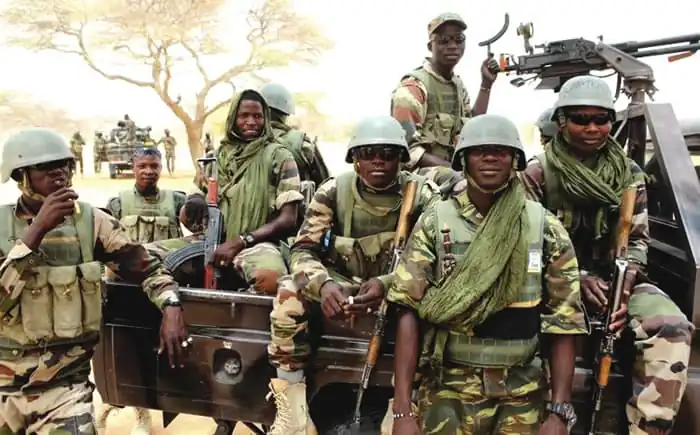
A civil society organisation, the Centre for Security and Peace Advancement (CSPA), has urged Nigerians to appreciate the complex realities confronting security forces in rescue operations involving kidnap victims held in remote forests across the country.
Speaking on behalf of the organisation, its Executive Director, Abdul Ganiyu, said public demands for the Armed Forces of Nigeria to immediately launch large-scale assaults on every identified kidnappers’ hideout often fail to consider the grave risks such actions pose to innocent captives.

According to him, military operations are guided by the overriding responsibility to protect lives, including those of hostages who may be used as human shields by criminal elements. He noted that kidnappers frequently disperse victims across multiple locations within dense forests, making direct assaults extremely dangerous.
“The public must understand that rescue missions are not as simple as sending troops into a forest and engaging criminals. In many cases, victims are surrounded by heavily armed kidnappers who may kill hostages at the slightest indication of an approaching military force,” Ganiyu stated.
He explained that security agencies often rely on painstaking intelligence gathering, surveillance, negotiations, and carefully coordinated operations to create opportunities for successful rescues while minimising casualties among victims and security personnel.
The CSO further noted that forests used by kidnappers are often vast, rugged, and difficult to navigate, with criminals possessing extensive knowledge of the terrain.
Such conditions require detailed planning to avoid ambushes, friendly-fire incidents, and unintended harm to civilians.
Ganiyu said experiences from counter-terrorism and anti-banditry operations around the world have shown that rushed military offensives can sometimes trigger mass killings of hostages, a situation security commanders are determined to avoid.
He added that while Nigerians understandably desire swift action, operational decisions must be guided by intelligence, professionalism, and the safety of those being held captive rather than public pressure or emotional reactions.
The organisation commended members of the Armed Forces, intelligence agencies, and other security services for their continued efforts in securing the release of abducted persons under difficult and often life-threatening circumstances.
The CSO also called on communities to support security agencies by providing credible intelligence capable of helping authorities identify criminal hideouts, movement patterns, and logistics networks.
“Every rescue operation must balance speed with caution. The ultimate objective is not merely to neutralise criminals but to ensure that innocent Nigerians return home alive. This is why security forces must carefully assess every situation before launching kinetic operations,” Ganiyu concluded.