0
More than 10,000 households across the Federal Capital Territory (FCT) have transitioned from firewood and charcoal to liquefied petroleum gas (LPG), marking a significant milestone in Abuja’s campaign to tackle indoor air pollution, improve public health and promote cleaner sources of energy.
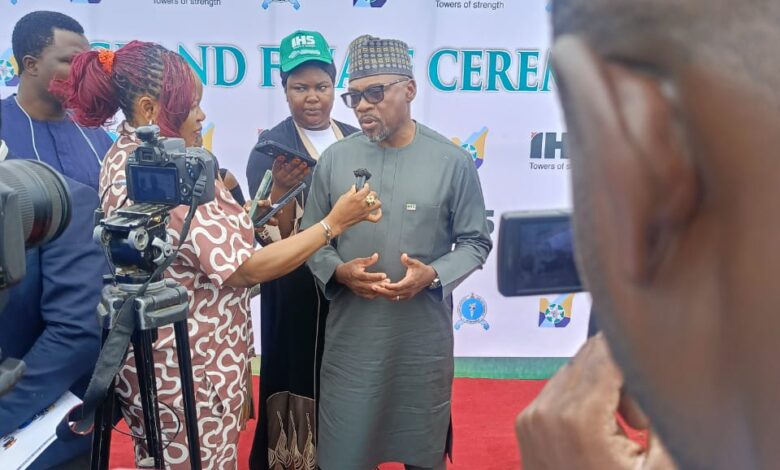
The achievement was announced at the grand finale of the Abuja Breathe Clean Air Initiative, a programme implemented by the Federal Capital Territory Administration (FCTA) in partnership with IHS Nigeria to reduce dependence on traditional cooking fuels that have long been associated with respiratory illnesses and environmental degradation.
Speaking at the event, the Mandate Secretary for Health Services and Environment, Dr. Dolapo Fasawe, said the initiative was conceived after the FCT Administration discovered that many residents, including those living within the Abuja metropolis, still relied on firewood for cooking despite the availability of cleaner alternatives.

According to her, indoor air pollution remains one of the leading but often overlooked public health challenges, particularly for women, children and the elderly who spend longer periods around cooking areas.
“We started this initiative two years ago to address air pollution, especially indoor air pollution. We discovered that a large percentage of Abuja residents, even within the metropolis, still cook with firewood. It is not necessarily because they cannot afford gas, but because many do not understand the harmful effects of using firewood,” she said.
Fasawe explained that smoke from firewood and charcoal contributes to respiratory tract infections, allergies, burns and other health complications, while also accelerating environmental degradation through deforestation and carbon emissions.
She said rather than merely discouraging residents from using firewood, the FCT Administration adopted a practical approach by providing cleaner cooking alternatives.
“This administration believes in being proactive. We cannot ask people to stop cooking with firewood without providing an alternative. That is why the Abuja Breathe Clean Air Initiative was established,” she said.
According to the Mandate Secretary, the partnership with IHS Nigeria has enabled more than 10,000 households to embrace clean cooking technology, significantly improving the health and wellbeing of residents.
“It is heartwarming that we have been able to replace firewood and charcoal in over 10,000 households. The impact goes beyond individual homes; it improves people’s health, productivity and even contributes to the economy of Abuja,” she said.
Fasawe expressed optimism that the initiative would evolve into a sustainable public policy capable of expanding access to clean energy across the territory.
She also challenged the widespread perception that cooking gas is more expensive than firewood, arguing that LPG offers greater value over time.
According to her, while many households spend between ₦1,200 and ₦1,500 daily on firewood, a gas refill costing about ₦4,000 can serve an average family of six for more than a month.
“When you compare the costs, gas is cheaper, healthier, cleaner and more sustainable,” she added.
Also speaking, the Senior Vice President and Chief Corporate Services Officer of IHS Nigeria, Dapo Otunla, said the programme culminated in the distribution of more than 10,000 gas cylinders to beneficiaries across the six area councils of the FCT.
He disclosed that the first 2,000 beneficiaries were automatically enrolled in the company’s Clinic Without Walls Insurance Scheme, giving them access to one year of free healthcare through participating healthcare providers.
“The whole idea is to move people away from cooking with firewood and charcoal, which increases carbon emissions, and encourage them to cook with LPG. That is why we provided over 10,000 gas cylinders,” Otunla said.
To encourage sustained adoption, he explained that beneficiaries also received refill vouchers alongside 3kg LPG cylinders, making it easier for families to transition permanently to cleaner cooking fuel.
“In addition to giving beneficiaries the cylinders, we also provided vouchers for their first refill. When they compare the long-term cost of refilling gas with what they spend on charcoal and firewood, they will realise that LPG is more affordable,” he added.
Otunla said IHS Nigeria would continue to monitor the programme to ensure its sustainability, describing the initiative as part of the company’s commitment to environmental sustainability and community development.
Fasawe noted that feedback from beneficiaries, particularly women and food vendors, indicated that the switch to LPG had increased productivity, reduced cooking time and improved household welfare.
She added that each beneficiary received a gas cylinder, burner and refill voucher to encourage continued use of clean energy.
“We went a step further by providing refill vouchers so people could experience the benefits of cooking with gas firsthand. From the feedback we have received, after the second refill, nobody goes back to firewood,” she said.
The Senior Adviser to the Minister of State for the FCT, Mrs. Majeed Adamu, described indoor air pollution as a silent public health threat that disproportionately affects women and children.
She said the clean cooking initiative would significantly reduce residents’ exposure to harmful smoke while supporting the Federal Government’s broader efforts to improve environmental sustainability and public health.
The Abuja Breathe Clean Air Initiative forms part of the FCT Administration’s wider strategy to promote cleaner energy, reduce carbon emissions and improve the quality of life for residents through practical, community-based interventions.