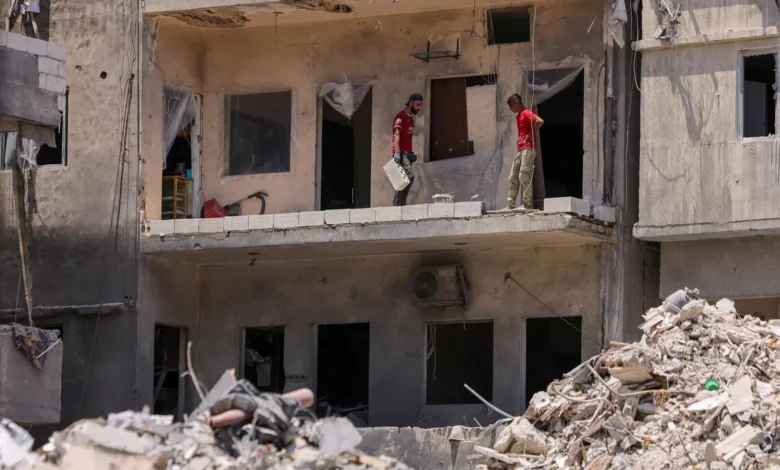
BEIRUT – Amnesty International on July 9 accused Israel of wiping out families in its strikes on Lebanon during its war with Hezbollah, calling for these attacks to be investigated as war crimes.
Hezbollah drew Lebanon into the Middle East war on March 2 by launching rockets at Israel in support of its backer Iran.
Israel responded with major airstrikes and a ground invasion, killing more than 4,300 people according to Lebanese authorities, including more than 250 children.
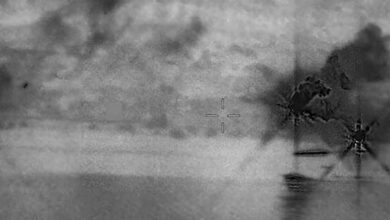
Amnesty analysed three strikes on civilian homes between March 6 and 13, in which 24 civilians were killed, 12 of them children.
The London-based rights group accused Israel of “wiping out families” in those strikes and called for them to be treated as “war crimes”.
The group said it reached out to Israeli authorities, who said that some of the attacks “were carried out against Hezbollah military objectives”, while others were “referred for examination”.
The authorities told Amnesty they were “committed to mitigating harm to civilians during operational activity”.
“Despite follow-up, the Israeli military did not provide specific information regarding the three attacks… including what the targets may have been,” Amnesty added.
Its findings in the investigation were based on interviews with 15 people, including survivors, relatives, paramedics, journalists who visited attack sites and local officials.
“Based on the evidence gathered, in each of these air strikes, Amnesty International has reasonable basis to conclude that Israeli forces violated international humanitarian law, including by failing to distinguish between civilians and military objectives, by carrying out attacks directed against civilians or civilian objects, or by failing to take all feasible precautions to minimise harm to civilians,” the report read.
Kristine Beckerle, Amnesty’s deputy regional director for the Middle East and North Africa, said that “within the space of just a week – the Israeli military obliterated entire families, including a dozen children, in Lebanon, demonstrating a callous disregard for civilian lives”.
“States must impose an immediate comprehensive arms embargo on Israel and use universal and extraterritorial jurisdiction to investigate and prosecute those responsible,” she added.
Israel’s Defence Minister Israel Katz said, in a statement on July 9, that the military’s operations in Lebanon were a response to attacks by Hezbollah.
“The terrorist organisation Hezbollah has attacked Israel twice on its own initiative,” Katz said, without specifying whether he was responding to Amnesty’s report.
“Israel responded with force and, over the past 2½ years, has crushed most of Hezbollah’s capabilities and its leadership,” adding that Israeli forces would remain in their self-declared “security zone” inside Lebanon “as long as necesssary” to protect Israel’s northern communities.
Lebanon and Israel concluded a US-backed framework agreement in June aiming to pave the way for a permanent end to hostilities.
It was preceded by a memorandum of understanding between Iran and the United States to end the broader Middle East conflict, which included a ceasefire in Lebanon.
Despite this, Israel still carries out intermittent strikes on southern Lebanon, some of them deadly. AFP