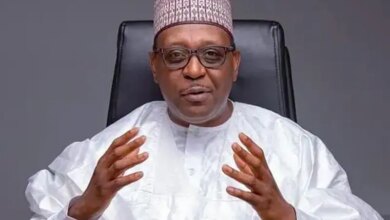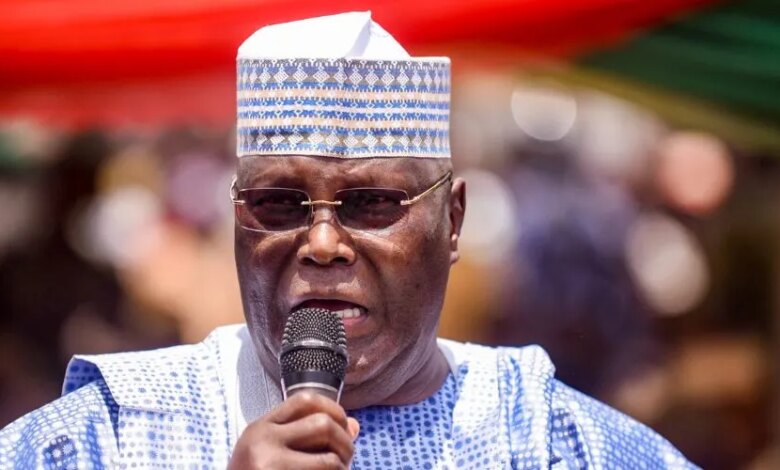
Atiku in a statement issued on Saturday alleged that the IMF report, published on July 1, 2026 and reported by Reuters, showed that the Federal Government failed to capture public expenditure amounting to about two percent of Nigeria’s Gross Domestic Product (GDP) in recent official budgets.
According to him, with Nigeria’s economy valued at about N441.5tn, the figure translates to approximately N8.8tn allegedly spent outside the country’s statutory budget framework.
Atiku described the alleged development as “the most consequential act of fiscal impunity in Nigeria’s recent democratic history,” urging Nigerians, the media, civil society organisations, the National Assembly and other democratic institutions to give the matter urgent attention.
“My attention has been drawn to a deeply troubling report by the International Monetary Fund,” Atiku said.
“I view this revelation with the gravest alarm and call upon all Nigerians, the media, civil society, the National Assembly, and every democratic institution in this country to set aside every distraction and direct their full attention to what is, by any reasonable standard, the most consequential act of fiscal impunity in Nigeria’s recent democratic history.”
The former vice president said the IMF’s findings showed that the discrepancy resulted from large-scale government projects executed outside the official budget process.
“The Tinubu administration is awarding multi-trillion naira contracts, moving massive public capital, and commissioning infrastructure projects entirely beyond the reach of the Auditor-General, the nation’s procurement laws, and the legitimate oversight of the National Assembly,” he alleged.
“It is a parallel fiscal universe, one governed by executive whim, shielded from the constitutional accountability that the Nigerian people are owed.”
Atiku argued that the alleged practice reflected what he described as a continuation of a fiscal model previously associated with President Bola Tinubu’s administration in Lagos State.
“What the IMF has now documented at the federal level is that same Lagos playbook, replicated at national scale and with national consequences. The man who perfected the art of the off-budget economy in Lagos has brought that ‘Beta’ form to Abuja, and the price is being paid by 220 million Nigerians.”
Beyond the alleged off-budget expenditure, Atiku claimed that N800bn had been unlawfully deducted from statutory allocations due to state governments.
According to him, the funds were allegedly withheld and diverted without constitutional backing.
“We state clearly and without equivocation that this ₦800 billion, combined with the ₦8.8 trillion in unrecorded federal expenditures, points unmistakably to the construction of a massive, multi-source political war chest being assembled ahead of the 2027 general elections.”
“When a government operates a secret treasury of this scale at precisely the moment it needs to purchase electoral outcomes, the conclusion is not difficult to reach. The Tinubu administration is not reforming Nigeria’s economy. It is financing its own political survival with money that belongs to the Nigerian people.”
He also linked the allegations to the controversy surrounding the N1.3bn provision in the 2026 Federal Budget for the Presidential Foreign Intervention Promotion Council (PFIPC), which he noted the administration later acknowledged did not exist.
“The ghost agency and the shadow budget are not separate scandals. They are two expressions of the same governing philosophy: that public money belongs to those in power, to be deployed as they see fit, beyond the reach of the law and the knowledge of the public.”
The former vice president further criticised the administration’s economic policies, saying Nigerians had endured severe hardship while government officials allegedly operated what he described as a “shadow treasury.”
“The IMF has now exposed that narrative as a big fat lie. While the poor were told to bleed, the government maintained access to a ₦8.8 trillion shadow treasury, entirely outside public view, entirely beyond legislative oversight, and entirely at the disposal of those who hold executive power.”
He argued that the alleged off-budget expenditure had deprived the productive sector of critical resources that could have strengthened the economy.
“The interest rates crushing Nigerian businesses, the weak Naira destroying Nigerian savings, and the economic stagnation hollowing out Nigerian households are not the unavoidable consequences of global headwinds.
“They are, at least in part, the direct result of a government that has removed from the productive economy ₦8.8 trillion that should have been transparently appropriated, competitively allocated, and deployed in ways that create jobs, reduce the cost of capital, and strengthen the naira.”
“This explains why contractors are owed and civil servants are not paid their salaries.”
Recalling his economic proposals during the 2023 presidential election, Atiku said the IMF report demonstrated that the resources required to stimulate the economy had existed.
“₦8.8 trillion… was available. It was not unavailable. It was not non-existent. It was simply being spent in the dark, by unaccountable hands, on undisclosed purposes, beyond the reach of the Nigerian public and their elected representatives.”
He maintained that Nigeria’s worsening poverty was the consequence of policy choices rather than unavoidable economic realities.
“The poverty of Nigerian citizens today is not fate. It is policy, or more precisely, it is the consequence of the absence of transparent, accountable, productive economic policy.”
Atiku consequently demanded six immediate actions from relevant institutions.
He called on the National Assembly to convene emergency investigative hearings into the IMF findings, while urging the Auditor-General of the Federation to carry out a full independent audit of all off-budget expenditures referenced in the IMF’s Article IV consultation.
He also demanded that the Federal Government publish a comprehensive account of every naira allegedly spent outside the official budget, identify all projects, contractors, procurement processes and officials involved, restore the alleged N800bn deducted from state allocations, and direct the Economic and Financial Crimes Commission (EFCC), the Independent Corrupt Practices and Other Related Offences Commission (ICPC), and other relevant agencies to launch investigations.
What do you think about this?
Drop your opinion in the comment section.
FOLLOW US & Share this with someone who needs to see this.