Benue Community Urges Western Nations To Reduce Interest Rates On Debts Owed By African Countries

0
The Advocacy Club of Freedom from Debt, Adaka community, of Makurdi Local Government Area (LGA) of Benue State, has appealed to Western countries to reduce interest rates on debt owed by African nations.
They argued that the ever-increasing interest rates on debts owed by African countries to the West have kept African countries in servitude and underdeveloped, just as the interest rates paid by African nations were higher than those paid by their counterparts in the Western world.
The group also stated that if the interest rates on debt owed to the West are reduced, a considerable chunk of it could be channelled towards developing health, education and other sectors that would make life meaningful for Africans.

While the group also called on developed nations to suspend debt repayments during disasters and pandemics, such as COVID-19, it also appealed to developed nations to channel a percentage of the resources generated from Artificial Intelligence (AI) to developmental projects across African nations.
According to the Senior Advocacy Marketing Manager, AHF, Nigeria, Steve Aborisade, about 3.4 billion people live in countries that spend more on debt servicing than they do on education and health issues.
Insisting that Africa is not poor, but that it is being drained, Aborisade noted that African nations were not asking for debt forgiveness, but it was rather asking for repayment terms that would also give room for development that would improve the lives of Africans.
Officials of the Advocacy club made the call while speaking at an Advocacy Programme, tagged “Freedom from Debt”, organised by AIDS Healthcare Foundation (AHF) in Adaka community last weekend, which had in attendance,
President, Adaka Advocacy Club, Moses Usuwe, who noted that the group was concerned about debts owed by African countries in general, added that they were more concerned about how Africans can be free from the shackles of debt.
He stressed that the issue has become a challenge to many African nations, stressing that more worrisome is that the interest rates charged to African countries are higher than those charged to other countries.
Usuwe said, “We are agitating that there should be equal interest charges for all nations. We are also talking about AI, which is Artificial Intelligence; we are saying that AI has been generating a lot of funds and that at least one per cent of it should be used in developing African countries, especially the educational sector and health facilities.
On her part, the Public Relations Officer (PRO), of the group, Eunice Lawrence, appealed to developed nations to reduce the interest rates on debts to developing nations, so it could be ploughed back into education and healthcare projects.
She said, “So why are we agitating for freedom from debt in Nigeria? For instance, in Adaka, where I reside, there are no tangible projects, and I think this is because of the high interest rate, because money that ordinarily would have been put into developmental projects is channelled towards debt repayment.
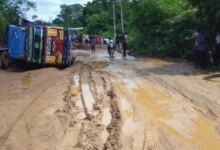
“Actually, the interest rate is too much on African countries. Here in Adaka, honestly water is a problem. It is a serious challenge for women and young girls in the community. We come out as early as 4 am, just to get water for our daily needs, and we end up going home between 8 am and 9 am because the source of the water is only one or two places. We have to line up to get one bucket of water, and at the end of the day, you see our children going late to school.
“So what I am suggesting is that at least they (developed nations) should please reduce the interest rate, so that the remaining fund can be used for other infrastructures, like water; at least to get tap water all over Adaka.
In his contribution, Chief Nicholas Angbianshio, traditional ruler of the Adaka Mbagbaange community, appreciated AHF for bringing the club to the community, adding that he is a direct beneficiary of the free healthcare programme of AHF.
Speaking with the Senior Advocacy and Marketing Manager, AHF, Nigeria, Steve Aborisade, who toed the line of the officials, pointed out that AHF established community advocacy clubs to enable residents identify their development challenges and engage government constructively
He said, “If we negotiate collectively, we can push for lower interest rates. That would free up resources for governments to invest in healthcare, education, roads, water and other critical services.
“We realised governments genuinely want to do more but are constrained by huge debt repayment obligations. Most African countries borrow because they need resources for development, yet they pay far higher interest rates than wealthier countries.”
Therefore, ” We trained community members on advocacy because we believe communities should be able to speak for themselves on issues affecting them,” Aborisade observed.
Also present at the event were AHF officials, stakeholders and community members. End