Ceasefire, the Memorandum of Understanding, and intermittent exchanges of fire: Can Iran and the US negotiate a permanent peace treaty?

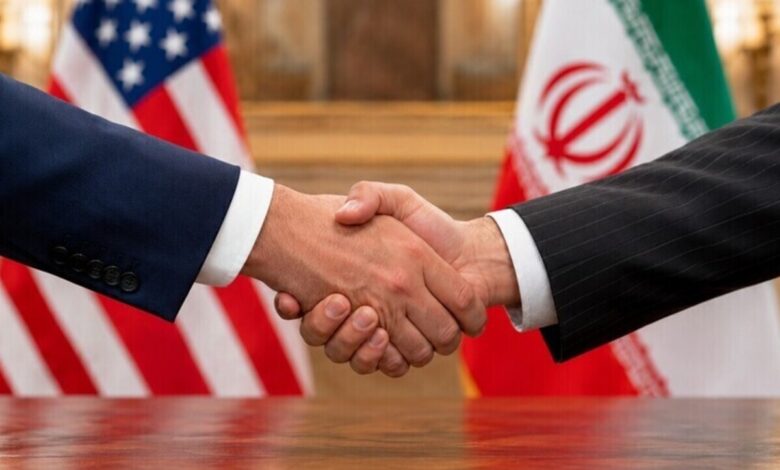
The post-February 2026 war period marks a new phase in US–Iran relationship, a relationship of strange diplomatic impasse characterized by no war, nor peace, but a rotating cycle of ceasefire announcements, Memoranda of Understanding (MOUs), and intermittent exchanges of fire across the Strait of Hormuz. This situation indicates structural problems that both sides are unprepared to address. The absence of a permanent peace treaty, as expected from negotiations, is the logical outcome of incompatible strategic objectives, domestic political constraints, and a shared preference for managed instability.
Recent reporting underscores this structural paradox. The US–Iran MoU, signed on 17th June 2026, is explicitly framed not as a peace treaty, but as a temporary framework to “pause hostilities and open negotiations.” Yet even this limited arrangement has already been strained by renewed maritime incidents and retaliatory strikes in the Gulf, where both sides accuse the other of violating the spirit of the ceasefire, straining peace negotiations.
This is not simply a failure of diplomacy, but a reflection of how both states have learned to manage confrontation as a long-term condition rather than solve it as a problem. The absence of a permanent peace treaty is not an anomaly. The MoU framework has been designed as temporary stabilisers rather than binding settlements.

It explicitly defers hard questions about nuclear capability, sanctions relief, regional proxy dynamics, and maritime security.
Process diplomacy, and no end outcome
Modern US–Iran diplomacy is dominated by what might be called “process without closure.” Negotiations produce frameworks, technical committees, and phased agreements—but no final treaty. The problem is not that diplomacy is absent; it is that neither the US nor Iran has the real intent to drive negotiations to a successful end. MOUs allow both sides to claim progress while avoiding irreversible commitments.
This structure creates a recurring cycle: escalation, emergency de-escalation or ceasefire, MOU or interim framework, partial compliance disputes, and renewed confrontation. Each loop reinforces the next.
READ: Iran warns it is ready for war if US fails to honour agreement
Why a treaty is structurally unlikely
A permanent peace treaty is a long process to complete, not a 60-day time frame to achieve lasting peace. Three structural barriers dominate Iran–US negotiations:
The first is the absence of a shared definition of security. For Washington, Iranian nuclear capability is a proliferation risk embedded in a broader regional security challenge, especially for Israel. For Tehran, nuclear capability is a deterrent against regime change and external coercion. These are not negotiable differences in policy, they are incompatible security interests.
The second structural barrier is asymmetric warfare as a substitute for diplomacy. Iran’s regional strategy relies heavily on asymmetric influence: allied militias, maritime pressure points, and strategic depth across Iraq, Syria, Lebanon, and Yemen. The US, by contrast, relies on forward military presence, sanctions regimes, and alliance networks in the Gulf and beyond. This asymmetry means neither side can credibly guarantee restraint in a treaty format. Even if the two governments sign agreements, proxy actors complicate enforcement.
The third structural barrier is the credibility gap. A treaty requires trust in long-term compliance mechanisms. But both the US and Iran interpret past agreements as having been violated, reinterpreted, or abandoned depending on political shifts. President Trump during his first term in office threw the JCPOA, negotiated by the Obama administration, under the bus in 2018. The result is a deep credibility deficit that no single agreement can easily repair.
The three structural barriers are buttressed by the two unresolved issues of nuclear conflict and U.S. imposed sanctions regime on Iran. This is further exacerbated by domestic political constraints.
The nuclear issue as the unresolved core tension
At the center of the conflict is Iran’s nuclear program. Even when negotiations appear to focus on sanctions or maritime security, nuclear capability remains the implicit organizing issue.
The US views enrichment capacity beyond certain thresholds as a latent weapons pathway. Iran insists on enrichment as a sovereign right under the Non-Proliferation Treaty framework. This produces a classic security dilemma: defensive measures by one side appear offensive to the other.
The absence of a permanent agreement means that even technical progress such as inspections, caps, monitoring remains reversible. And reversibility is precisely what makes both sides cautious – nothing is ever truly settled.
Sanctions as a parallel system of governance
Sanctions are not merely punitive tools; they function as an alternative governance architecture.
For the US, sanctions on Iran regulate financial flows, energy exports, and international investment in lieu of direct political control. For Iran, sanctions create incentives for economic linkages with states unfriendly or hostile toward the U.S., regional trade networks, and strategic adaptation. This produces a paradox: sanctions are intended to pressure behavioral change, but over time they also create a new normal.
As a result, sanctions relief becomes one of the most difficult components of any negotiation. It is not just an economic question; it is about dismantling an entire parallel system that has developed over the last four to five decades.
READ: Qatar says frozen Iranian funds remain withheld as US-Iran Talks Continue
The regional dimension: everyone else is in the room
Any potential US–Iran treaty is not bilateral in practice. It is embedded in a regional system involving Gulf monarchies, Israel, non-state armed groups, and global energy markets.
For many regional actors, US–Iran rapprochement is not necessarily desirable. Some Gulf states prefer calibrated tension that justifies continued US security presence in the Gulf (the UAE, and Bahrain, for example). Others fear Iranian regional dominance if sanctions collapse (such as Saudi Arabia, and Israel). Israel specifically views Iran’s strategic capabilities – especially missile and nuclear potential – as existential risks that cannot be outsourced to diplomacy.
This external environment constrains negotiation space. Even if Washington and Tehran reach partial alignment, regional veto players can destabilise implementation. This is what Israel did or is doing by continuing the war on Lebanon, despite the Iran–US MOU containing a provision to halt such attacks.
Domestic politics as structural veto points
One of the most underappreciated obstacles to a permanent treaty is domestic political fragility on both sides. In the US, Trump’s Iran policy is highly polarised, along both Democratic Party and Republican Party lines. Any major concession to Iran risks being framed as appeasement, especially in electoral cycles.
This creates an incentive to prefer reversible agreements over binding treaties.
In Iran, concessions on nuclear or regional policy are interpreted internally as weakness or erosion of sovereignty. The hardliners are highly vocal against a treaty that makes concessions to the U.S. The political system therefore favors resilience over compromise, even at economic cost.
Why MOUs are replacing treaties
The rise of MoUs is not accidental. MOUs sit in a deliberate grey zone between political signaling and legal obligation. They are attractive because they avoid legislative ratification burdens, allow ambiguity on enforcement, provide diplomatic “wins” without permanent commitments, can be abused or misused without formal treaty violation.
In effect, MOUs are optimized for mistrust. But this optimization comes at a cost – they cannot resolve core disputes, only postpone them. The most uncomfortable conclusion is that both the U.S. and Iran may have adapted to a system of managed instability. This system is characterized by controlled escalation, limited strikes or proxy responses, rapid de-escalation channels, and repeated diplomatic resets. It is not peace, but it is not total war either. It is a calibrated conflict environment.
Some analysts describe recent arrangements as “pauses in escalation rather than pathways to settlement,” highlighting the absence of any credible end state. This system persists because it is, in a narrow sense, functional. It prevents full-scale war while preserving leverage on both sides.
READ: Iran says ‘no need’ for outside help in Hormuz mine clearance
Requirements for a treaty
A permanent treaty would require more than technical negotiations. It would require structural transformation in at least one of the three areas: a) a regional security architecture that includes Iran as a legitimate stakeholder; b) a verified and irreversible nuclear arrangement acceptable to both sides; and c) a broader normalisation of political relations and sanctions architecture.
It cannot skip one’s attention that each of these structural transformations is politically costly. Taken together, they are system-changing. Predictably, the U.S. will remain opposed to the first and third transformations, while Iran would be staunchly opposed to the second and third transformations, though it prefers the dismantling of the sanction regimes.
Why diplomacy without an endpoint
The enduring US–Iran confrontation is not a failure of negotiation skills. It is a reflection of a deeper reality: neither side currently has a politically feasible path to a final settlement. Ceasefires, MOUs, and exchanges of fire are not deviations from diplomacy, rather they are its current form.
Until the underlying security dilemmas, regional rivalries, and domestic political constraints are transformed, the system will continue to reproduce itself: escalation, pause, framework, breakdown, but no permanent peace.
OPINION: Iran war and the bankruptcy of Bangladesh foreign policy
The views expressed in this article belong to the author and do not necessarily reflect the editorial policy of Middle East Monitor.