0
LAGOS – The Federal Government has declared the Dangote Petroleum Refinery and Petrochemicals complex a critical pillar of Nigeria’s ambition to build a $1 trillion economy, saying large-scale industrial investments will be central to accelerating manufacturing, job creation and sustainable economic growth.
Minister of State for Industry, Senator John Owan Enoh, made the declaration during a high-level inspection tour of the 700,000 barrels-per-day Dangote Refinery, Dangote Petrochemicals Complex and Dangote Fertiliser Limited in Lagos.
Enoh described the integrated industrial complex as one of Africa’s most significant private-sector investments and a model of the industrial transformation required to reposition Nigeria as a globally competitive manufacturing economy.
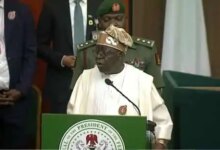

He said the facility was not merely a refinery but a demonstration of what Nigeria could achieve through domestic value addition, private-sector investment and stronger government- industry collaboration.
“You cannot be minister in charge of industry and not visit the Dangote Refinery,” Enoh said, stressing that the facility was central to Nigerian industry, employment generation and President Bola Tinubu’s $1 trillion economy ambition.
According to him, the refinery represents one of the clearest demonstrations of Nigeria’s capacity to move beyond the export of raw materials and capture greater value from its natural resources.
“The more a country adds value to its products, the more respect it earns globally. The Dangote Refinery stands today as one of the strongest demonstrations of that principle,” he said.
The minister noted that the refinery had significantly altered Nigeria’s position in the global petroleum market by helping the country move from dependence on imported refined petroleum products towards domestic refining and exports.
He said the ability of the refinery to export petroleum products to international markets during periods of global supply disruptions demonstrated the strategic importance of developing domestic industrial capacity.
“When global supply disruptions occurred, Nigeria was able to export petroleum products to markets in the Middle East and beyond. That is an extraordinary achievement and one that deserves recognition,” Enoh said.
The minister, who was accompanied by directors, regulators and heads of agencies under the Ministry of Industry, said the visit provided the delegation with a clearer understanding of the scale, technological sophistication and economic significance of the Dangote industrial complex.
He pledged continued government support for Dangote Industries Limited and other manufacturers through engagements under the Industrial Revolution Work Group and ministerial roundtables.
Particular attention, he said, would be given to challenges confronting manufacturers, including access to affordable and long-term financing. Enoh also dismissed concerns surrounding the refinery’s single-train configuration, saying operations continued even during scheduled maintenance.
“The issues surrounding the single-train configuration are much clearer now. Even during scheduled maintenance, operations continued,” he said.
Speaking during the inspection, President and Chief Executive of Dangote Industries Limited, Aliko Dangote, reinforced the call for industrialisation, saying manufacturing remained the fastest route to creating jobs, expanding prosperity and strengthening Nigeria’s economic resilience.
“There is no way to create jobs and prosperity without industrialisation,” Dangote said.
He argued that the success of domestic investors was itself one of the strongest signals Nigeria could send to prospective foreign investors, because international capital would be more willing to enter an economy where local businesses were able to thrive.