0
ABUJA – Stronger border controls, sustained public awareness campaigns and greater economic opportunities for young people are essential to curb irregular migration and human trafficking in The Gambia, officials said on Wednesday during a community engagement in Brikama South.
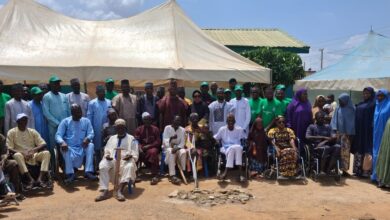
The sensitisation programme, held at Suba Ward, formed part of the ECOWAS Parliament’s ongoing week-long campaign against irregular migration and modern slavery across the country.
Speaking at the event, the West Coast Regional Anti-Trafficking Officer of the National Agency Against Trafficking in Persons (NAATIP), Seedy Bojang, warned that traffickers continue to prey on vulnerable young people by offering fake employment opportunities abroad.

According to Bojang, many victims are deceived with promises of jobs in restaurants, hotels and beauty salons, only to end up in situations of commercial sexual exploitation after arriving at their destinations.
“Many victims are lured with promises of employment in restaurants and beauty salons, but when they arrive, they are forced into commercial sexual exploitation,” Bojang said.
He disclosed that traffickers often rely on threats, intimidation and psychological manipulation to control their victims, revealing that some girls as young as 12 years old have fallen prey to the criminal networks.
Providing an overview of the agency’s operations, Bojang said NAATIP investigated about 30 human trafficking cases over the past year, with the majority involving sexual exploitation.
“During the period, more than 50 victims were rescued, over 30 suspects were arrested and four convictions were secured, while several other cases are still before the courts,” he said.
Bojang attributed the persistence of trafficking to porous borders, organised criminal syndicates and growing economic pressures that push many young people to seek quick financial success through unsafe migration routes.
The engagement also featured emotional testimonies from returnees of irregular migration, who shared their experiences to discourage others from embarking on dangerous journeys.
One of the returnees, Alhagie Kanteh, recounted surviving torture, imprisonment and witnessing the killing of fellow migrants during his journey.
“I witnessed unimaginable suffering, including the brutal killing of fellow migrants, among them a mother and her son,” Kanteh told participants.
Another returnee, Alimatou Sarjo, also narrated her ordeal, urging young people to avoid irregular migration and instead pursue legal pathways and opportunities at home.
Members of the ECOWAS Parliament attending the programme reiterated the need for stronger regional cooperation to address the drivers of irregular migration.
Speaking during the engagement, Hon. Maimuna Ceesay acknowledged that migration remains a global reality but cautioned against irregular routes.
“Migration is a reality, but irregular migration exposes our young people to trafficking, exploitation, abuse and even death. We must continue educating our communities about these dangers,” she said.
Also speaking, Hon. Alhagie S. Darboe, Minority Leader and a member of The Gambia’s delegation to the ECOWAS Parliament, said the country continues to shoulder a disproportionate burden of irregular migration due to its geographical location and socio-economic challenges.
Community leaders commended the ECOWAS Parliament for taking the awareness campaign directly to local communities, describing public sensitisation as one of the most effective ways to tackle the root causes of irregular migration and human trafficking.
The week-long campaign forms part of broader regional efforts by the ECOWAS Parliament to combat human trafficking, protect vulnerable populations and promote safe, orderly and legal migration across West Africa.
The outreach campaign continues on Thursday in Barra, North Bank Region, where lawmakers and anti-trafficking officials are expected to engage more communities on the dangers of irregular migration and modern slavery.