0
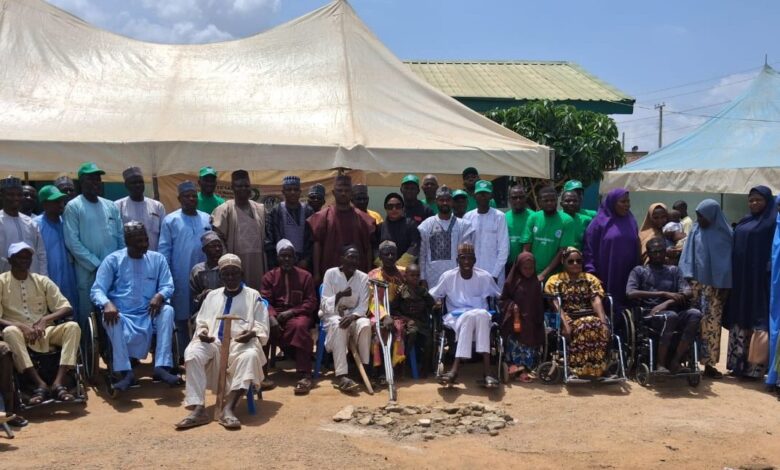
ABUJA – The Federal Government has launched the integration of rehabilitation services into Primary Health Care (PHC) centres nationwide, a landmark initiative aimed at bringing essential care closer to millions of Nigerians living with disabilities, injuries and chronic health conditions.
The Coordinating Minister of Health and Social Welfare, Prof. Muhammad Ali Pate, said the programme marks a major shift in healthcare delivery by making rehabilitation services available at the grassroots instead of limiting them to tertiary hospitals.
Represented by his Special Adviser, Dr. Baba Abubakar Suleiman, at the national launch held at Doya Primary Health Care Centre in Bauchi State, Pate said the initiative aligns with President Bola Ahmed Tinubu’s Renewed Hope Agenda and the Nigeria Health Sector Renewal Investment Initiative (NHSRII), both of which seek to strengthen primary healthcare and achieve Universal Health Coverage.
According to him, integrating rehabilitation into PHCs is a strategic investment in human capital development and will ensure that no Nigerian is denied access to quality healthcare because of location or disability.
“This is the beginning of a national transformation. Rehabilitation services will no longer be confined to tertiary hospitals but will become an essential component of primary healthcare delivery across Nigeria,” he said.
Pate disclosed that the programme follows the World Health Organisation’s Rehabilitation 2030 Initiative and noted that Nigeria had already approved its implementation, inaugurated a National Rehabilitation Technical Working Group and completed a nationwide assessment of rehabilitation services.
He added that the Federal Government has also approved a National Minimum Benchmark Framework to guide the integration of rehabilitation services and workforce requirements into Primary Health Care facilities across the country.
However, the minister identified a shortage of skilled professionals as a major obstacle to the programme’s success.
According to him, while Nigeria has about 34,000 Primary Health Care Centres, it currently has only about 5,000 licensed physiotherapists, alongside shortages in other rehabilitation professions.
He urged the Medical Rehabilitation Therapists Board of Nigeria (MRTB) to review its regulatory framework and adopt successful workforce expansion models used by other health professional bodies.
Pate also announced plans to increase funding for the programme and include rehabilitation services and assistive devices under the National Health Insurance Scheme to reduce treatment costs for Nigerians.
He called on state governments, local councils, development partners, academic institutions, civil society organisations and professional associations to collaborate in ensuring the programme succeeds nationwide.
Earlier, the Registrar and Chief Executive Officer of the Medical Rehabilitation Therapists Board of Nigeria, Prof. Rufai Yusuf Ahmad, said the country must urgently expand its rehabilitation workforce to meet growing demand.
He disclosed that the Board has reviewed its regulatory policies, digitised its operations and strengthened accreditation and professional development programmes to support the nationwide rollout.
Ahmad also called for greater collaboration among physiotherapists, occupational therapists, prosthetists, orthotists, speech and language therapists, audiologists and other rehabilitation professionals.
“The success of rehabilitation at the Primary Health Care level will depend on multidisciplinary teamwork, shared responsibility and an unwavering commitment to placing patients first. No single profession can achieve this vision alone,” he said.
He assured Nigerians that the Board would continue to provide the regulatory leadership needed to ensure quality, affordable and people-centred rehabilitation services become available in Primary Health Care facilities across the country.