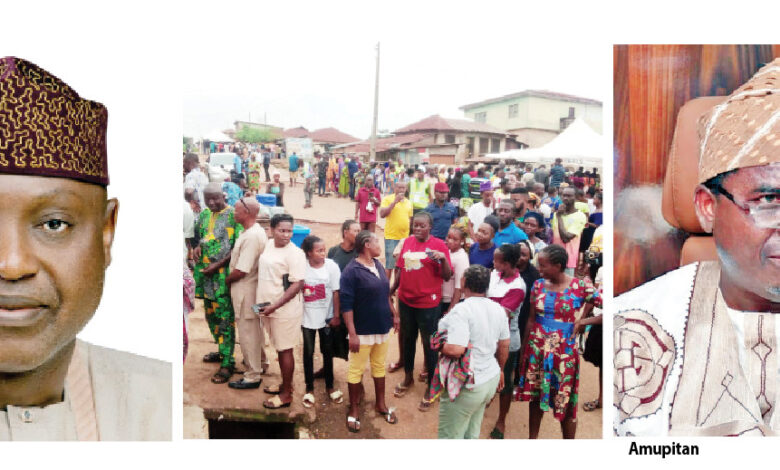
Voters in Ekiti trekked to polling units on Saturday only to meet dead BVAS machines and empty queues. The low turnout and tech failures have reignited fears that 2027 may repeat 2023’s logistical problems, civil society groups warned, write ADEMU IDAKWO
Low voter turnout, isolated BVAS failures and fresh allegations of vote-buying in the Ekiti State governorship election have sparked concerns among political parties, civil society groups, election observers and political analysts, who warn that the issues could pose significant challenges ahead of Nigeria’s 2027 general elections.


Although the poll was conducted peacefully in most parts of the state, stakeholders say the exercise exposed lingering weaknesses in voter participation, election technology and public confidence that require urgent attention.
Ahead of the election, the Independent National Electoral Commission (INEC) announced that Ekiti State had 1,059,360 registered voters, while 1,028,929 Permanent Voter Cards (PVCs) had been collected, representing 97.1 per cent of eligible voters.
However, official results released after the poll showed that only 384,940 voters were accredited, while 382,109 votes were eventually cast. The figures indicate that 646,820 eligible voters who possessed PVCs did not participate in the election, translating to a turnout rate of 37.1 per cent and a non-participation rate of 62.9 per cent.
The statistics have renewed concerns among democracy advocates and election observers over growing voter apathy and declining public confidence in Nigeria’s electoral process.
For many stakeholders, the Ekiti election was more than an off-cycle governorship contest. It represented another test of the country’s electoral reforms and a measure of institutional preparedness ahead of the 2027 general elections.
The Nigeria Civil Society Situation Room, in a statement signed by its co-conveners, Celestine Odo and Mma Odi, described the election as generally peaceful but expressed concern over participation levels.
The coalition noted that despite the high rate of PVC collection, voter turnout remained significantly lower, underscoring the need for renewed voter mobilisation and stronger civic engagement.
The group also raised concerns over reports of vote-buying and called for stricter enforcement of electoral laws to preserve the integrity of future elections.
According to the coalition, addressing voter apathy and rebuilding public confidence must remain central to preparations for subsequent polls.
Yiaga Africa, in a preliminary report signed by the Chair of its Election Observation Mission, Dr. Aisha Abdullahi, and its Executive Director, Samson Itodo, estimated voter turnout at between 34 and 38.1 per cent.
“If INEC’s official figures fall within this range, they accurately reflect turnout at polling units observed by Yiaga Africa,” the organisation stated.
The group commended improvements in logistics and the timely deployment of election officials and materials but warned that allegations of voter inducement and operational lapses remained a threat to public confidence in the electoral process.
Yiaga Africa further noted that while BVAS functioned effectively in most polling units, isolated glitches delayed accreditation in some locations, particularly among elderly voters whose fingerprints and facial authentication posed challenges.
The organisation urged INEC to strengthen contingency measures and improve technical preparedness ahead of future elections.
Similarly, the EU-SDGN Election Observation Hub, comprising Yiaga Africa, The Kukah Centre, TAF Africa, the Nigerian Women’s Trust Fund, the International Press Centre and the Centre for Media and Society, described the election as largely peaceful but called for stronger safeguards against electoral malpractice.
The observers commended the performance of election technology in most areas while urging improved backup arrangements and tougher action against vote-buying to enhance public trust ahead of the 2027 general elections.
Reports from observers indicated that although BVAS performed satisfactorily in most polling units, technical hitches in some locations delayed accreditation and verification, especially for elderly voters.
Stakeholders say such challenges, though not widespread, underscore the need for more rigorous testing, adequate backup systems and stronger operational efficiency before the 2027 polls.