Europe is confronting one of its worst wildfire disasters in recent history, with more than 300,000 people forced to flee their homes as fast moving blazes sweep across large parts of France and Spain, threatening major cities, tourist destinations and critical infrastructure. Authorities warn that the crisis is far from over, as extreme heat, drought and powerful winds continue to fuel the flames.
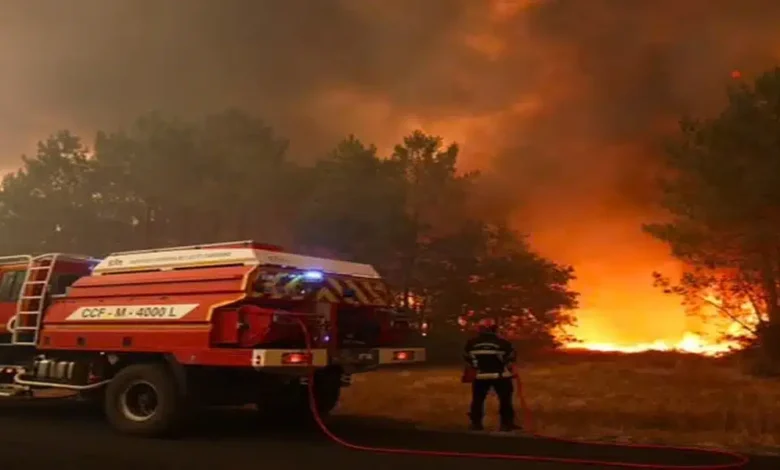
The most serious threat is unfolding in south-west France, where a massive wildfire has advanced to within 15 kilometres of Bordeaux, one of the country’s largest cities and a globally renowned wine producing region. French officials have said they are prepared to order a wider evacuation if weather conditions deteriorate further, although no city wide evacuation order has yet been issued.
Emergency authorities have already evacuated around 220,000 to 250,000 residents across France, particularly in the Gironde region. Hundreds of homes have been destroyed, while exhibition centres and public buildings have been converted into temporary shelters for displaced families. Thick smoke has reduced air quality across the region, forcing schools, businesses and transport services to suspend operations.
Across the border in Spain, authorities have declared a national civil protection emergency as multiple wildfires continue to burn in central and eastern parts of the country. More than 75,000 people have been evacuated, with tens of thousands of others advised to remain indoors because of dangerous smoke levels. One fatality has been confirmed near Valencia, while firefighters continue battling blazes around Madrid, Valencia and several protected natural parks.
The combined evacuations in France and Spain now exceed 300,000 people, making the operation one of the largest peacetime civilian evacuations ever undertaken in western Europe. Rescue teams are working around the clock as rapidly changing winds create unpredictable fire behaviour, including fire-generated storms that have made containment extremely difficult.
France has deployed more than 2,500 firefighters, military personnel, helicopters and water-bombing aircraft to the affected regions. Spain has mobilised thousands of emergency workers and requested additional assistance through the European Union’s Civil Protection Mechanism. Firefighting aircraft from Greece, Italy and other European countries have joined the response, while Portugal has also provided military support.
READ RELATED STORY
Europe accelerates defence industry revival to cut reliance on US
Nigeria defeats European contractor in $6.2m arbitration over e-procurement project
Moldova’s pro-European party wins majority in parliamentary election
Scientists say the disaster has been intensified by a prolonged heatwave, exceptionally dry vegetation and strong winds, conditions increasingly associated with climate change. Several parts of Europe have experienced record-breaking temperatures this summer, creating ideal conditions for wildfires to ignite and spread rapidly. Experts warn that longer and more destructive wildfire seasons are becoming increasingly common across southern Europe.
The crisis is also disrupting Europe’s tourism industry during the peak summer holiday season. Thousands of holidaymakers have been evacuated from campsites, resorts and coastal communities near Bordeaux and other popular destinations. Roads have been closed, flights delayed and rail services interrupted as emergency crews prioritise evacuation routes and firefighting operations.
For the United Kingdom, the unfolding disaster is expected to affect thousands of British holidaymakers currently travelling across France and Spain. UK authorities are monitoring the situation closely, while travellers have been urged to check airline schedules and follow local emergency guidance before travelling to affected regions. Smoke and wildfire disruptions could continue to impact flights and transport links in the coming days.
Although Nigeria is geographically distant from the disaster, the fires could still have indirect economic consequences. Europe remains one of Nigeria’s largest trading partners, and prolonged disruption to transport networks, agricultural production and tourism could contribute to supply-chain pressures and higher prices for some imported goods. Climate experts also say the crisis highlights the growing global risks associated with extreme weather, a challenge that increasingly affects African countries through floods, droughts and heatwaves.
European leaders have pledged continued support for affected communities as firefighters race to contain the blazes before weather conditions worsen again. Pope Leo XIV has offered prayers for victims and emergency responders, while governments across the continent have renewed calls for stronger climate resilience and cross-border disaster cooperation. With forecasts indicating more hot, dry weather in the days ahead, authorities fear the wildfire emergency may continue well into next week.