The Federal Government has announced plans to abolish the policy separating Junior Secondary Schools (JSS) from Senior Secondary Schools (SSS), citing its failure to achieve intended objectives and its contribution to rising school dropout rates.
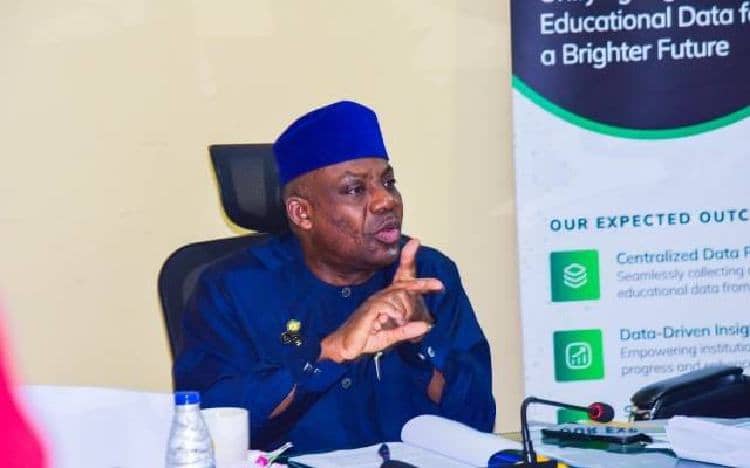
Minister of Education, Tunji Alausa, disclosed this on Tuesday in Abuja at the inauguration of the Universal Basic Education Commission (UBEC) Ministerial Implementation and Monitoring Committee.
Alausa explained that the current disarticulation policy, which mandates the physical and administrative separation of JSS and SSS, has created significant structural inefficiencies within the education system.
“We’re seeing data from states like Kaduna and other parts of the North where there are separate principals for junior and senior secondary schools,” he said.
“We now have overcrowded junior secondary schools and underutilised senior secondary schools. I can objectively say that this disarticulation policy has failed, and we will phase it out.
“We cannot continue to create administrative positions at the expense of the education system. It is about doing what is best for every Nigerian child.”
The minister further noted that the policy has contributed to a widening enrolment gap between primary and secondary education levels.
According to him, more than 20 million children who began primary education have dropped out before reaching senior secondary school.
“We have over 20 million dropouts between primary school and junior secondary school. Where are these children?” he queried.
He added that the imbalance in school infrastructure has worsened the situation, noting that while there are about 80,000 public primary schools nationwide, there are only about 15,000 junior secondary schools—a ratio of one to eight.
Alausa acknowledged past shortcomings but assured that the current administration is committed to reversing the trend by expanding access and improving infrastructure.
“We must open up more opportunities for students to attend school. This policy has contributed significantly to the existing challenges, and we are determined to fix it,” he said.
The minister also disclosed that the newly inaugurated UBEC committee has been tasked with ensuring the completion, handover, and operationalisation of hundreds of smart schools, bilingual schools, and alternative learning centres funded by UBEC.
He expressed concern that despite substantial funding, many projects remain incomplete, while several completed schools have yet to be handed over to state governments or integrated into their education systems.
According to him, the committee will drive effective implementation and monitoring to ensure that these projects deliver quality education outcomes for Nigerian children.