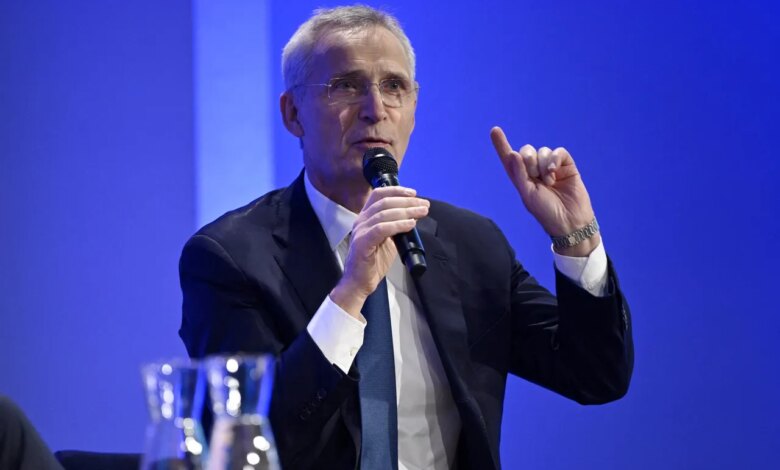
Former NATO chief Jens Stoltenberg has said Finland and Sweden’s accession to the alliance was the achievement he is most proud of during his decade-long tenure, thanking Turkish President Recep Tayyip Erdogan for his cooperation in the process.
“The one decision that I am most proud of is … to enlarge NATO with Finland and Sweden,” Stoltenberg told Anadolu ahead of the July 7-8 summit in Ankara.
Stoltenberg, now Norway’s finance minister, said the move had been neither obvious nor automatic, given the two countries’ long histories of neutrality.

“Finland and Sweden have been neutral for centuries. For Sweden, neutrality has been part of its identity. Finland was, of course, part of Russia at some stage and also had a security arrangement with Russia,” he said.
“But for those two countries to join, that was a huge achievement for the alliance, for Finland and Sweden,” he added.
Finland officially joined NATO on April 4 2023, while Sweden became a full member on March 7 2024. Both countries submitted their joint applications in May 2022 following Russia’s war in Ukraine.
‘We are safer together than apart’
Stoltenberg said his main expectation from the Ankara meeting was to demonstrate allied unity.
Despite differences among NATO members on issues such as trade, Iran and climate change, he said allies in North America and Europe should send a clear message that “we stand together, we protect each other, we are safer together than apart.”
He also stressed the importance of reaffirming support for Ukraine.
“That’s important because we live in a more dangerous world and, therefore, we need a united and strong NATO,” he said.
Stoltenberg said NATO’s primary purpose was not to wage war but to prevent it through credible deterrence.
“My top priority would have been to demonstrate unity and to make sure that we convey a strong message to any potential adversary that we will protect each other,” he said.
He said such a message leaves no room for “miscalculation” or “misunderstanding” in Moscow or elsewhere that an attack on one ally would trigger a response from the entire alliance.
“As long as that message is credible, there will be no military attack because NATO is by far the strongest military alliance in the world,” he said.