0
Nigeria’s private sector is showing signs of a gradual recovery in access to credit, but analysts have warned that the Central Bank of Nigeria’s (CBN) prolonged tight monetary stance, rising fuel costs and surging government borrowing could continue to suppress lending to businesses and households, slowing economic expansion.
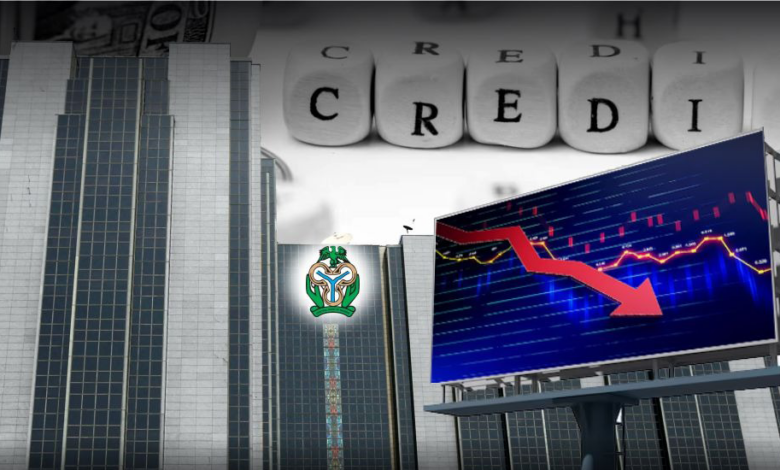
Latest monetary statistics released by the CBN showed that private sector credit extension (PSCE) rose by 3.0 percent month-on-month and 9.0 percent year-on-year to N83.3 trillion in June 2026, marking the strongest annual expansion since December 2024, when credit growth stood at 25 percent.
While the latest figures indicate that banks and other financial institutions are gradually increasing lending to businesses, the pace remains significantly below the levels recorded in 2024, when private sector credit expanded by an average of 48 percent year-on-year following the sharp depreciation of the naira and the revaluation of foreign currency-denominated loans.

The CBN data covers credit extended across the financial system, including deposit money banks, development finance institutions such as the Bank of Industry, microfinance banks, non-interest banks and direct lending by the apex bank.
Financial analysts said the modest improvement reflects cautious lending by financial institutions as high interest rates continue to discourage borrowing by businesses already grappling with elevated operating costs.
The development comes as the CBN has repeatedly reaffirmed that restoring price stability remains its foremost policy objective. Faced with stubborn inflationary pressures, the Monetary Policy Committee (MPC) has maintained a restrictive monetary stance, keeping benchmark interest rates elevated to tame inflation and anchor inflation expectations.
Although inflation has moderated considerably from its 2024 peaks, policymakers remain wary of fresh upside risks that could reverse recent gains.
One of the biggest concerns is the renewed pressure from energy prices. Dangote Petroleum Refinery recently raised its ex-depot petrol price by N140, taking it to N1,215 per litre, a development analysts believe could trigger another round of increases in pump prices nationwide.
Higher petrol prices are expected to translate into increased transportation costs, higher logistics expenses and more expensive production costs across several sectors of the economy.
Economists warned that such cost-push pressures could complicate the CBN’s inflation fight by feeding into consumer prices at a time when households are already battling weak purchasing power.
Beyond domestic factors, persistent geopolitical tensions in the Middle East continue to threaten global crude oil supplies, raising concerns about sustained increases in international oil prices.
Should crude prices remain elevated, Nigeria may face renewed pressure on domestic fuel prices despite increased local refining capacity, potentially reigniting inflationary pressures.
Analysts believe these developments reduce the likelihood of an early shift toward monetary easing. Instead, the CBN is expected to retain its tight policy stance for longer, keeping borrowing costs elevated and limiting demand for new loans.
The prolonged period of high interest rates is therefore expected to remain a major constraint on stronger private sector credit expansion.
Businesses, particularly manufacturers and small and medium- sized enterprises, have repeatedly expressed concerns that high financing costs are eroding profitability and discouraging investment.
With lending rates remaining at historically elevated levels, many firms have postponed expansion plans, while others have scaled back borrowing to preserve cash flow.
Analysts noted that although banks remain well-capitalised and liquid, loan demand has weakened considerably because many businesses are unwilling to take on expensive debt amid economic uncertainty.
Beyond high borrowing costs, economists also expressed concern over the rapid increase in government borrowing, which they say is crowding out private investment.
According to the CBN data, credit extended to the government surged by an impressive 85 percent year-on-year to N40 trillion in June 2026.
The pace of government borrowing far exceeded growth in the country’s monetary aggregates.
Broad money supply (M3) and narrow money supply (M2) both expanded by only about 14 percent year-on-year over the same period, underscoring the government’s increasing appetite for domestic financing.
Market observers warned that the strong preference for government securities by financial institutions could reduce the amount of funds available for lending to the productive sectors of the economy.
Government borrowing is often viewed as less risky because treasury instruments provide attractive returns backed by sovereign guarantees.
Consequently, banks may find it more profitable to invest in government securities than to extend credit to businesses, particularly in an environment characterised by elevated credit risks.
Economists argued that this crowding-out effect could weaken private investment, reduce job creation and ultimately slow economic growth.
They also warned that sustained fiscal borrowing carries inflationary implications, particularly if financed through expansion in liquidity.
According to analysts, rising government borrowing could dilute the effectiveness of the CBN’s monetary tightening measures by injecting additional liquidity into the financial system, thereby sustaining inflationary pressures.
The latest figures therefore highlight the difficult balancing act facing monetary authorities.
On one hand, the CBN must maintain tight financial conditions to ensure inflation continues on a downward trajectory.
On the other hand, excessively restrictive monetary policy risks suppressing credit growth, slowing investment and limiting the private sector’s contribution to economic recovery.
Analysts believe that stronger credit growth will ultimately depend on a combination of sustained disinflation, improved macroeconomic stability and lower interest rates.
They added that fiscal discipline would also be critical, noting that reducing the government’s reliance on domestic borrowing would free up more financial resources for businesses and support stronger economic expansion.
For now, however, the outlook remains cautious.
While June’s improvement in private sector credit signals that lending activity is gradually recovering, economists believe the pace is unlikely to accelerate significantly unless inflation moderates further, fuel price pressures ease and monetary policy eventually shifts toward accommodation.
Until then, Nigeria’s private sector is expected to continue operating under tight financing conditions, with elevated borrowing costs and aggressive government debt issuance likely to remain the dominant factors shaping credit growth in the months ahead.