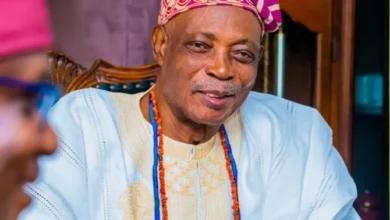
Former President Goodluck Jonathan has called for stronger democratic institutions, expanded intra-African trade and purposeful leadership as key drivers of sustainable economic growth and Africa’s long-term prosperity.
Jonathan made the call in Abuja yesterday at the Breaking Barriers to Trade and Leadership Summit, organised by the Africa Leadership Organization (ALO).


The former President joined the Prime Minister of Lesotho, Samuel Matekane; former Tanzanian President Jakaya Kikwete; former Liberian Vice President Jewel Howard-Taylor; and other prominent African leaders at the summit.
Speaking on the significance of the gathering, Jonathan said discussions focused on unlocking Africa’s vast economic potential through stronger institutions, deeper regional integration and visionary leadership.
He stressed that strengthening democratic institutions and promoting closer economic cooperation among African countries remain critical to accelerating development and securing the continent’s economic future.
The summit brought together political leaders, policymakers, business executives and development stakeholders to examine practical strategies for eliminating barriers to trade, attracting investment and driving economic transformation across Africa.
In recognition of his contributions to democratic governance and institutional development, Jonathan received the Award for Democratic Leadership and Institutional Integrity from the Africa Leadership Organization.
Receiving the award, the former President expressed appreciation to the organisers, describing the honour as a recognition of the collective efforts of individuals and institutions committed to strengthening democracy and promoting sustainable development across Africa.
“I accept this honour with humility and regard it as recognition of the collective efforts of all those committed to advancing democratic governance, strengthening institutions, and promoting Africa’s growth and development,” Jonathan said.
He reaffirmed his commitment to supporting initiatives that promote good governance, institutional integrity and inclusive economic development across the continent.
In his keynote address, Lesotho’s Prime Minister, Samuel Matekane, urged African leaders to focus on building enduring institutions rather than relying on individual personalities.
“Africa has too often celebrated the leader and neglected the institution. We have built cults of personality around individuals rather than the systems they were meant to strengthen,” he said.
Matekane warned that many of Africa’s development gains disappear when individual leaders leave office because institutions remain weak and overly dependent on personalities.
“If this summit achieves one thing, let it be a shift from admiring leaders to demanding durable institutions,” he declared.
According to him, persistent barriers to trade—including weak border systems, inconsistent regulations and limited access to finance—continue to undermine Africa’s competitiveness because institutions responsible for implementing policies are underfunded, personality-driven or lack public confidence.
“Investors do not commit capital to good speeches; they commit capital to predictable institutions,” he said.
He added that Africa’s trade ambitions and global competitiveness would only be realised through institutions capable of surviving political transitions and consistently implementing agreed policies.
The Prime Minister also commended the Africa Leadership Organization for investing in leadership development, particularly among young Africans, whom he described as the future custodians of the continent’s institutions.
He highlighted the planned launch of Dr. Ken Giami’s book, Influence by Design: How to Build Sustained Significance Across Africa, noting that its message aligns with the urgent need for deliberate institution-building across the continent.
Matekane further praised the summit’s Governance and Leadership Awards, describing the recipients as leaders whose contributions are helping to build lasting institutions at national, state and community levels.