0
ABUJA – The Centre for Democracy and Development (CDD), the Academic Staff Union of Universities (ASUU) and other notable personalities from Nigeria and South Africa have continued to lament recent xenophobic attacks meted out on foreigners, especially Nigerians, leading to their expulsion from the country.
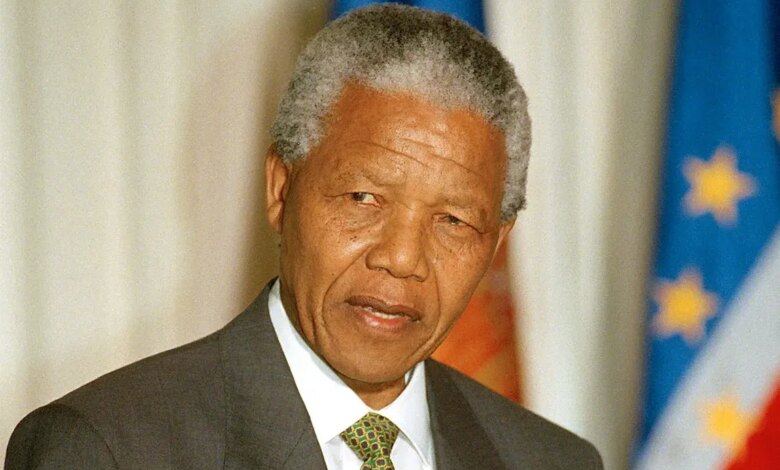
They posited that the ideology of the late iconic liberation fighter, Nelson Mandela, who fought the apartheid regime in South Africa for justice, democracy and an egalitarian society has been ruptured beyond repair, insisting that something has to be done to salvage the situation.
According to them, Mandela will be weeping in his grave over the unfortunate situation in South Africa at the moment.


Other speakers took turns to share their thoughts on the escalation of violence against foreigners, while observing the 2026 Nelson Mandela International Day, with it’s theme, ‘Mandela’s Long Shadow: Foreign Influence Campaigns and Struggle for South Africa’s Democratic Identity’, held at Nasarawa State University, Keffi.
President of the Academic Staff Union of Universities, Prof. Christopher Piwuna, who spoke on behalf of the academia, argued that ordinarily Mandela would have settled for revenge against the white minority leaders for his imprisonment but opted for peace and reconciliation upon his release.
Prof. Piwuna, represented by the ASUU Chairman, Nasarawa State University Chapter, Comrade Zubairu Abdulmumini, said no aspect of Mandela’s legacy speaks more powerfully to our present moment than his remarkable capacity for reconciliation.
According to ASUU, after spending twenty-seven years in prison under the brutal apartheid regime, Mandela did not preach vengeance against his white jailers or the Boer establishment that denied him his freedom. Instead, he embraced forgiveness without forgetting justice, choosing nation-building over hatred, dialogue over revenge, and reconciliation over retribution.
“For ASUU, Mandela’s legacy imposes an enduring obligation on African intellectuals, workers, students, and democratic movements to defend truth, challenge oppression in all its forms, and promote critical scholarship capable of exposing manipulation, injustice, and inequality. Universities must remain centres of independent thought, where knowledge serves the people rather than narrow political or foreign interests.
“He understood that democracy could only flourish where human dignity transcends race, ethnicity, nationality and identity. It is against this enduring moral example that ASUU expresses its profound concern over recurring xenophobic attacks against fellow Africans in South Africa, including Nigerians and citizens of other African countries. Such acts of violence, intimidation, discrimination and exclusion stand in direct contradiction to Mandela’s vision of a democratic, inclusive and Pan-African South Africa.
“They diminish the sacrifices of those who fought and died to end apartheid and weaken the bonds of African solidarity that sustained South Africa throughout its liberation struggle.
“ASUU unequivocally condemns all forms of xenophobia and identity-based violence. There can be no justification for attacking fellow Africans who seek lawful livelihoods, contribute to economic development, and share a common history of struggle against colonialism and racial oppression. Africa’s strength lies not in division but in unity, mutual respect and shared prosperity,” ASUU posited.
Some other panelists corroborated ASUU, arguing that the recent development in South Africa does not reflect what Mandela stood for, but a clear departure from genuine democratic principles of equality and social justice.
They suggested the rejigging of Nigeria’s foreign policy thrust to ensure protection and preservation of our economic interests in all our engagements with other countries.
One of the panelists and a South African trade unionist, Zwelinzima Vavi, said that Mandela will not support any action that tends to humiliate black immigrants if he were to be alive today.
He rather blamed the uprising on bad governance and corruption, inequalities and exploitation that have engulfed South Africa and which tend to set the “poor against the poor”.
“Let us reject xenophobia, let us reject anything that divides Africa, let us reaffirm the spirit of Africa and Nelson Mandela’s legacies,” he said.
Another female panelist, Comrade Hauwa Mustapha, said the situation in South Africa is being heightened by what she described as dual identity crisis afflicting the citizens who now consider themselves as less of African than other African people.
Comrade John Odah, Executive Secretary, Organisations of Trade Unions of West Africa, said commemorating the life and times of Mandela comes at a time when South Africa once again finds itself in the midst of violent xenophobic attacks against African migrants from neighbouring countries and from across the continent, with Nigerians featuring prominently among the victims.
He said meting out violence against black Africans living in South Africa comes with damage to the image of the country and its people.
According to Odah, it is difficult to explain away the disturbing images of migrants fleeing South Africa to their countries of origin and the painful stories they recount about the maltreatment they suffered.
“We are not unmindful of the damage these attacks by black South Africans against fellow black Africans. However, we are equally encouraged by the remarkable response from thousands of South Africans who have stood in solidarity with their African brothers and sisters. We have been in contact with South African organisations that are mobilising support, including blankets and other relief materials, for displaced migrants who are forced to sleep outdoors in extremely harsh winter conditions”.