0
Chibuzor Emejor
The Federal Government of Nigeria has called on African countries to strengthen unity and advance a common position on global telecommunications and digital development at the forthcoming International Telecommunication Union (ITU) in Doha, Qatar.
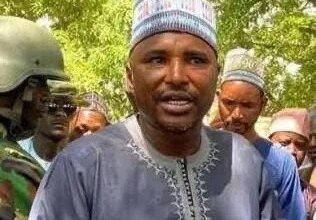
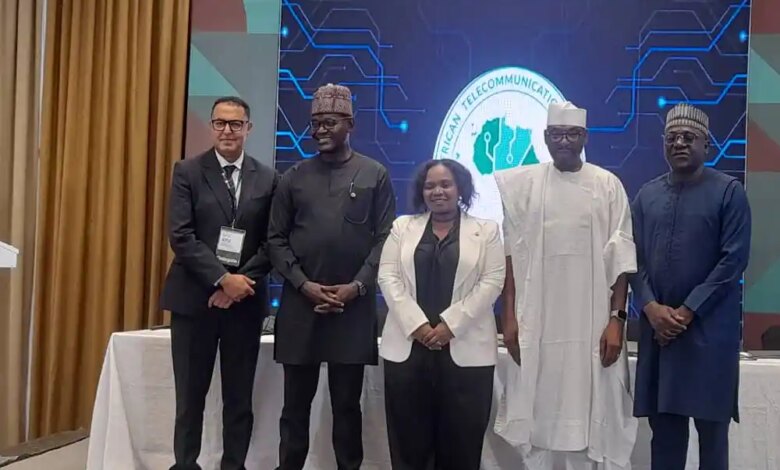
Mr. Ahmed Mohammed Alsukun, Director, Overseeing the Office of the Permanent Secretary, Federal Ministry of Communications, Innovation and Digital Economy, stated this on Thursday at the Special Session of the African Telecommunications Union (ATU) Administrative Council in Abuja.


Alsukun said the meeting has provided a critical opportunity for Africa to speak with one voice on issues that will shape the future of global telecommunications and digital development.
Alsukun, pointed out that united Africa has greater influence, adding that the “common position advanced through the ATU process must reflect Africa’s priorities with clarity and be supported consistently by our delegations.
“In a united Africa, we have greater influence in international decision-making and will be better placed to advance and protect the interest of our continent.”
He also commended the Secretary General of ATU, Mr. John Omo, the Administrative Council, and all member states for their dedication to the growth of the Union.
As host nation, he assured, delegates of Nigeria’s full support throughout the session and encouraged them to experience the country’s hospitality and culture.
“It is my sincere hope that the outcome of this Special Session will strengthen the African Telecommunications Union, reinforce cooperation among member states, and contribute meaningfully to the success of the forthcoming Conference of Plenipotentiaries,” he said.
He acknowledged significant progress in Africa’s ICT sector, including growth in mobile connectivity, rapid digital innovation, and increased adoption of digital technologies in public service delivery.
Alsukun noted persistent challenges such as lack of reliable internet access by millions of Africa; uneven distribution of digital infrastructure;need for coordinated policy and capacity building on emerging technologies such as Artificial Intelligence, among others.
According to him, “Almost one billion people in Africa do not use mobile internet despite living within broadband coverage.
“Infrastructure expansion must therefore be matched by affordability, suitable devices, digital skills, trust and local services.”
He emphasised that these challenges also present opportunities, adding that “Through ATU, Africa can develop common solutions to expand connectivity, improve digital infrastructure, promote digital skills, strengthen cybersecurity, protect data, and create opportunities for the people, especially youth.”
Earlier, ATU Secretary General, Mr. John Omo, said the meeting was convened for member states to finalise Africa’s common positions and candidates ahead of the ITU Plenipotentiary Conference.
Omo explained that the session would focus on groundwork for the Plenipotentiary Conference, including harmonising proposals and regional candidates.
“This is a critical moment for us to make strategic decisions about the future of globalisation, the future of the continent, and the future of all citizens in the region.
“Building economic resilience cannot be a future aspiration. It must become a deliberate regional strategy,” he said.
He called on ATU to maximise its role in advancing regional integration, supporting the African Continental Free Trade Area (AfCFTA), and driving development through ICTs to deliver AU Agenda 2063: The Africa We Want.
While acknowledging progress in universal and meaningful connectivity, he stressed that “infrastructure deployment alone is not enough. Connectivity must translate to meaningful use.”
To achieve this, Omo urged focus on three pillars namely affordable access to digital services; digital skills development and
innovation and inclusivity.
The Secretary General of ATU reaffirmed his commitment to work in partnership with the African Union, ITU, United Nations, development finance institutions, private sector, and civil society to shape Africa’s digital future.
In her remarks, Chairperson of the Administrative Council, Ms. Nonkqubela Jordan-Dyani, called for increased investment in Digital Public Infrastructure (DPI) and emerging technologies like Artificial Intelligence to accelerate regional integration, boost e-commerce, and strengthen Africa’s digital sovereignty.
Jordan-Dyani, who is also Director General, Department of Communications and Digital Technologies, South Africa, highlighted DPI as a critical tool to enable citizens, businesses, and governments to interact securely and efficiently across the region.
“DPI can be used to enable e-commerce faster, customs, immigration and transactions. Developing countries including India, Brazil and a lot of African countries have played a central role in developing the concept of DPI,” she said.
She commended Nigeria for being “fast ahead” in digital service delivery and online submissions, cited as an example of great effort in modernising public services.
She emphasised the opportunity to design digital public services in line with Africa’s developmental aspirations to ensure “maximum public value.”
She also stressed the need to build national capacity and infrastructure to enhance sovereignty, strengthen resilience, and reduce dependencies and risks.
“Globally, we need to engage strategically to protect our interests, leverage partnerships, and enhance our efforts to ensure Africa’s voice is heard in shaping the future of our economies and the global economy,” she added.