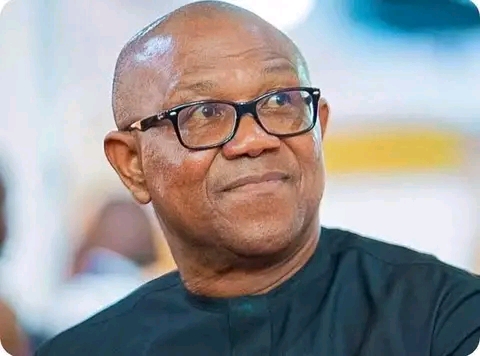
Former Labour Party (LP) presidential candidate Peter Obi has placed education and skills development at the centre of his proposed plan to revive Nigeria’s economy, saying investment in human capital would help create jobs, support industrialisation and improve the quality of life.
On Wednesday, 1 July, 2026, Obi shared a statement where he noted that reforms in education and healthcare would form the foundation of his agenda if elected president. He said these sectors are vital to building the workforce needed for economic progress and better public services.
Obi said his administration would set up a task force from the beginning of his presidency to cut the number of out-of-school children. He also pledged to expand Technical and Vocational Education and Training (TVET) to prepare young Nigerians with practical skills for industries.
Plan targets skills gap
Obi said Nigeria must produce more skilled workers to meet the needs of local businesses. He argued that the country cannot continue to face high unemployment while some Nigerian entrepreneurs move their businesses to other countries because skilled labour is difficult to find.


He said greater funding for TVET institutions and better equipment would help improve training. He proposed partnerships involving government, the private sector and faith-based educators to support apprenticeship programmes based on the German dual education system, where classroom learning is combined with workplace experience.
Read Related News
Obi cries out over alleged FG plot to stop his presidential campaign
Obi says 2027 ambition will survive NDC court ruling
Umahi challenges Obedient Movement to compare Tinubu, Obi records
Obi said this approach would support industrialisation built on Nigeria’s agricultural resources and value addition. He said industrial parks would be developed in designated development zones within the country’s geopolitical regions to strengthen production and manufacturing.
He said building a skilled workforce is necessary to move Nigeria from a consumption-driven economy to one driven by production.
Human capital forms part of wider agenda
Obi presented the education proposals as part of a broader political vision he said would be explained in greater detail over the coming weeks and months.
He recalled that when he decided to seek the presidency, he promised to place Nigeria on the path of unity and national transformation. He said his roadmap is designed to reduce abuse in government, improve living standards and promote peace, unity and prosperity.
He said the vision is built on unity, inclusion, social justice, equity and the freedom of every Nigerian to pursue lawful ambitions.
Obi described human capital as an essential form of national infrastructure. He said investment in education and healthcare provides the foundation for economic expansion, public service delivery and daily life.
He argued that Nigeria must reform both sectors with determination if the country is to benefit from its large youthful population.
Obi, beyond technical education, also proposed greater attention to character and civic education. He said teaching values that promote trust, responsible leadership and national unity would form part of his administration’s approach to governance.
He said trust is necessary for enterprise and leadership and should be strengthened through education alongside practical job skills.
The policy outline forms part of Obi’s wider vision for what he described as a productive and prosperous Nigeria. He said more details of the roadmap would be presented in the coming weeks and months as he continues to explain his plans for governance ahead of the election.
For More News Details, Visit New Daily Prime.