0
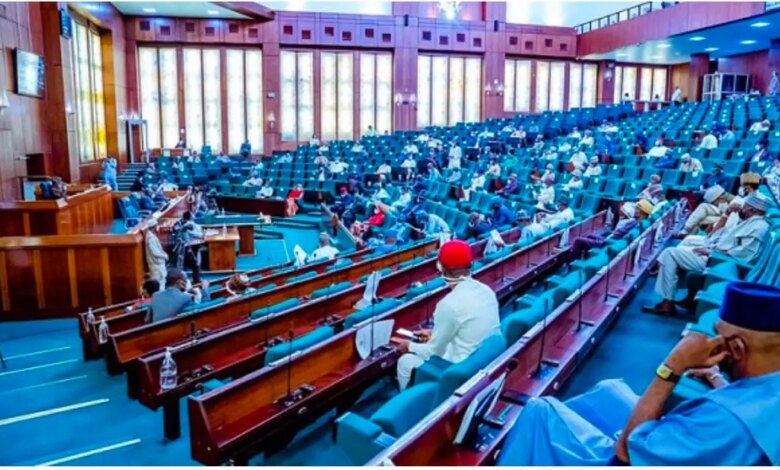
The House of Representatives Public Accounts Committee (PAC) on Monday directed the Office of the Accountant-General of the Federation (OAGF) to furnish it with comprehensive details of outstanding operating surplus and other revenues allegedly owed to the Federal Government by the Central Bank of Nigeria (CBN), the Nigerian National Petroleum Company Limited (NNPCL), and other government-owned enterprises.
The committee issued the directive during an investigative hearing with the Accountant-General of the Federation (AGF), Mr. Shamseldeen Babatunde Ogunjimi, as part of its ongoing oversight of public revenue administration and compliance with the Fiscal Responsibility Act, which mandates government-owned enterprises to remit portions of their operating surplus into the Federation Account.
Beyond the issue of outstanding remittances, lawmakers also questioned the OAGF over allegations that it had made deductions from the statutory accounts of several Ministries, Departments and Agencies (MDAs), including the reported withdrawal of N15 billion from the Universal Basic Education Commission (UBEC).

Opening the discussion on revenue remittances, a member of the committee, Hon. Gboyega Nasir Isiaka, expressed concern over Nigeria’s persistently low revenue-to-GDP ratio, arguing that stronger oversight was required to ensure agencies complied with their remittance obligations.
“I mean, considering our GDP, ours is one of the lowest in the continent, at about 16%. Now, I know that business entities are meant to return about 80% of their taxes, and others are between 20% and 50%.
“From the totality of what we are seeing, there appears to still be some backlog of remittances. Can you give some instances or some figures around this? That is one. Two, even those business entities that are returning, as a member of the economic team, how comfortable are you with the performance of some of those entities given their assets and all of that?
“Like CBN, SEC, NIMASA and some of those. Because it’s not just enough for us to say 80% of their surpluses. What exactly is the surplus they are giving us? These are the asset bases that they have in their hand. So I think it’s important for us to have a look at that. In addition to some of the revenues that they are meant to have paid, that they have not paid for.”
Responding, the Director of Revenue and Investment at the OAGF, Mr. Makinde Mogaji, disclosed that the CBN allegedly owed the Federal Government N5.3 trillion in unremitted operating surplus.
According to him, previous efforts by the committee to recover the funds had not produced the desired outcome.
“Early last year, they are owing the Federal Government… N5.3 trillion for their operating surplus, and despite all the efforts of the PAC, N5.3 trillion CBN, and despite the effort of the PAC to recover the money, they refused to pay… 70% of that money should be paid and behold, CBN refused to pay. That is CBN. And that is just one of our huge sources of revenue. Agency like FAAN, we have record of N473 billion paid,” he said.
On the issue of automatic deductions from MDAs’ accounts, the Accountant-General explained that the policy was introduced as a mechanism to collect anticipated operating surplus in advance, describing it as one of the measures that boosted government revenue in the previous fiscal year.
“That was an ingenious way of taking in advance what is due to government last year, and that was how we were able to rake in a lot of revenue last year,” Ogunjimi said.
He acknowledged, however, that the policy had generated resistance from some agencies, with several seeking presidential intervention.
“When we initiated that move and were able to rake in a lot of revenue, some of these agencies went back to seek a reversal. So, we’ve been battling with that issue because some went back to Mr. President and said that was too much this and that. Some got total cancellation. Some got reduced advance.
“So we have been battling with that, and that’s why we were not able to return like what we had last year to that level. And you have instances also where agencies like NNPC refused totally to cooperate… to the extent that they have to be walked out because of their non-compliance and cooperation. NNPC has agreed to some of those liabilities; some they said no, they do not agree, so all of that is still being handled by a post-mortem committee.”
Providing further clarification, Mogaji said the auto-deduction system remained operational and was designed to reconcile payments after agencies computed their actual operating surplus.
“Yes, the auto deduction that was established last year has been working perfectly. As AGF said, the auto deduction is an advanced way. It’s a mechanism designed to pick the operating surplus in advance from these agencies, and at the end of the day, they will compute OPS and see whether they have excess or they have been over-deducted. We have some figures here, but they can’t be taken to be the final lists.”
The committee also turned its attention to complaints from agencies whose statutory funds were allegedly withdrawn by the OAGF.
Chairman of the committee, Hon. Bamidele Salam, said petitions before the committee indicated that agencies such as UBEC and the National Agency for Science and Engineering Infrastructure (NASENI) had suffered significant deductions that affected their operations.
“There is an ongoing investigation involving UBEC and other agencies. And in the course of the investigation, UBEC claimed that, for example, there was a shortfall. There was an authority to incur expenditure of November 2025 which was not released by the Accountant General… N16 billion from the Commission’s account. Another N15 billion from the Commission’s account which has not been refunded.
“And we actually wondered why these deductions from statutory payments of some of these very critical institutions of government. Not only UBEC. We had the same thing with NASENI. NASENI, was it N70 billion or more than that? Different agencies complained. So, what is the justification, Accountant-General?”
In his defence, Ogunjimi maintained that such withdrawals were temporary and undertaken only to meet urgent government financial obligations, with the understanding that the funds would be refunded.
“We have instances where at a point in time, when we have the need to take monies from some of these agencies to be able to meet critical financial obligations of government. Yes, it’s like a borrow, a loan. We are going to refund it, and we have been refunding for those agencies. It’s just to meet those critical obligations.
“Sir, first and foremost, Accountant-General cannot just sit and begin to pick money from accounts of these agencies. We first analyse, because the directives come from the Honourable Minister. We first analyse how long these funds have remained in the account unutilised. So, if you have this money for six months and the government needs funding, we say let’s take it and then refund your money when you need it.
“Like TETFund, for instance, we took over N300 billion, and we have refunded the whole amount to them. So, if you come back and tell us that we need this money now, can you give us that money, then we process and give it back to them.”
The explanation did not satisfy the committee.
Salam argued that depriving agencies of funds appropriated by law undermined their ability to deliver on their statutory mandates, particularly in critical sectors such as education.
“So, which ones have you refunded? UBEC is crying, NASENI is crying, NBC too is crying. We have quite a number of them. We have more than six that are under various investigations here, and that is their major claim—that they don’t know how to approach this matter. The Accountant-General just gets into their accounts, so they cannot have the money to use for the primary purpose they were meant for.
“Like the one in UBEC, you will agree with me that the problem we have today, including banditry and what have you, is also as a result of our neglect of basic education, especially in the northern part of the country. We have about 13.5 million out-of-school children. UBEC is to construct schools, provide infrastructure and instructional materials. They can’t do that because the fund that is statutorily meant for them is being taken for other purposes.”
The committee subsequently directed the OAGF to submit detailed records of outstanding operating surplus owed by the CBN, NNPCL and other agencies, as well as documentation relating to deductions from MDA accounts and the status of refunds, as it continues its investigation into public revenue management and fiscal accountability.