By Kayode Adebiyi
When Gov. Dikko Radda stepped into some of China’s most advanced technology hubs, the visit was about far more than diplomatic courtesies or investment meetings.
At Huawei’s futuristic Integrated Operations Centre, the Katsina governor encountered a model of governance increasingly powered by innovation rather than convention.
The centre is where artificial intelligence, big data and automated systems coordinate city services in real time, and manufacturing plants produce next-generation technologies,
The experience underscored a reality that many development experts have long emphasised: in today’s interconnected world, the strength of governments is no longer measured solely by kilometres of roads constructed or public buildings commissioned.
Increasingly, competitiveness depends on digital infrastructure, smart governance, technological innovation and the capacity to prepare citizens for a knowledge-based economy.
For Radda, whose administration is pursuing the “Building Your Future” agenda, the week-long Strategic Technology and Industrial Partnership Mission to the People’s Republic of China was designed to position Katsina for that emerging reality.
The mission focused on building practical partnerships capable of accelerating development in education, agriculture, security, manufacturing, public administration and the digital economy.
Speaking during the visit, the governor said technology had remained at the heart of his administration’s development philosophy since assuming office.
“Technology has been integrated into our development strategy since the beginning of this administration.
“We are using it to improve public services, create economic opportunities, strengthen security and support growth across key sectors,” he said.
According to him, the objective of the China mission was to strengthen existing partnerships while identifying practical technologies capable of addressing Katsina’s developmental challenges.
Observers say the approach reflects a growing trend among Nigerian sub-national governments seeking global partnerships that extend beyond traditional trade and investment into technology transfer, skills development and digital transformation.
The governor’s Chief Press Secretary, Ibrahim Mohammed, said the mission was carefully designed to identify practical solutions in education, agriculture, cybersecurity, governance and smart security systems.
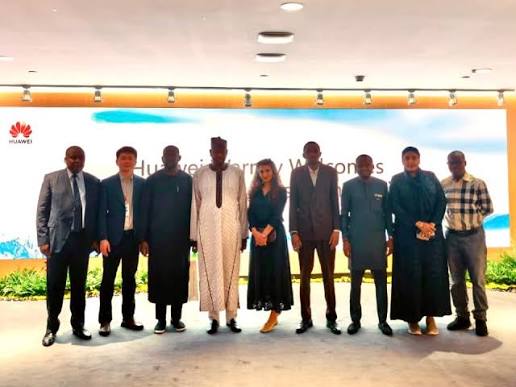
One of the major highlights was the delegation’s visit to Huawei’s Global Training Centre, research and development facilities, manufacturing plants and the company’s renowned Smart Campus and Integrated Operations Centre.
At the operations centre, the Katsina delegation observed how modern cities deploy artificial intelligence, integrated data platforms and automated emergency response systems to improve public safety and municipal administration.
Analysts believe that such technologies hold particular significance for Katsina, a state that continues to confront security challenges while seeking innovative ways to improve surveillance and coordination among security agencies.
Reflecting on the visit, Radda said the experience provided useful insights into how technology, industrialisation and skills development could drive economic diversification and job creation.
“The insights gained will help us strengthen security and improve coordination across government institutions in Katsina State,” he said.
Stakeholders say the partnership between Katsina State and Huawei is already producing visible results.