10 Things That’ll Determine If Osun Guber Election Is Free, Fair – Yiaga Africa Boss, Itodo

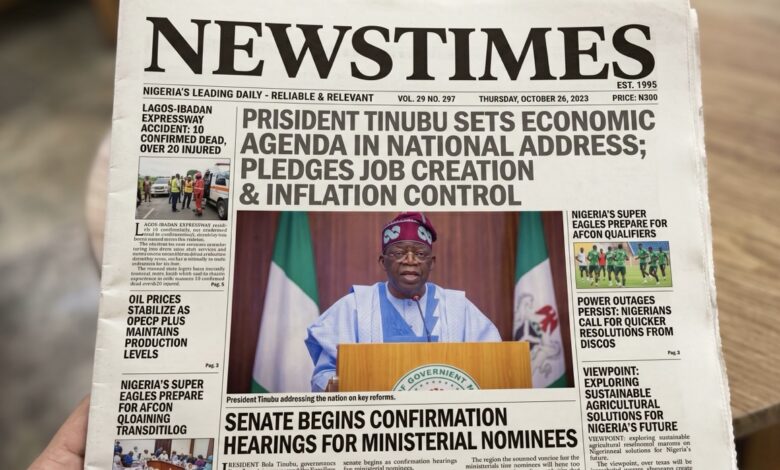
SAMSON ITODO is the Executive Director of Yiaga Africa, a civil organisation dedicated to promoting democracy across Africa. In this interview, JAMES KWEN discusses the assessment of preparations for Saturday’s Osun State governorship election and the implications for the 2027 polls.

As an election observation organisation, what is your overall assessment of preparations for tomorrow’s Osun governorship election?
We assess that preparations are broadly on track, but readiness must ultimately be judged by performance on election day. INEC has completed several important preparatory activities across the 30 LGAs, including recruitment and training of officials, PVC distribution, BVAS configuration, mock accreditation, stakeholder engagement, and election security coordination. But two developments have introduced significant risks. First, the mock accreditation exercise exposed technical problems with some BVAS devices, including failures to recognise fingerprints, facial features and some older voter records. Second, the court-ordered inclusion of the SDP required INEC to reprint ballot papers and result sheets at the last minute, compressing the timeline for sorting and distributing materials.
So, for us, the question is no longer whether preparations have taken place. The question is whether those preparations will translate into timely deployment, reliable technology, effective contingency arrangements and strict compliance with the law.
What are the key indicators that will determine whether the election is free, fair, credible and transparent?
We will assess the election across the entire integrity chain—from the ballot box to the results portal. We will examine whether polling units open on time; whether essential materials are available; whether BVAS functions properly; whether voters are accredited without discrimination or disenfranchisement; whether citizens can vote without violence, intimidation or inducement; whether ballots are counted transparently; and whether polling-unit results are accurately recorded.
But the integrity test does not end at the polling unit. We will also scrutinise whether results are electronically transmitted and published in accordance with the Electoral Act 2026 and INEC’s Regulations and Guidelines, and whether collation is transparent and accessible to accredited party agents, observers and the media. A credible election is not simply one in which people vote peacefully. The votes cast must remain intact from the polling unit to the final declaration.
Why is transparency in the Osun election particularly important for Nigeria’s democracy?
Because Osun is the last major governorship election before the 2027 general election and the second governorship election conducted under the Electoral Act 2026, it is an important test of INEC’s operational readiness and of some of the innovations introduced under the 2026 Act and accompanying regulations, including downloadable PVCs, the electronic EC8A, and the validation of polling-unit results. This election provides an opportunity to demonstrate that electoral reforms are working in practice, not merely on paper. Public trust cannot be legislated into existence. It is built when citizens can see that the rules are clear and consistently applied, and that the announced results reflect the votes cast.
Yiaga Africa has repeatedly raised concerns about vote-buying and voter inducement. How serious is this threat in Osun, and what should security agencies and INEC do to prevent it?
It poses a significant integrity risk. Our pre-election observers documented political actors distributing money and gift items. Although some of these activities were presented as social interventions or charitable support, their timing and proximity to campaign activities raise legitimate concerns about voter inducement and undue influence. Our position is that enforcement must target the entire vote-buying network, not merely the voter receiving money. We are calling for stronger coordination among security agencies, the EFCC, and the ICPC to identify and arrest political party leaders, agents, and others involved in financing or facilitating vote-buying.
Your organisation has identified security concerns in parts of the state. How confident are you that voters will be able to cast their ballots without intimidation?
There are genuine reasons for concern. Our observers documented a shift from conventional political rivalry and campaign-related violence towards incidents that directly affect electoral activities and strategic public spaces. We documented the attack on a PVC collection centre in Odo-Otin, politically linked violence in Osogbo, and disputes over control of motor parks.
Yiaga Africa plans to deploy election observers across Osun. What exactly will they be monitoring on election day?