By Aza Msue, Samson Elijah and James Kwen
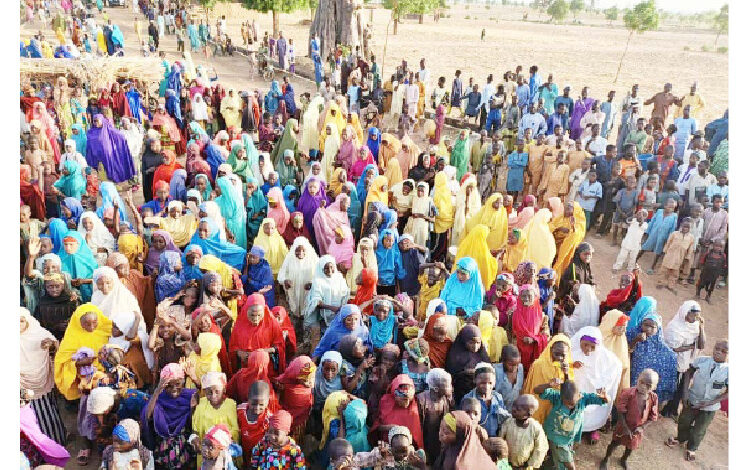
The United Nations food agency has disclosed that at least 17 million people across nine conflict-hit states in northern Nigeria are facing severe hunger, warning that violence and funding cuts were driving food insecurity to its worst level in nearly a decade.


The World Food Programme (WFP) , in a statement, said the latest food security analysis showed the number of people facing crisis, emergency, or catastrophic hunger had risen by almost 2 million from previous projections.
The statement issued by the WFP regional director for West and Central Africa, Kinday Samba, noted that violence was spreading across a wider area and forcing people from their farmland.
The findings underline the deepening humanitarian cost of insecurity in Africa’s most populous country, where Islamist insurgents in the northeast and armed gangs in parts of the north have displaced communities, kept farmers from their fields and restricted aid access.
The crisis is worsening during the lean season, when households typically exhaust food stocks before the next harvest.
Borno State, the epicentre of a long-running Islamist insurgency, has more than 3 million people who are acutely food insecure, including more than 750,000 facing severe hunger conditions, WFP said.
“When people lose access to food, the risks of displacement, exploitation and instability increase,” the agency said, adding that it can only support fewer than half of the 1.3 million people it assisted last year in three northeast states, where 6.2 million are food-insecure.
WFP, however, said it needs $89 million over the next six months to maintain food, nutrition, and logistics support across northern Nigeria.
CISLAC Expresses Concern Over UN Statement On Escalating Hunger Crisis in Northern Nigeria
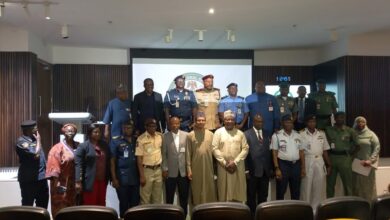
Reacting to the UN revelation, the Civil Society Legislative Advocacy Centre (CISLAC) has expressed deep concern over the latest warning by the United Nations World Food Programme (WFP) that northern Nigeria is experiencing its worst hunger crisis in nearly a decade.
The executive director of the Civil Society Legislative Advocacy Centre (CISLAC) who is also head of Transparency International (TI) Nigeria, Auwal Musa Rafsanjani, expressed concern, in an interview with LEADERSHIP.
According to the WFP, more than 17 million people across nine conflict-affected northern states are facing acute food insecurity as a result of persistent insecurity, mass displacement, economic hardship, climate-related shocks, and declining humanitarian funding.
Rafsanjani said the alarming development is not merely a humanitarian emergency; it is a stark indictment of the country’s governance failures and the inability of successive interventions to address the structural drivers of poverty, insecurity, and food insecurity.
“Hunger on this scale undermines human dignity, weakens national security, fuels social instability, and threatens sustainable development,” he said.
The CISLAC boss said the civil society organisation is particularly concerned that continued attacks by insurgents, bandits, and other armed groups have displaced farming communities, disrupted agricultural production, destroyed livelihoods, and restricted humanitarian access to vulnerable populations.
“Combined with soaring food prices, inflation, unemployment, and shrinking household incomes, millions of Nigerians are being pushed deeper into extreme poverty.
“Equally troubling is the significant reduction in humanitarian assistance caused by global funding shortfalls. While international partners have played an important role in responding to the crisis, Nigeria cannot continue to depend primarily on external humanitarian support to feed its citizens. Food security is fundamentally a governance responsibility that requires sustained domestic commitment and accountable public investment,” he added.
CISLAC therefore called on the federal government and affected state governments to urgently implement coordinated emergency and long-term measures to avert a worsening catastrophe.