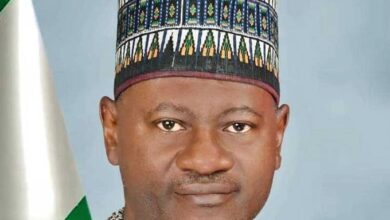
‘Repeated Benue, Plateau killings expose failure of Nigeria’s security response,’ Peter Obi says

Former Labour Party presidential candidate Peter Obi has said the latest killings in Benue and Plateau states underscore what he described as the country’s inability to halt recurring attacks on vulnerable communities, warning that repeated condemnations without decisive action have failed to stem the violence.
Reacting to fresh attacks that reportedly claimed at least 16 lives in the Otukpo-Nobi community of Benue State and wiped out nine members of a family, including a two-month-old baby, in Plateau State‘s Riyom Local Government Area, Obi declared that Nigeria has reached a point where routine expressions of sympathy are no longer enough.
He said in a statement released on Monday, “The time has come to move beyond routine condemnations after every attack.”

READ RELATED NEWS UPDATES
US Lawmaker urges Trump administration to act over Plateau killings
“I never denied Benue killings”— Gov Alia clarifies
Women protest disrupt funeral of Plateau attack victims over arrest of youths
He maintained that Nigerians deserve “a security architecture that is proactive rather than reactive, driven by intelligence, rapid response and accountability.”
His comments come against the backdrop of renewed concern over persistent attacks in Nigeria’s North-Central region, where communities in Benue and Plateau have endured years of deadly violence linked to armed groups, communal conflicts, and disputes over land and grazing routes. Despite repeated military operations and security deployments, attacks have continued, often leaving scores dead, thousands displaced, and farming activities disrupted.
Describing the latest incidents as “painful and deeply disturbing,” Obi said the recurring bloodshed has continued for far too long and should no longer be treated as an unfortunate but routine occurrence.
He said, “For years, families in Benue, Plateau and other communities across Nigeria have lived under the constant shadow of fear, violence and displacement.
“Mothers have buried their children, children have become orphans overnight, farmers have abandoned their lands, and entire communities have been left devastated. We cannot continue to accept this tragic cycle as though it were normal. It is not.”
Rather than focusing solely on the immediate casualties, Obi framed the attacks as evidence of a broader failure to guarantee citizens’ constitutional right to security, arguing that the government’s foremost obligation remains the protection of lives and property.
He noted, “The primary responsibility of any government is the protection of lives and property.
“Every Nigerian life is sacred, and every life lost is one too many. These are not mere statistics; they are fathers, mothers, children, breadwinners and future leaders whose dreams have been violently cut short.”
The former Anambra State governor also called for greater accountability in the country’s criminal justice system, saying perpetrators of the attacks must no longer evade justice.
He said, “Those responsible for these atrocities must be identified, arrested and prosecuted. The culture of impunity must end.”
The latest attacks add to a long list of deadly incidents that have placed Benue and Plateau at the centre of Nigeria’s security concerns. Both states have witnessed repeated mass killings over the past decade, with villages frequently coming under attack despite assurances from successive administrations that the violence would be contained.
The perpetual insecurity has also fuelled humanitarian challenges which force thousands of residents into internally displaced persons’ camps while disrupting farming in two of Nigeria’s major food-producing states.
Although security agencies have repeatedly intensified operations across the region, fresh attacks have continued to raise questions about the effectiveness of existing security strategies and the capacity of authorities to prevent rather than merely respond to violence.
Offering condolences to the bereaved families, Obi expressed solidarity with the governments and people of Benue and Plateau, praying for comfort for grieving families and healing for those injured in the attacks.
He maintained that the worsening security situation should not be viewed through a partisan lens.
He said, “This is not about politics; it is about humanity.
“We must summon the collective will to secure our nation and restore hope to our people. No country can develop when its citizens live in fear, and no society can prosper when innocent blood continues to flow unchecked.”
His intervention comes as pressure continues to mount on security authorities to not only respond to the latest attacks but also demonstrate that long-standing promises to restore peace in Nigeria’s troubled communities can translate into lasting security on the ground.