Scholar Decries Low Modern Media Spaces For Children In Nigeria, Ghana Belittles 3.3% Broadcast Share

0
LAGOS – The media over the weekend came under scrutiny as a result of research and content analysis of media in Nigeria and Ghana, which were laid bare for the public to assess.
Professor Olusola Samuel Oyero, a communication scholar and Deputy Vice-Chancellor of Anchor University, Lagos, in the presentation of his research findings, expressed concern over what he described as the continued neglect of children in Nigeria and Ghana’s media spaces, saying they are too often portrayed as victims of hardship rather than recognised as stakeholders in national development.
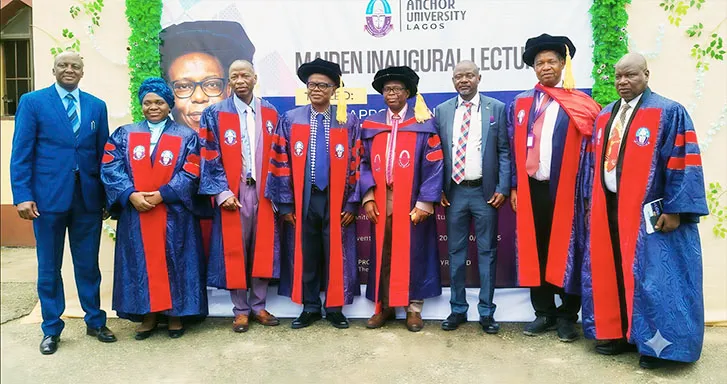
Speaking while delivering the university’s maiden inaugural lecture entitled, “God’s Arrow and the Gongman: Reclaiming the Child in the Age of Media Spectacle,” Professor Oyero, of the Faculty of Social and Management Sciences, argued that although children frequently feature in reports on abuse, conflict, poverty and other tragic events, they are rarely given a voice or meaningful representation in media discourse and decision-making.

The scholar painted a sobering picture of contemporary childhood in Nigeria, arguing that while previous generations were nurtured by family values, community guidance and educational broadcasting, today’s children are increasingly being shaped by a media environment driven by profit, visibility and endless competition for attention.
The scholar revealed that only 448 child-related stories appeared in 1,200 newspaper editions over five years in Nigeria and Ghana, a development he described as evidence that children’s concerns are not accorded sufficient news value capable of engendering sustainable development.
Also in the broadcast sector, his findings showed that a mere 3.3 percent of programmes aired by selected television stations were specifically designed for children.
He argued that despite their visibility in stories centred on tragedy, abuse, conflict and poverty, children remain largely excluded from meaningful representation and decision-making processes within the media landscape.
According to him, children should not be seen merely as passive recipients of media messages but as social actors whose dignity, future and development are profoundly shaped by the structures of communication and representation in contemporary society.
He lamented that many media institutions frame children predominantly within contexts of emotional appeal and sensationalism while paying little attention to their intellectual growth, civic engagement, creativity and participatory rights.
The scholar maintained that such an imbalance has fostered a communication culture where children are consumed as emotional subjects rather than regarded as investments for national development.
He, therefore, advocated a rights-based and development-oriented communication framework that prioritises the best interests of children in media production, policy formulation and public discourse.
Decline Of Value-Based Children’s Programmes
The academic also expressed concern over the decline of educational and value-driven children’s programmes in Nigerian broadcasting, saying the trend has negatively affected cultural socialisation, moral upbringing and identity formation among young audiences.
Reflecting on earlier eras of children’s broadcasting in Nigeria that featured programmes like ‘Tales by Moonlight’, ‘ Milo Last Kid Standing’, and others, he noted that the programmes once successfully blended entertainment with moral instruction, civic education, language development and cultural continuity.
However, he observed that the growing influence of commercial entertainment, imported media content and algorithm-driven digital platforms has significantly weakened broadcasting’s developmental role in the lives of children, stressing that communication should not be treated merely as a commercial enterprise but as a social responsibility with far-reaching implications for nation-building.
Consequently, he called for renewed investment in public-interest broadcasting and greater institutional support for child-centred communication initiatives, insisting that such efforts should be regarded as developmental necessities rather than optional ventures.
The scholar further linked sustainable national development to the communication environment in which children grow, learn and form identities.
According to him, meaningful development cannot be achieved without ensuring access to quality educational content, ethical media environments, participatory communication structures and culturally relevant storytelling.
He maintained that communication must go beyond information dissemination to serve as a tool for shaping values, citizenship, empathy, responsibility and collective aspirations.
The scholar also disclosed that his advocacy has informed proposals for the establishment of Children Journalism and Media Studies as a specialised field aimed at institutionalising sustained scholarly and policy engagement with issues affecting children within modern media systems.
While acknowledging that the United Nations Convention on the Rights of the Child recognises the media as critical stakeholders in promoting children’s welfare and development, he argued that evidence from years of research suggests otherwise.
According to him, media organisations have contributed to the marginalisation, silencing and neglect of children within public communication systems instead of serving as advocates for their rights.
He attributed the trend partly to perceptions among journalists that children are peripheral to societal decision-making and partly to commercial realities, noting that children do not constitute a significant newspaper market.
Oyero also pointed to ethical restrictions surrounding the interviewing and photographing of minors, saying that although such regulations are essential for child protection, they sometimes discourage journalists from engaging children directly because of procedural requirements.
The consequence, he argued, is that media coverage of children’s issues often remains episodic, superficial and event-driven, with little effort devoted to investigative reporting or deeper analysis of structural and policy dimensions.
The scholar equally criticised Nigerian television stations for paying inadequate attention to children’s programming, saying that 3.3 per cent of programme content aired by selected television stations was specifically designed for children.
According to him, the figure underscores the low priority accorded to children within the country’s broadcasting system and reflects a wider failure to comply with international standards on children’s programming.
Beyond issues of representation, the scholar lamented what he described as the persistent silencing of children’s voices in public discourse. Noting that even in news stories directly concerning children, adults, including politicians, government officials, security agencies and civil society actors are usually the ones speaking on their behalf.
Such practice, he argued, contradicts the spirit of international conventions which affirm children’s rights to express their views and participate meaningfully in decisions affecting their lives,s warning that their exclusion reinforces adult dominance, deprives children of communicative agency and sustains a culture in which children are spoken for rather than listened to.
He also criticised media narratives that consistently portray children as helpless victims, saying such representations undermine their resilience, competence and capacity for meaningful participation in society.
The scholar called for a fundamental rethinking of journalistic approaches to childhood issues, urging media organisations to abandon paternalistic narratives and recognise children as active citizens with opinions, rights and contributions to make.