0
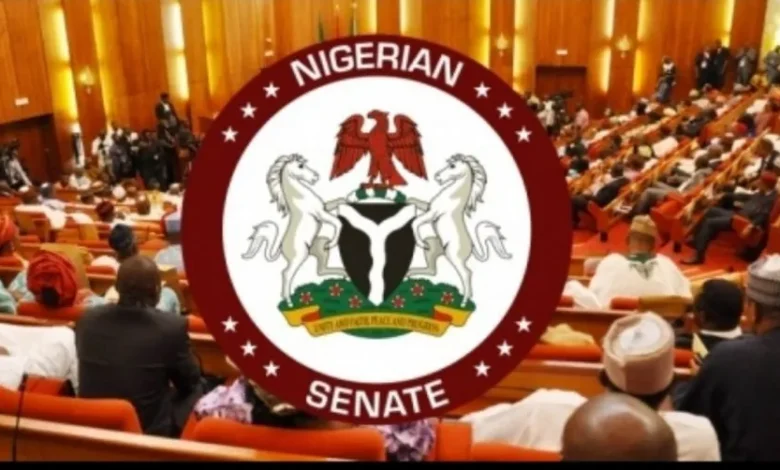
ABUJA – The Senate on Thursday brushed aside protests and allegations trailing the nomination of Professor Abayomi Sunday Fasina, confirming him as a Non-Career Ambassador and High Commissioner of the Federal Republic of Nigeria after a heated debate that exposed deep divisions among lawmakers.
The confirmation came after a dramatic plenary session in which senators clashed over whether allegations that have not resulted in criminal conviction or judicial pronouncement should be sufficient grounds to halt a presidential nominee’s elevation to one of the country’s highest diplomatic offices.
Tension rose on the floor when concerns were raised over allegations previously levelled against the academic, prompting calls for the Senate to suspend action on the nomination pending further investigation.

The controversy erupted shortly after the Senate Committee on Foreign Affairs presented its report recommending Fasina’s confirmation. The committee, chaired by Senator Mohammed Sani Bello and represented by Senator Simon Lalong, informed lawmakers that it had thoroughly screened the nominee and reviewed petitions both supporting and opposing his appointment.
According to the committee, investigations conducted by relevant authorities, including the governing council of the Federal University, Oye-Ekiti and the Nigeria Police Force, found no evidence to substantiate the allegations against the nominee.
The panel further stated that no court judgment, criminal conviction or documentary proof establishing wrongdoing was presented during the screening process.
However, Senator Cyril Fasuyi (Ekiti North) challenged the recommendation, arguing that the allegations remained a matter of public concern in Oye-Ekiti, where the nominee served as Vice-Chancellor of the Federal University.
Fasuyi told the Senate that a woman involved in the matter had approached him personally and claimed she did not receive justice.
The lawmaker urged the chamber to suspend consideration of the nomination and allow a fresh review, including inviting the petitioner to appear before senators.
His intervention sparked an immediate backlash from several lawmakers who insisted that the Senate must be guided by constitutional provisions rather than public sentiment or unproven accusations.
Leading the defence of the nominee, Senate Chief Whip Mohammed Tahir Monguno invoked Section 36(5) of the 1999 Constitution, stressing that every citizen remains innocent until proven guilty by a competent court.
He warned that allowing allegations alone to derail a nomination would amount to punishing an individual without due process.
Senator Abdul Ningi also rallied support for the committee’s recommendation, arguing that the Senate could not undermine the integrity of its own committee system after a detailed investigation had already been conducted.
Ningi maintained that lawmakers should not destroy the reputation and career of a distinguished professor on the basis of allegations that had not been proven, adding that anyone dissatisfied with the outcome had the option of seeking judicial redress.
He further questioned why those raising objections failed to ensure that the petitioner appeared before the committee during the screening exercise.
As the debate intensified, Senate President Godswill Akpabio stepped in, cautioning lawmakers against discussing matters that could prejudice ongoing legal or administrative processes.
Akpabio reminded senators of the need to remain guided by parliamentary rules and avoid turning the chamber into a forum for adjudicating unresolved disputes.
The atmosphere eased when Fasuyi eventually withdrew his objection after clarifications that the nominee hails from Lagos State and that no senator from the state had opposed the nomination.
With the objection withdrawn, the Senate moved into the Committee of the Whole to consider the report clause by clause before returning to plenary for final approval.
Moments later, Akpabio put the recommendation to a voice vote.
The response from the chamber was overwhelmingly in support.
Declaring the outcome, the Senate President announced the confirmation of Professor Abayomi Sunday Fasina as a Non-Career Ambassador and High Commissioner of the Federal Republic of Nigeria.
The decision marked the end of a contentious confirmation process and reinforced the Senate’s position that allegations without judicial proof cannot be used as the basis for denying a nominee appointment to public office.
With the confirmation secured, Fasina is expected to await formal diplomatic posting by the Presidency in the coming weeks.