0
ABUJA – The. Senate on Friday intensified its sweeping investigation into Nigeria’s Safe Schools Initiative as the Ministry of Finance came under fresh legislative scrutiny over the management, disbursement and accountability of funds earmarked to protect schools from rising insecurity.
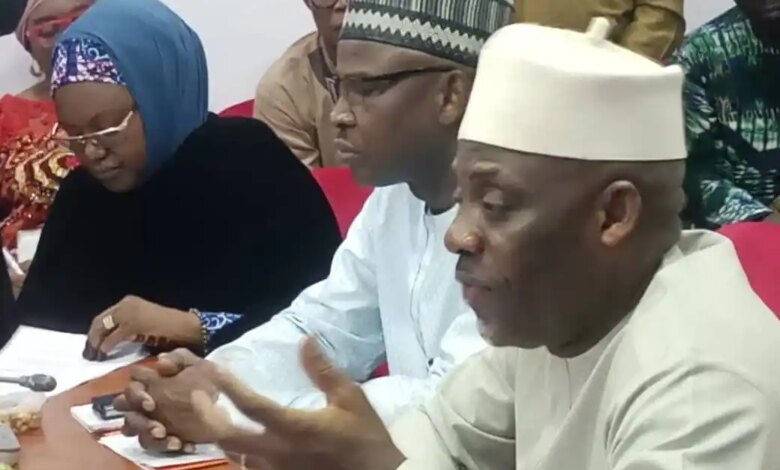
At a tense session of the Senate Ad-hoc Committee on the Safe Schools Initiative at the National Assembly, Abuja, Chairman of the Committee, Senator Orji Uzor Kalu, declared that the probe was aimed at tracing every naira allocated to the programme, insisting that the National Assembly would leave no stone unturned in uncovering how public resources meant for safeguarding schoolchildren had been managed.
Kalu, while welcoming the Minister of Finance and Coordinating Minister of the Economy, Taiwo Oyedele, commended him for honouring the committee’s invitation, describing his consistent appearance before parliamentary panels as a demonstration of respect for democratic oversight and accountability.
The Committee Chairman said the investigation was necessitated by resolutions of the Senate following concerns over the funding structure, implementation process and accountability framework of the Safe Schools Initiative.
According to him, preliminary findings uncovered issues requiring comprehensive legislative scrutiny, making it imperative for the Committee to examine financial allocations, donor contributions, fund disbursements and utilisation across all Ministries, Departments and Agencies connected with the programme.
He stressed that the Ministry of Finance occupied a strategic position in the investigation because of its constitutional responsibility for managing public funds.
Kalu, however, dismissed any suggestion that the exercise was targeted at individuals or institutions, maintaining that the investigation was strictly in line with the constitutional oversight powers of the National Assembly.
“This investigation is not a witchhunt. It is our constitutional responsibility to ensure accountability, value for money and the protection of Nigerian schoolchildren,” he declared.
The lawmaker also acknowledged that Oyedele assumed office long after many of the transactions under investigation, but insisted that changes in leadership could not erase institutional responsibility because government remained a continuum.
Warning that sensitive operational issues could not be discussed publicly, Kalu announced that deliberations would proceed behind closed doors to prevent security information from falling into the wrong hands.
Members of the committee unanimously endorsed the decision, with Senator Sahabi Yau saying the executive session would allow unrestricted discussions on issues affecting national security.
Responding, Oyedele reaffirmed the Federal Government’s commitment to transparency and accountability, describing the protection of schools as one of government’s most critical responsibilities.
He said securing educational institutions was an investment in Nigeria’s future and assured lawmakers that the ministry would fully cooperate with the Senate’s investigation.
The Minister disclosed that government had already identified gaps requiring urgent attention, particularly delays in funding agencies responsible for implementing the Safe Schools Initiative, including the Nigeria Police Force, the Nigeria Security and Civil Defence Corps, the Department of State Services and other relevant institutions.
He also revealed that fresh measures were being introduced to strengthen transparency and accountability in the management of resources dedicated to school security.
Oyedele agreed with the Committee that public institutions remained accountable irrespective of changes in leadership, promising that any shortcomings discovered would be corrected to strengthen future governance.
Speaking with journalists after the closed-door meeting, the Minister described school safety as a shared national responsibility requiring collaboration among the Executive, Legislature, state governments and security agencies.
He dismissed suggestions that control of the Safe Schools budget was the central issue, explaining that statutory provisions empowered the Ministry of Finance to administer service-wide votes and intervention funds through the Office of the Accountant-General.
According to him, the real priority should be ensuring timely release of funds to security agencies to prevent attacks on schools rather than responding after tragedies occur.
While admitting that funding alone could not completely eliminate insecurity, Oyedele maintained that adequate and prompt financing would significantly reduce risks and strengthen preventive measures.
He also appealed to Nigerians and the media to support ongoing security operations, warning that public narratives should not inadvertently strengthen terrorists or undermine efforts by security agencies.
The minister urged all stakeholders to unite in protecting schools, insisting that securing the nation’s children remained a collective responsibility.