Nigeria’s Senate has rejected calls for the Federal Government to take over South African-owned businesses, including MTN and DStv, in response to renewed xenophobic attacks on Nigerians in South Africa. Instead, lawmakers urged the government to step up diplomatic pressure, seek written safety guarantees from South Africa and support Nigerians affected by violence, intimidation, looting and displacement.
The debate came after fresh reports of attacks and threats against Nigerians and other African nationals following a 30 June 2026 deadline reportedly issued by anti-migrant vigilante groups for undocumented foreigners to leave South Africa.
The motion, sponsored by Senator Asuquo Ekpenyong of Cross River South, asked the Senate to respond to what it described as recurring xenophobic attacks and intimidation against Nigerians and other African nationals in South Africa.
Reuters reported this week that Nigeria said two of its citizens had been killed in South Africa during a surge in anti-migrant violence, while South Africa called on Nigeria to provide evidence through formal diplomatic channels. South Africa’s police watchdog said it had opened an investigation into one reported police-related death.


Read related news:
Two Nigerians killed in South Africa, FG intensifies evacuation efforts
FG demands justice over two Nigerians killed in South Africa
FG to bring home 271 more Nigerians from South Africa
Senate Chooses Diplomacy over Retaliation
Some lawmakers argued that Nigeria should respond more firmly because South African companies continue to operate profitably in Nigeria while Nigerian-owned businesses in South Africa have reportedly been attacked or looted.
Senator Eshilokun Wasiu of Lagos Central raised the call for the nationalisation of South African businesses in Nigeria, while Senators Adams Oshiomhole and Abdul Ningi opposed severing ties with South Africa.
Nationalisation means the government takes control of private businesses or assets, usually by law. In this case, it would have meant a direct move against South African-linked commercial interests in Nigeria, including major brands such as MTN and DStv.
The Senate did not adopt that position.
Instead, it called for the Ministry of Foreign Affairs and the Nigerian High Commission in South Africa to obtain written assurances from the South African government on the protection of Nigerians. It also demanded the arrest and prosecution of those responsible for violence, looting, intimidation and unlawful immigration enforcement.
Lawmakers also urged the Ministry of Foreign Affairs, the Nigerians in Diaspora Commission and the Nigerian High Commission to strengthen emergency consular support. They called for a verified register of Nigerians who had suffered death, injury, displacement, unlawful detention or loss of property, so that legal redress, restitution and possible compensation could be pursued.
Oshiomhole Pushes for Compensation
Senator Oshiomhole said he was alarmed by comments attributed to a South African minister suggesting that compensation may not be paid to Nigerians whose properties were looted, shops burnt, businesses destroyed or relatives killed.
He said: “If indeed the South African government refuses to compensate affected Nigerians, it is proposed that the federal government of Nigeria should consider appropriating the profits made by South African companies operating in Nigeria, including their banks and other businesses, and use those funds to compensate Nigerian victims.”
Oshiomhole argued that Nigeria should not use taxpayers’ money to compensate victims while South African companies continued to make profits in Nigeria.
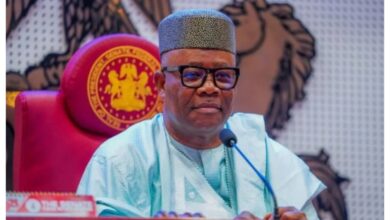
But Deputy Senate President Barau Jibrin, who presided over the session, urged caution. He said senators should not rely only on statements circulating on social media without proper verification.
Barau said the attacks were unacceptable, but added that the Senate Committee on Foreign Affairs should complete its investigation before further decisions were taken.
“Nobody in this chamber is happy with what is happening in South Africa,” he said. “The actions of violent groups attacking innocent people are completely unacceptable. Killing people in the name of protests cannot and should not be tolerated.”
He later directed the Committee on Foreign Affairs to submit its report within two weeks, saying the Senate needed comprehensive information before deciding its next step.
Why the Issue Matters
The row has revived long-standing tensions between Nigeria and South Africa over the safety of Nigerians living there.
Senator Ekpenyong said intimidation had gone beyond undocumented migrants and had affected Nigerians and other foreign nationals with valid residence, work and immigration permits. He said some had reportedly been threatened, profiled, evicted or ordered to leave by unauthorised vigilante groups.
The Senate said South Africa had the right to enforce immigration laws, but insisted that such enforcement must be carried out only by authorised state institutions and in line with the rule of law, human dignity and fundamental rights.
Lawmakers also recalled Nigeria’s historic support for South Africa during the struggle against apartheid, including diplomatic, financial and material support for the liberation movement.
For Nigerians in South Africa, the immediate issue is safety and access to help. Affected citizens should keep records of any attack, threat, loss of property or unlawful detention and contact Nigerian diplomatic officials or NiDCOM for guidance when official reporting channels are announced.
For now, the Senate has chosen not to back the takeover of MTN, DStv or other South African-linked businesses. The next major step will be the Foreign Affairs Committee’s report, which is expected to guide any further action by lawmakers.