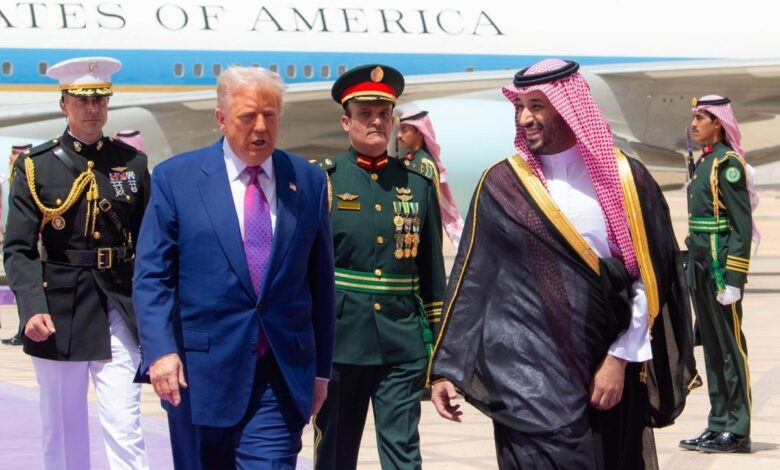
The United States and Saudi Arabia took a step toward nuclear cooperation on 22nd July 22 2026, when U.S. Energy Secretary Chris Wright and Saudi Energy Minister Prince Abdulaziz bin Salman signed a Section 123 Agreement. It creates the legal basis for civilian nuclear trade and comes with a bilateral safeguards agreement. Washington presented it as the foundation of a decades-long, multibillion-dollar partnership favouring American companies.
One day later, however, President Donald Trump introduced a condition that was absent from the original announcement: Saudi Arabia must normalize relations with Israel through the Abraham Accords or “the deal is off.”
The ultimatum turns what had looked like a completed nuclear framework into a politically conditional bargain, creating uncertainty for Riyadh, Congress, and prospective U.S. suppliers.


Scope, legal and commercial framework, timeline, and significance
Section 123 of the Atomic Energy Act requires nine nonproliferation criteria, including peaceful-use guarantees, safeguards, physical-security requirements, and U.S. consent rights over enrichment, reprocessing, and retransfers of American-origin material. The agreement does not authorize a reactor by itself; it enables licensing, exports, fuel services, training, and technical cooperation. For Saudi Arabia, the agreement opens the door to American reactors, fuel services, training, and regulatory support. For Washington, it promises exports, jobs, and lasting influence. Cooperation could extend to research and peaceful applications beyond electricity generation.
The difficult question is uranium enrichment. Unlike the US–UAE “gold standard,” under which Abu Dhabi renounced enrichment and reprocessing, the Saudi agreement may leave that door open. Washington and Riyadh could study enrichment inside the kingdom, perhaps using tightly controlled American technology or a sealed “black box” system. That might reduce the risk, but enrichment on Saudi soil would still carry serious proliferation implications.
READ: Trump says Saudi nuclear deal will be subject to Riyadh joining Abraham Accords
The agreement is expected to last roughly 30 years. Saudi Arabia must choose technology, sites, financing, and suppliers while expanding regulatory capacity. Large reactors require years of licensing and construction, while most small modular designs remain commercially immature. The agreement is an enabling framework, not a construction schedule. Trump’s new condition now makes even that framework uncertain.
Commercially, the agreement strengthens companies such as Westinghouse and emerging small-reactor suppliers. Success will depend on financing, project costs, and whether American vendors can match state-backed competitors.
Benefits for Saudi Arabia and US opportunities
Saudi electricity demand is climbing as its population, industries, cooling needs, desalination plants, and Vision 2030 projects grow. Nuclear plants could provide steady low-carbon power while reducing the oil and gas burned at home, leaving more hydrocarbons for export or higher-value uses.
Desalination strengthens the case. As the world’s largest producer of desalinated water, Saudi Arabia could use nuclear facilities for electricity and process heat with lower direct emissions. Nuclear power could also complement solar after sunset and during peak demand. The Saudi National Atomic Energy Project includes reactors, fuel-cycle capabilities, and applications in industry, medicine, research, and water. A domestic program could create specialized jobs and support engineering and manufacturing, but it should complement cheaper renewable and efficiency options.
Saudi Arabia must still decide where nuclear power belongs within its expanding solar and gas systems. Reactors offer steady output but require large upfront commitments and management of construction risk. A phased program beginning with strong regulation, workforce development, and one carefully selected project would be more practical than announcing a large fleet before local institutions are ready.For the United States, benefits extend to fuel, maintenance, safety systems, and training. Continued involvement provides leverage over standards and safeguards, while Saudi investment could support the American nuclear supply chain.
Principal challenges and risks
Nonproliferation remains the central concern. Saudi Arabia has a comprehensive safeguards agreement with the IAEA but has not adopted the Additional Protocol, which gives inspectors wider access to search for undeclared activity. Riyadh should accept it before receiving sensitive technology or material.
The concern is simple: technology used to produce reactor fuel can also make weapons-grade material. Crown Prince Mohammed bin Salman has said Saudi Arabia would pursue a bomb if Iran acquired one. Even tightly controlled enrichment could give Riyadh a latent capability and weaken the precedent established by the UAE.
The bilateral safeguards agreement, IAEA monitoring, U.S. consent rights, and export licensing can reduce risk, but only with access, transparency, and enforcement. Arrangements must also address spent fuel, reprocessing, waste, cybersecurity, physical protection, and dual-use knowledge.
Cost is another challenge. Large nuclear projects often face delays and overruns, especially in newcomer countries. Saudi Arabia needs an independent regulator with adequate staff, authority, and expertise, alongside credible plans for emergencies, waste, decommissioning, liability, and oversight.
Congress will review the agreement for 90 days of continuous session. Lawmakers will focus on enrichment and safeguards. Supporters will emphasize jobs and influence; critics will reject weaker standards. Israel’s concern is equally direct. It fears Saudi enrichment could encourage an arms race and will likely demand firm limits, tougher inspections, and a clear link between nuclear cooperation and normalization.
Comparison with alternatives and US competitiveness
Without an attractive American offer, Saudi Arabia could select Russia’s Rosatom, China’s CNNC, South Korea’s KEPCO, or French suppliers. Russia and China can offer state financing, integrated fuel services, and fewer political conditions, but choosing them would expand their strategic influence and weaken U.S. visibility into the Saudi program. South Korea and France offer credible commercial and safety records, although some projects may still depend on U.S.-origin technology and approvals.
Washington therefore faces a difficult balance. Terms that are too restrictive could push Riyadh toward suppliers demanding less transparency, while too much flexibility could weaken global nonproliferation standards. A U.S.-operated or technically sealed enrichment facility might offer a compromise, but only with the Additional Protocol, continuous monitoring, clear termination rules, and the removal of sensitive material during a crisis.
READ: Israel warns Saudi-US nuclear deal raises stakes as Iran expands nuclear programme
Regional context: Iran, Abraham Accords, and stability
The agreement comes amid renewed conflict with Iran and uncertainty over Tehran’s nuclear program. For Riyadh, nuclear cooperation strengthens ties with Washington, reduces dependence on Russian or Chinese technology, and signals continued American investment in the kingdom’s security. Trump’s July 23 ultimatum goes beyond using nuclear cooperation as an incentive. By declaring that “the deal is off” without normalization, he has made the Abraham Accords a condition for implementation. That may give Washington leverage for a wider regional bargain, but it also leaves Riyadh with less room to maneuver. Saudi leaders continue to demand credible progress toward Palestinian statehood and face strong regional opposition to normalization, particularly during the Iran war. A public ultimatum may therefore harden positions instead of bringing an agreement closer.
With strong safeguards, the agreement could show that civilian nuclear energy and regional security can advance together. But if enrichment rules look permissive, Iran may cite the deal to defend its own program, while Egypt, Turkey, and others could demand similar rights. Depending on implementation, the agreement could either reinforce deterrence or accelerate regional nuclear hedging.
Conclusion: Opportunities vs. risks
The agreement offers real benefits: diversified Saudi electricity generation, support for desalination and industry, commercial opportunities for US companies, and stronger bilateral ties. American participation is preferable to withdrawing and leaving the market to suppliers offering less transparency.
But engagement alone will not be enough, and normalization cannot replace nuclear safeguards. Success requires Saudi adoption of the Additional Protocol, enforceable limits on enrichment and reprocessing, congressional oversight, credible waste and security plans, and sustained regional diplomacy. Trump’s ultimatum could produce a broader strategic bargain, but it could also stall an energy agreement Washington had already presented as complete.
Ultimately, the deal’s value will depend on whether the United States can combine nuclear commerce, nonproliferation discipline, and realistic diplomacy without allowing one objective to undermine the others.
OPINION: Beyond the Strait of Hormuz: Refining capacity and product-market vulnerability
The views expressed in this article belong to the author and do not necessarily reflect the editorial policy of Middle East Monitor.


