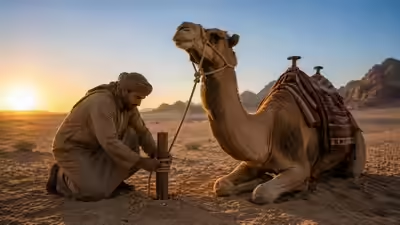
A traveller stopping after a long journey with a camel faces a simple choice: leave the animal outside and hope everything remains safe, or secure it before resting. The proverb comes from that everyday scene, where faith and practical action meet. A person can place their trust in God, while still taking responsibility for the things within their control.The saying is widely associated with Islamic and Arab wisdom traditions and is often linked to a narration involving the Prophet Muhammad. According to the commonly told account, a man asked whether he should leave his camel untied and rely on God, to which the response was: “Tie it and trust in God.” Over time, the phrase became a widely used expression about balancing belief with effort.The camel in the proverb represents the things people are responsible for — their work, decisions, relationships and duties. Trusting in God reflects faith and acceptance of what cannot be controlled. Tying the camel represents the actions people are expected to take before leaving the outcome to fate.The strength of the saying lies in its simplicity. It does not present faith and action as opposing choices. The traveller does not have to choose between trusting God and securing the camel; both come from the same approach. Preparation and caution are part of trust rather than a replacement for it.The proverb has remained relevant because the situation behind it appears in everyday decisions. A student preparing for an examination cannot depend only on hope while ignoring study. A farmer cannot control the weather, but can still prepare the land and protect the crop. A person planning a journey can believe things will go well while still checking directions and carrying what they need.The saying also reflects a practical side of traditional wisdom. Life often involves uncertainty, and people have always searched for ways to deal with things beyond their control. The proverb suggests that accepting uncertainty does not mean abandoning responsibility.The image of the camel makes the message especially memorable because it comes from a world where survival depended on preparation. For travellers crossing difficult landscapes, losing a camel could mean losing their supplies, transport and ability to continue the journey. Securing the animal was a small action with a major purpose. In modern life, the “camel” can take different forms. It can be a plan someone is building, a skill they are developing or a relationship they are trying to protect. The proverb is often used to remind people that hope works best alongside effort.The saying also reflects a broader idea found across cultures: belief becomes meaningful when it is accompanied by action. Waiting for things to improve without taking steps can leave people unprepared when challenges arrive.The reason this proverb continues to be remembered is because it addresses a question people have faced for centuries — how to deal with uncertainty. The answer lies in the image of a traveller and a camel: trust in what lies beyond your control, while taking care of what is in your hands. A tied camel does not guarantee that every journey will be easy, but it gives the traveller a better chance of continuing the road ahead.